The studio lights are warm, buzzing just above hearing range, casting a hard, clinical glare across the desk. Across from the camera sits a man whose tie is knotted with the precise, practiced symmetry of someone who has done this a hundred times before. On cable television, the air is never actually still. It hums with an invisible, manufactured electricity. Every second of broadcast time is worth thousands of dollars, and every question is engineered to produce either an explosion or a scalp.
This is the arena of the modern cultural brawl. You might also find this similar coverage interesting: Why Everyone Is Completely Wrong About Who Actually Runs Haiti.
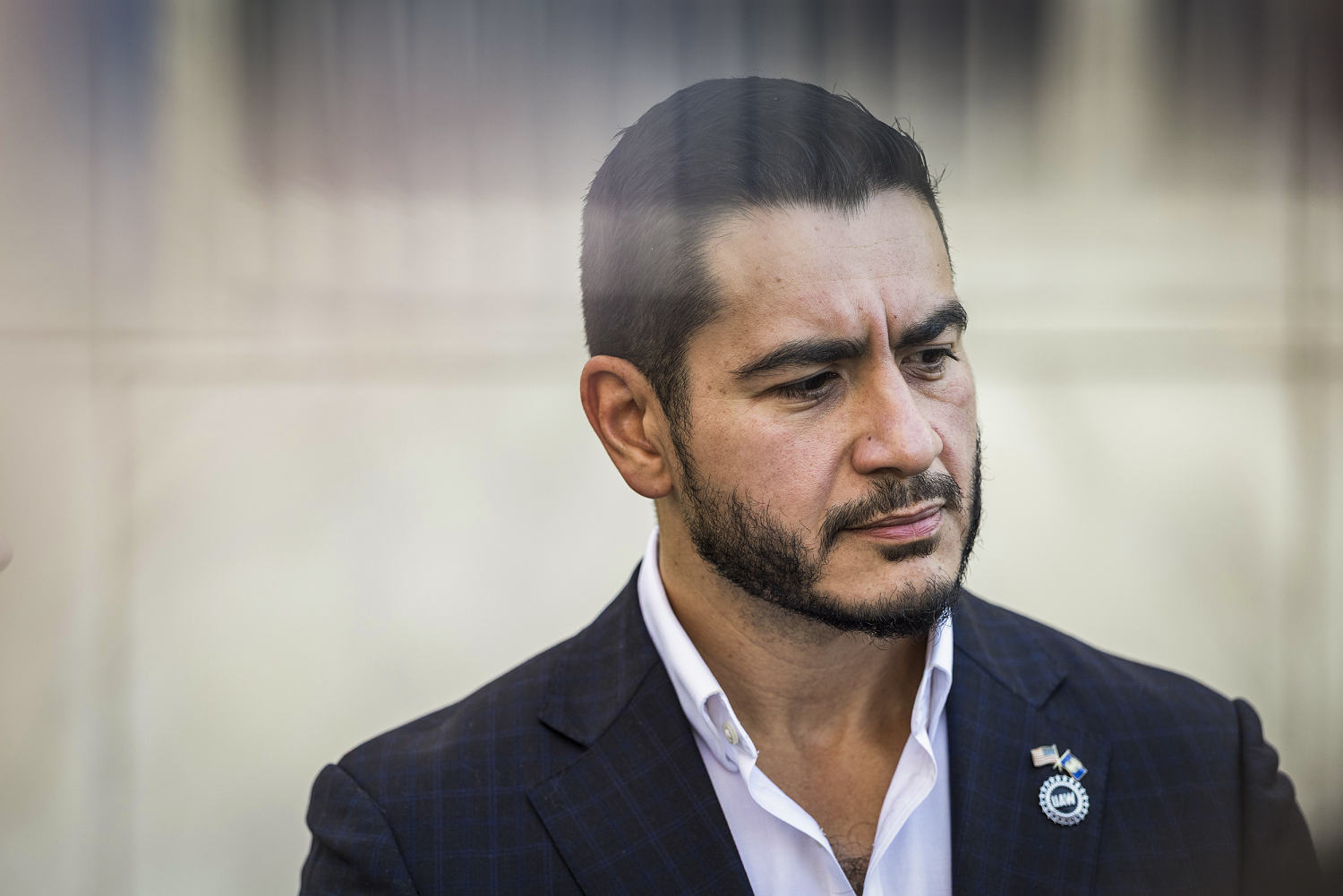
Abdul El-Sayed knows the stage well. He has walked into the lions' den of prime-time news cables more times than most policy wonks care to count. When he appeared on Fox News, the trap was set with the usual heavy-handed bait. The questions were not designed to explore the nuances of public health policy, the mechanics of municipal infrastructure, or the quiet, grinding realities of poverty in the industrial Midwest. They were designed to provoke. They were built to pull him into the theatrical mud pit where sound bites rule and substance goes to die.
They wanted a fight. They wanted blood for the chyron. As extensively documented in latest reports by TIME, the effects are widespread.
Instead, he refused.
"I'm not here to fight a culture war," he said.
Quietly. Firmly. Without blinking.
It was a small moment, easily missed if you were scrolling through your phone while the television played in the background. Yet that single sentence represented something radical in modern media: a deliberate, conscious choice to step off the treadmill of outrage.
Consider what happens next in these encounters. The host leans forward, eyebrows arched in theatrical disbelief. The guest’s pulse spikes. Adrenaline floods the bloodstream. Viewers at home feel their jaws tighten, their muscles coil, ready to cheer for a verbal knockout or curse a perceived betrayal. The culture war machine feeds on that exact physiological response. It is designed to hijack our evolutionary wiring, turning political debate into a high-stakes tribal clash where compromise is treason and nuance is weakness.
We have all lived through the exhaustion of this dynamic. You feel it in your bones by Tuesday afternoon, scrolling through feeds designed to make your blood boil over things happening a thousand miles away. You feel it around the Thanksgiving dinner table when a casual remark about inflation or school boards detonates into a three-hour shouting match. We are drowning in manufactured conflict, gasping for air in a room where someone keeps turning up the thermostat.
El-Sayed’s response was an act of oxygen.
To understand why his refusal matters, you have to look past the cable studio and into the actual neighborhoods where policies take flesh. Culture wars are fought with abstractions. They use flags, slogans, and caricatures. They tell you that your neighbor is either a saint or an existential threat. But actual governance is granular, messy, and painfully concrete.
Think about what a broken water main looks like on a freezing Tuesday morning in Detroit. It does not care about your political affiliation. It does not ask whether you voted blue or red before it floods your basement and ruins your furnace. Lead in municipal water pipes does not check your ideological registration card before it enters the bloodstream of a toddler, quietly lowering their IQ and reshaping their future. Asthma rates spiking in industrial zip codes are not ideological constructs; they are the physical consequence of particulate matter lodging in young lung tissue.
When a politician is pushed to litigate transgender bathrooms or critical race theory on national television, the water mains keep leaking. The lead pipes keep leaching. The insulin prices keep climbing. The culture war is a brilliant magic trick. While everyone looks at the flashing lights in the left hand, the right hand quietly picks the pockets of the working class.
El-Sayed’s background as an epidemiologist gives him a unique lens on this pathology. Epidemiology is the study of why people get sick, and more importantly, why some groups get sicker than others. It is a discipline rooted in material reality. Viruses do not care about your cultural grievances. They care about viral load, droplet transmission, and immune response. Poverty is an environmental toxin just as surely as benzene or arsenic.
When you spend your formative years looking at data tables that map mortality rates against zip codes, you develop a certain immunity to political theater. You realize that arguing over who is winning the latest Twitter skirmish does nothing to lower the infant mortality rate in Wayne County. It is a waste of finite human energy.
Of course, refusing the bait is professionally dangerous.
The media ecosystem rewards combat. A politician who comes to a cable news interview armed with peer-reviewed studies and calm demeanor rarely goes viral on TikTok. The algorithms that govern our digital lives are fueled by outrage. They measure engagement in heart rates, shares, and furious comment sections. By declining to take the bait, El-Sayed risked being dismissed as boring, evasive, or weak. In a culture addicted to high-fructose drama, plain water tastes like nothing at all.
Yet there is a growing, silent hunger for politicians who refuse to yell.
Walk into any community center in America, whether it is in a fading rust-belt town or a booming sunbelt suburb, and ask people what keeps them awake at night. They will not talk to you about the abstract parameters of the culture war. They will talk about whether they can afford their insulin. They will talk about whether their children’s school has enough teachers. They will talk about the crushing weight of rent increases and the terrifying reality of medical debt.
They want competence. They want dignity. Above all, they want leaders who treat their daily struggles as matters of urgent public policy rather than props for a nightly monologue.
When the interview ended, the studio lights flickered off. The host moved on to the next segment, seamlessly transitioning to a new crisis, a fresh outrage, another reason to panic. The machinery of television reset itself for the next guest.
Outside, the real world was waiting. The traffic on the freeway moved at its usual sluggish pace. The streetlights flickered on against the gathering dusk, casting long shadows across asphalt that needed repaving. In thousands of homes, families sat down to dinner, wrestling with budgets that did not quite balance and futures that felt increasingly uncertain.
They do not need another gladiator for the culture war. They need someone who remembers that government is supposed to be the things we do together to keep each other safe.
Abdul El-Sayed’s quiet refusal on Fox News was not just a clever media strategy. It was a reminder of what politics could be if we ever decide to demand better. It was an invitation to put down our weapons, step out of the colosseum, and remember the work that actually matters.
The water is still poisoned in some places. The roads still need fixing. The children are still waiting for us to grow up.