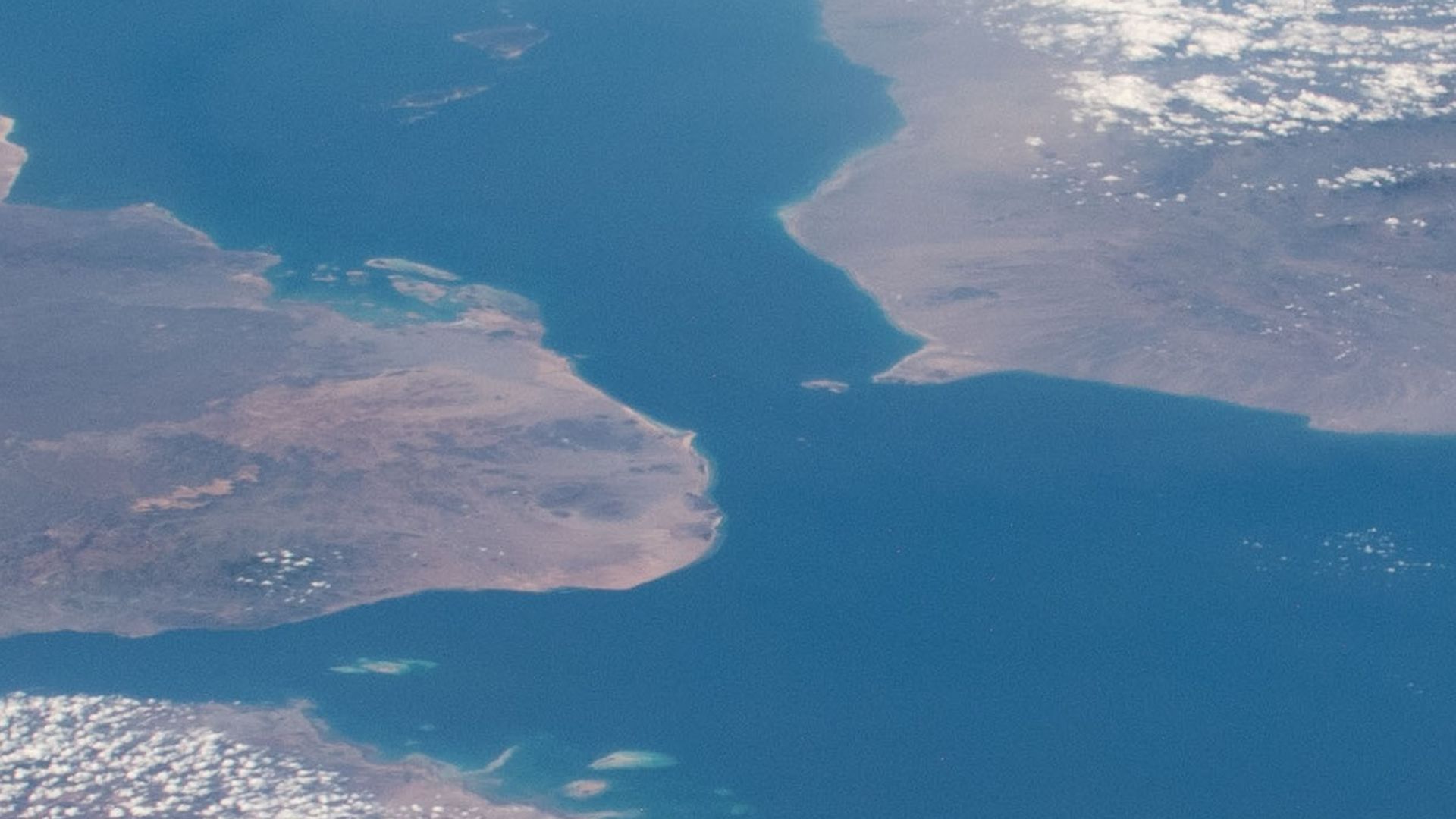
Global trade relies on a fragile sequence of maritime "gates," where geographical constraints force high-density shipping into narrow, predictable corridors. When regional actors, specifically Iranian-backed proxies, transition from harassing the Bab al-Mandab Strait to targeting the Mediterranean access points or the Strait of Gibraltar, they move from a localized disruption to a systemic structural failure of the Euro-Atlantic supply chain. This is not merely a threat of kinetic strikes on hulls; it is an assault on the mathematical basis of maritime insurance, fuel efficiency, and "just-in-time" inventory ratios.
The Mechanics of Maritime Denial
The strategic threat to a "second crucial sea route" refers to the potential closure or high-risk indexing of the Western Mediterranean or the approaches to the Strait of Gibraltar. To understand the impact on the UK and Europe, one must categorize the threat into three distinct operational layers:
- Kinetic Interdiction: The use of One-Way Attack (OWA) drones and anti-ship cruise missiles (ASCMs) to create "no-go" zones.
- Insurance Risk Indexing: The transition of a primary shipping route from a "Standard Risk" to an "Exclusion Zone," which triggers War Risk Premiums.
- Logistical Divergence: The forced rerouting of vessels around the Cape of Good Hope, adding approximately 3,500 nautical miles to a standard Asia-to-Europe transit.
The Cost Function of Divergence
When the Red Sea/Suez route is compromised, the primary alternative is the circumnavigation of Africa. This shift is governed by a rigid cost function. The variables include fuel consumption (bunkerage), vessel charter rates, and the opportunity cost of "dead time" where cargo is inaccessible.
For a standard Ultra Large Container Vessel (ULCV), the detour adds 10 to 14 days of transit time. This delay creates a "bullwhip effect" in UK ports. Because the UK operates on a thin margin of port capacity and storage, the arrival of delayed ships in clusters—rather than a staggered, predictable flow—causes immediate berth congestion.
The economic formula for this disruption is expressed as:
$$C_{total} = (T_{extra} \times R_{charter}) + (F_{extra} \times P_{fuel}) + P_{premium}$$
Where:
- $T_{extra}$ is the additional time in days.
- $R_{charter}$ is the daily hire rate of the vessel.
- $F_{extra}$ is the additional fuel consumed.
- $P_{fuel}$ is the price of bunker fuel.
- $P_{premium}$ is the surge in insurance costs due to the perceived risk of the new route or the heightened risk of the old one.
The Mediterranean-Gibraltar Bottleneck
If Iranian-backed groups utilize long-range drone technology from positions in North Africa or through Mediterranean-based proxies, the Strait of Gibraltar becomes the secondary chokepoint. Unlike the Bab al-Mandab, which is 18 miles wide at its narrowest point, the Strait of Gibraltar is approximately 8 miles wide.
The density of traffic here is unparalleled. Approximately 300 vessels pass through the Strait daily. A "clear and significant" impact on the UK manifests through the energy sector. The UK’s Liquefied Natural Gas (LNG) imports from Qatar and the United States are highly sensitive to transit security. If the Mediterranean becomes a high-threat environment, the cost of securing these shipments rises. This cost is passed directly to the UK consumer via the energy price cap mechanism, as the "delivery cost" component of the wholesale price fluctuates with maritime security indices.
The Three Pillars of Supply Chain Fragility
The UK's specific vulnerability stems from three structural realities that the competitor's analysis fails to quantify:
I. The Inventory-to-Sales Ratio
Modern UK retail and manufacturing operate on a "Just-in-Time" (JIT) model. This minimizes the capital tied up in warehousing but assumes a constant, frictionless flow of goods. A 14-day delay in maritime arrivals is not a linear delay; it is a systemic break. Components for automotive manufacturing or fresh produce for supermarkets cannot be "buffered" for two weeks without significant spoilage or production halts.
II. The Concentration of Port Infrastructure
The UK is disproportionately dependent on its "Big Three" ports: Felixstowe, Southampton, and London Gateway. These ports are optimized for the Suez route. A shift in global shipping patterns that favors Atlantic approaches might seem beneficial, but the internal rail and road infrastructure of the UK is geared toward moving goods from the Southeast toward the industrial North. Rerouting creates a domestic logistics bottleneck that the current HGV (Heavy Goods Vehicle) fleet is not scaled to handle.
III. The Sovereign Insurance Gap
Most commercial shipping is insured through P&I (Protection and Indemnity) Clubs, largely based in London. When a sea route is threatened, these clubs raise rates or withdraw cover. The UK government then faces a choice: subsidize the insurance to keep goods flowing (a massive fiscal liability) or allow the costs to manifest as inflation.
Technical Capabilities of the Adversary
The transition from the Red Sea to the Mediterranean requires a leap in "kill chain" sophistication. To close a second route, the adversary must maintain:
- Over-the-Horizon (OTH) Targeting: Drones require satellite links or sophisticated relay networks to hit moving targets at ranges exceeding 1,000 km.
- Electronic Warfare (EW) Resilience: Western naval assets in the Mediterranean (such as the UK's Type 45 destroyers) possess advanced AEGIS-equivalent sensor suites. To be effective, any proxy threat must saturate these defenses with high-volume, low-cost "swarms."
- Intelligence Persistence: Knowing where a specific high-value ship is located requires access to AIS (Automatic Identification System) data and satellite reconnaissance, which Iran has been increasingly providing to its regional partners.
The Inflationary Vector
The "clear and significant" impact mentioned by analysts is primarily an inflationary one. In the UK, a 10% increase in shipping costs typically correlates with a 0.5% to 1.2% increase in the Consumer Price Index (CPI) over a 12-month horizon, depending on the commodity.
The second-order effect is the "devaluation of the pound" against the dollar. Since oil and shipping contracts are priced in USD, any increase in the cost of maritime transit requires more GBP to cover the same volume of goods. This creates a feedback loop where the cost of living rises not because the goods are more expensive to produce, but because they are more expensive to move.
Strategic Mitigation and Naval Posture
To counter the closure of a second route, the UK’s maritime strategy must shift from "reactive escorting" to "proactive theater persistence." This involves:
- Forward-Deployed Carrier Strike Groups (CSG): Utilizing the HMS Queen Elizabeth or HMS Prince of Wales as mobile airbases to provide a "protective bubble" over Mediterranean shipping lanes.
- Interoperability with Allied Navies: Strengthening the "Combined Maritime Forces" (CMF) framework to include Mediterranean patrols, moving beyond the current focus on the Gulf of Aden.
- Diversification of Supply Lines: Reducing reliance on the "Southern Route" by incentivizing the development of the "Middle Corridor" (rail and sea via Central Asia), though this remains a long-term and capital-intensive project.
The Geopolitical Leverage Point
The threat to close a second route is a form of "Grey Zone" warfare. It allows the adversary to exert maximum economic pressure on the UK and Europe without triggering a formal Article 5 NATO response. By using proxies, the state actor maintains "plausible deniability" while achieving the strategic objective of decoupling Western economies from their Eastern supply bases.
The critical vulnerability is the "Strategic Strait Concept." Most analysts look at the map and see water; a strategy consultant sees a series of interconnected nodes where the failure of one increases the load on the others until the entire network reaches a breaking point. If the Mediterranean access is compromised, the "global commons" of the sea effectively ceases to exist, replaced by a series of contested lakes.
Strategic Play
The UK must immediately move to secure "bilateral maritime security guarantees" with North African littoral states to prevent the establishment of launch sites for OWA drones. Simultaneously, the Department for Business and Trade must mandate "logistical stress tests" for critical infrastructure providers, requiring them to prove they can sustain a 30-day total maritime blackout. The focus should not be on preventing the threat—which is a matter of volatile regional politics—but on hardening the domestic economy to ensure that the "clear and significant" impact does not become a terminal one. Eliminate the "Just-in-Time" dependency for tier-1 medical and energy supplies, replacing it with a "Just-in-Case" strategic reserve located at the port of entry.