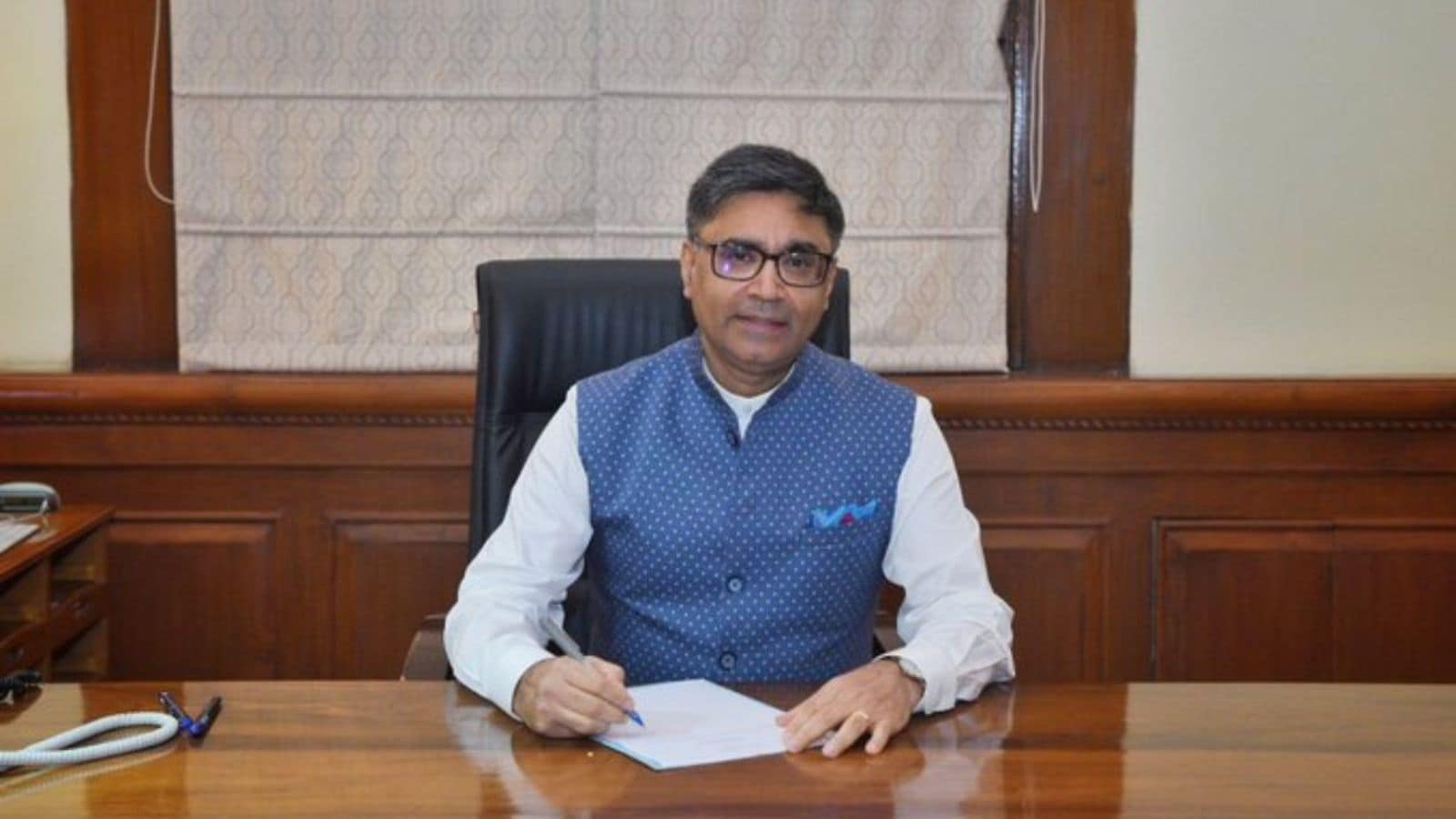
Indian Foreign Secretary Vikram Misri’s arrival in Paris for the India-France Strategic Dialogue on Space marks an operational shift from ceremonial diplomatic alignment to structural defense-industrial integration. While surface-level reporting frames this meeting as routine bilateral diplomacy, the underlying mechanism is an urgent effort by New Delhi and Paris to build a sovereign, non-aligned space architecture capable of surviving contested orbital environments and bypassing single-vendor supply chain bottlenecks.
To evaluate the true output of the Paris dialogue, analysts must strip away diplomatic rhetoric and examine the three core friction points driving both nations toward deeper integration: orbital domain awareness, dual-use launch economics, and the regulatory harmonization required for private sector capital deployment.
The Structural Drivers of the Paris Dialogue
Bilateral space cooperation between the Indian Space Research Organisation (ISRO) and France’s Centre National d'Études Spatiales (CNES) spans over six decades, historically anchored in civilian meteorology and remote sensing missions like Megha-Tropiques and SARAL. However, the elevation of these talks to the Foreign Secretary level—specifically involving Vikram Misri, whose career trajectory includes deep operational experience in national security and strategic affairs—confirms that orbital assets are now treated as primary instruments of terrestrial deterrence.
Three distinct geopolitical and economic pressures dictate the agenda in Paris:
- The Cislunar and Low Earth Orbit (LEO) Congestion Crisis: Both nations face asymmetric threats in LEO, where mega-constellations and counter-space capabilities (such as anti-satellite weapons and co-orbital inspectors) compress decision-making timelines for military commanders. Neither India nor France possesses the standalone global sensor network required for continuous, real-time Space Situational Awareness (SSA). Pooling ground-based radar and optical tracking assets across different hemispheres solves a fundamental physics problem: orbital blind spots.
- The European Launch Deficit and Indian Cost Arbitrage: Europe’s delayed transition from Ariane 5 to Ariane 6, combined with the loss of Russian Soyuz launch capacity, created an acute bottleneck for French commercial and military payloads. India’s Polar Satellite Launch Vehicle (PSLV) and Launch Vehicle Mark-3 (LVM3) offer proven, cost-effective lift capacity, while NewSpace India Limited (NSIL) seeks high-margin European commercial contracts to subsidize domestic R&D.
- Strategic Autonomy Under Great Power Bipolarity: Both New Delhi and Paris operate under doctrines of strategic autonomy, resisting total technological dependence on either Washington or Beijing. Co-developing critical satellite subsystems—such as electric propulsion, high-resolution synthetic aperture radar (SAR), and quantum key distribution (QKD) payloads—insulates both nations from extraterritorial export controls like the U.S. International Traffic in Arms Regulations (ITAR).
Deconstructing the Three Pillars of Bilateral Space Integration
Standard diplomatic coverage treats space cooperation as a monolithic block of "joint missions." In practice, the Paris dialogue operates across three distinct, non-overlapping operational layers, each governed by different risk profiles and capital requirements.
1. Military Space and Orbital Domain Awareness
The primary security deliverable of the dialogue is the operationalization of the 2018 Joint Vision for Space Cooperation and the subsequent establishment of a formal bilateral defense space dialogue. In military terms, a satellite is only as useful as its survivability and the speed of its data downlink.
India’s Defence Space Agency (DSA) and France’s Commandement de l'Espace (CDE) face an identical tactical challenge: transitioning from peacetime reconnaissance to resilient wartime communications. When a rival state deploys jamming, spoofing, or dazzling lasers against an intelligence, surveillance, and reconnaissance (ISR) satellite, the affected nation requires immediate attribution and alternative routing.
By integrating French territories in the Indian Ocean (such as La Réunion) and the Pacific (French Polynesia) with Indian ground stations on the mainland and the Andaman and Nicobar Islands, the two nations create a continuous equatorial and southern-hemisphere tracking belt. This geographic distribution allows for uninterrupted telemetry, tracking, and command (TT&C) coverage. The cause-and-effect relationship is direct: denser ground station geometry reduces latency in orbital debris and threat detection, which in turn increases the maneuver window for high-value military assets.
2. The Maritime Surveillance Engine
The second pillar addresses a concrete terrestrial vulnerability: maritime domain awareness (MDA) across the Indo-Pacific. France is an Indo-Pacific resident power with 1.6 million citizens and over 9 million square kilometers of Exclusive Economic Zone (EEZ) in the region. India’s primary security perimeter encompasses the Indian Ocean Region (IOR), where illicit fishing, submarine transits, and dark-shipping activities require persistent monitoring.
Traditional optical satellites fail under cloud cover and during nocturnal hours. Consequently, the Paris dialogue focuses heavily on the joint development of a constellation equipped with Synthetic Aperture Radar (SAR) and Automatic Identification System (AIS) receivers—specifically advancing the operational architecture behind the TRISHNA (Thermal InfraRed Imaging Satellite for High-resolution Natural Resource Assessment) mission and follow-on maritime surveillance constellations.
The operational logic relies on sensor fusion. When a vessel turns off its AIS transponder to evade detection, an optical satellite might miss it due to monsoon cloud cover. A joint Indo-French SAR constellation penetrates cloud cover to detect the physical hull, cross-references the coordinates with radio-frequency (RF) emission triangulation, and routes the targeting data directly to the Indian Navy’s Information Fusion Centre – Indian Ocean Region (IFC-IOR) in Gurugram. This transforms space assets from passive mapping tools into active maritime interdiction engines.
3. Commercial NewSpace and Supply Chain Localization
The third pillar shifts focus from state-run agencies (ISRO and CNES) to private capital. India’s 2020 space sector reforms and the establishment of the Indian National Space Promotion and Authorisation Centre (IN-SPACe) dismantled ISRO’s statutory monopoly, allowing private startups like Skyroot Aerospace, Agnikul Cosmos, and Pixxel to build launch vehicles and commercial constellations. Simultaneously, France’s France 2030 investment plan allocated €1.5 billion specifically to bolster its domestic NewSpace ecosystem, including firms like Loft Orbital, Unseenlabs, and Exotrail.
However, startups in both jurisdictions suffer from a structural capital mismatch. French startups possess deep engineering specialization in micro-propulsion and RF sensing but struggle with high European manufacturing costs and limited domestic launch cadence. Indian startups benefit from low-cost engineering talent and favorable unit economics for launch and assembly, yet often lack access to space-qualified, radiation-hardened components and institutional venture capital.
The strategic dialogue addresses this by establishing regulatory corridors for cross-border joint ventures. Rather than simple vendor-client transactions, the objective is co-production: pairing French payload electronics with Indian satellite buses and launch vehicles, thereby capturing global market share in the lucrative small-satellite constellation market.
The Friction Points: Where Bilateral Ambition Meets Structural Reality
A rigorous analysis cannot ignore the systemic bottlenecks that threaten to stall these initiatives. Diplomatic communiqués routinely mask severe bureaucratic, legal, and economic frictions that slow actual hardware deployment.
Export Control Asymmetries and Liability Regimes
The primary legal obstacle to commercial integration is the misalignment of export control frameworks and third-party liability laws. While India is a member of the Missile Technology Control Regime (MTCR) and the Wassenaar Arrangement, its domestic export control list (SCOMET) still enforces rigid, slow-moving licensing protocols for dual-use space technologies.
Conversely, French firms operating within the European Union regulatory sphere face strict compliance hurdles when transferring sensitive encryption algorithms, high-precision gyroscopes, or advanced focal plane arrays to non-NATO partners. Furthermore, under the 1972 UN Space Liability Convention, the "launching state" bears absolute international liability for damage caused by its space objects. When a French startup launches a satellite built with German components on an Indian private rocket, determining the precise indemnification cascade requires complex sovereign guarantees that neither bureaucracy currently processes at commercial speed.
The Budgetary Asymmetry Trap
A second limitation lies in the stark disparity between national space budgets and sovereign procurement models. France channels a massive portion of its space expenditure through the European Space Agency (ESA), where the principle of geographical return (juste retour) mandates that ESA invest in a member state's industry an amount roughly proportional to that state's financial contribution. This locks French prime contractors like Airbus Defence and Space and Thales Alenia Space into European supply chains, limiting their latitude to outsource major subsystems to Indian partners.
India operates under an entirely different fiscal constraint. ISRO’s total annual budget hovers around $1.6 billion to $1.8 billion—a fraction of NASA’s or the combined ESA/CNES funding pool. ISRO achieves high mission output through extreme frugality and vertical integration, keeping manufacturing in-house or within tightly controlled domestic public-sector undertakings. Integrating French high-cost engineering into Indian mission architectures often breaks the underlying cost-efficiency model that makes Indian space missions viable in the first place.
The Spectrum and Orbital Slot Bottleneck
As both nations accelerate plans for sovereign LEO communications and Earth observation constellations, they enter direct competition for finite radio-frequency spectrum and orbital inclinations at the International Telecommunication Union (ITU). While diplomatic agreements pledge cooperation, commercial entities in both countries are simultaneously filing competing priority claims for Ka-band and V-band frequencies. Without a bilateral mechanism to deconflict ITU filings prior to submission, Indian and French commercial operators risk neutralizing each other's market access through regulatory interference claims.
Hypotheses vs. Verified Operational Facts
To maintain analytical precision, observers must separate confirmed programmatic commitments from educated strategic hypotheses regarding what happens behind closed doors in Paris.
Verified Operational Facts:
- Institutional Elevation: Foreign Secretary Vikram Misri’s leadership of the Indian delegation confirms that space policy is no longer siloed within the Department of Space; it is now directly integrated into India’s apex foreign policy and national security apparatus.
- Active Joint Missions: The TRISHNA thermal infrared imaging mission is in advanced stages of development, representing a concrete, funded commitment to joint environmental and agricultural monitoring with dual-use terrestrial applications.
- Commercial Facilitation: NSIL and Arianespace maintain an active commercial launch relationship, evidenced by decades of heavy Indian communication satellites launching aboard Ariane rockets from Kourou, French Guiana, which is now evolving into reciprocal launch agreements for European payloads on Indian vehicles.
Educated Strategic Hypotheses:
- Classified SSA Data-Sharing Protocols: It is highly probable that the Paris talks include negotiating encrypted, low-latency data-exchange protocols between the Indian military’s space command structures and France’s military tracking radars (such as the GRAVES space surveillance system) to monitor Chinese naval and orbital movements in the Indo-Pacific.
- Human Spaceflight Subsystem Procurement: With India’s Gaganyaan human spaceflight program moving toward crewed orbital tests, New Delhi is almost certainly utilizing the Paris dialogue to finalize procurement and testing support for French-designed life support systems, spacesuit components, and astronaut medical monitoring telemetry, leveraging CNES’s extensive operational history on the International Space Station.
- Sovereign Quantum Key Distribution (QKD) Trials: Given both nations' heavy investments in quantum communications, the dialogue likely serves as a clearinghouse to establish bilateral testing protocols for satellite-to-ground QKD links, aiming to create a hack-proof diplomatic and military communication channel between New Delhi and Paris.
Tactical Execution: Resolving the Integration Bottlenecks
For the Paris Strategic Dialogue to yield measurable operational advantages rather than a static joint statement, policy architects and industry leaders in both capitals must execute specific structural reforms over the next 18 months.
First, both governments must establish a Bilateral Space Export Fast-Track Mechanism modeled on the U.S.-India Initiative on Critical and Emerging Technology (iCET). This requires pre-approving a specific whitelist of dual-use satellite components—specifically star trackers, reaction wheels, S-band/X-band transponders, and green propellant thrusters—for frictionless transfer between certified Indian and French private entities without case-by-case ministerial sign-offs.
Second, NSIL and CNES should co-structure a Blended Finance Sovereign Venture Fund dedicated exclusively to Indo-French NewSpace joint ventures. By absorbing the initial non-recurring engineering (NRE) costs and underwriting third-party launch liability insurance for joint missions, the two states can de-risk private capital entry and force commercial prime contractors to utilize cross-border supply chains.
Third, military planners from the Defence Space Agency and Commandement de l'Espace must transition from tabletop exercises to live-fire orbital wargaming. Integrating Indian and French ground stations during simulated satellite jamming or anti-satellite kinetic scenarios will expose the exact software, encryption, and latency incompatibilities between the two systems while there is still time to engineer technical patches.
The geopolitical reality of 2026 leaves no room for symbolic space diplomacy. As orbital lanes become congested and contested, the Indo-French partnership will succeed only if Misri and his French counterparts convert historical goodwill into interoperable military hardware, harmonized export laws, and commercially viable supply chains.