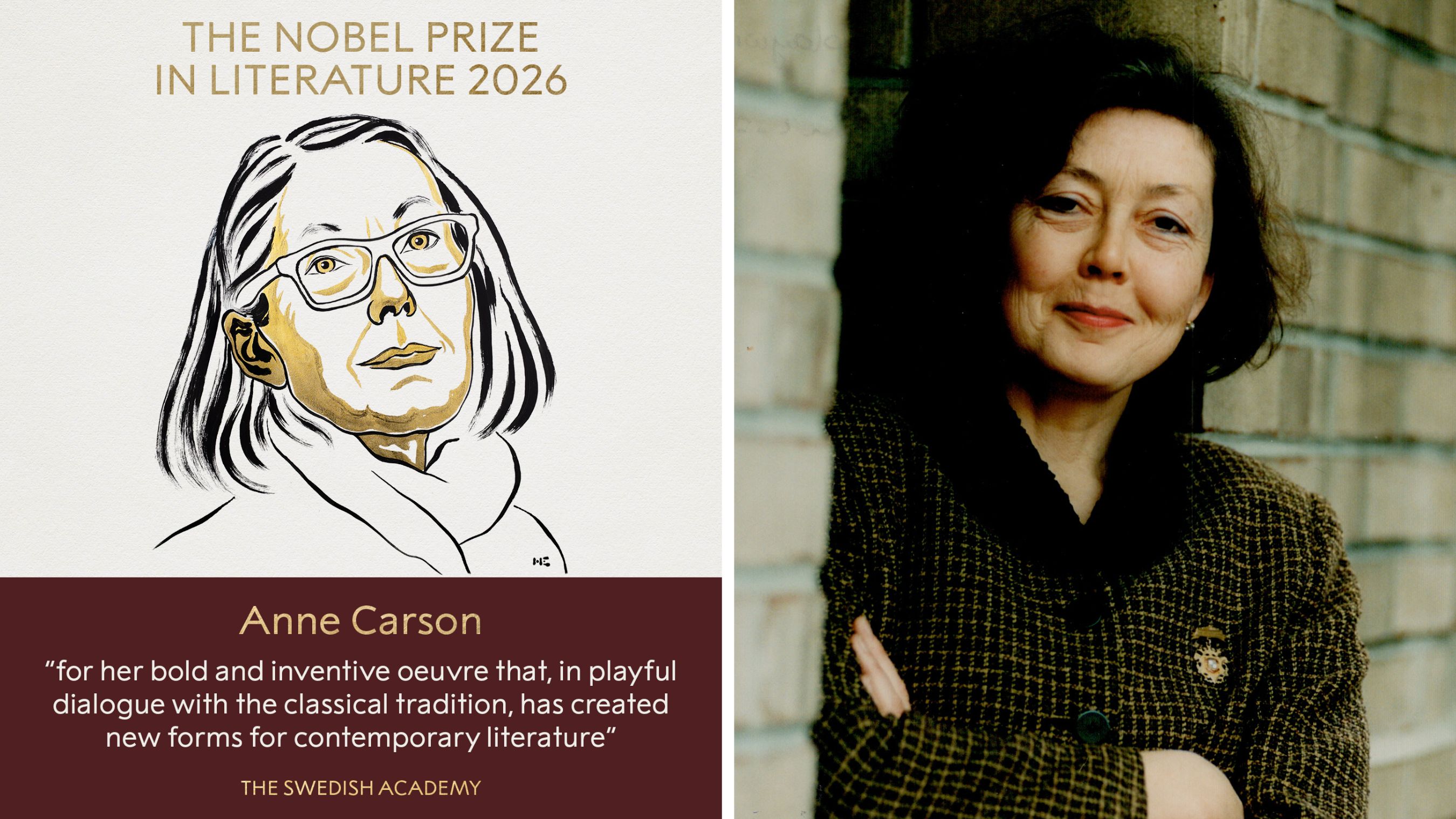
The committee in Stockholm finally handed Anne Carson the Nobel Prize in Literature, and the literary industrial complex is throwing a collective garden party. Twitter feeds are overflowing with breathy quotes from Autobiography of Red and reverent murmurs about her brilliant classicist sensibilities. Everyone is patting each other on the back, pretending this validation means poetry matters to the world at large.
It does not.
In fact, Carson taking home the ultimate literary laurel highlights everything currently rotting at the core of contemporary letters. We are celebrating a writer whose entire career operates as an academic fringe benefit, adored by professors, graduate students, and nobody else. The consensus narrative is that Carson represents the triumph of high intellect merging with poetic form. The reality is much bleaker. Her Nobel victory is the ultimate establishment seal of approval for an art form that long ago retreated from public life to hide inside university gates.
Let us dispense with the polite fiction that Carson is a household name or a cultural force. She is a brilliant translator of Euripides and a formidable intellect who realized early on that modern poetry could survive only by mutating into an institutional subsidy. When the academy loves you this much, you have not conquered literature. You have secured tenure.
The Myth of Accessible Scholarship
For decades, the standard defense of Carson has been her supposed accessibility. Reviewers love to claim that because she writes about motorcycles, Superman, and everyday heartbreak alongside ancient Greek fragments, she bridges the gap between high culture and low. This is a comforting delusion.
Let us look at the mechanics. Carson’s work is a collage of classical scholarship, visual art criticism, and elliptical narrative verse. It requires a baseline familiarity with pre-Socratic philosophy and the geography of ancient Boeotia to fully decode. To call this accessible is to stretch the definition of the word until it snaps. It is elite poetry masquerading as pop-culture-adjacent collage, designed precisely for readers who want to feel intellectually adventurous while remaining safely ensconced in a university seminar room.
When an artist spends their career teaching at NYU and Ann Arbor, producing work subsidized by fellowships and academic presses, they are not speaking to the culture. They are speaking to each other. The Nobel committee loves this ecosystem because it requires zero risk. Rewarding Carson is safe. It honors the safe, credentialed pedigree of a literary landscape that has completely abandoned the populist friction of actual cultural impact.
How Poetry Became an Echo Chamber
Look at how poetry is consumed today. It is not bought in bookstores by people walking down the street. It is assigned on syllabi, analyzed in journals with a readership in the hundreds, and traded as social currency among MFA graduates. Carson is the patron saint of this closed loop.
Imagine a scenario where a major literary prize actually rewarded work that sparked national riots, disrupted political discourse, or forced corporations to change how they operate. It sounds absurd precisely because we have lowered our expectations so completely. We now accept that poetry is a minor, monastic art practiced by specialists for specialists.
Carson’s brilliance is real, but her elevation to the Nobel pantheon signals the final institutionalization of poetry as museum artifact. It is taxidermy. We stuff the best minds of a generation with Greek mythology and literary theory, mount them on mahogany plaques, and marvel at how lifelike they look behind the glass.
The defense will immediately point to her sales figures or her devoted cult following. But let us be honest about scale. A cult following of fifty thousand academics and aspiring poets is a rounding error in a population of eight billion. By anointing Carson, the Nobel committee is not declaring that poetry is vital. They are writing its obituary and carving the epitaph in classic Greek font.
The Cost of Academic Isolation
When you divorce writing from the messy, uncredentialed realities of public commerce, something dies in the language. Carson’s verse is undeniably striking, but it is airless. It is laboratory poetry. It has been filtered through decades of comparative literature departments until every speck of raw, inconvenient dirt has been scrubbed away.
Real literary power used to be dangerous. It used to offend the state, horrify the bourgeoisie, and reach people who never set foot inside a university library. Today, we praise poets for being good at close reading. We reward them for writing blurbs for each other. We treat the Nobel Prize as a lifetime achievement award for maintaining high standards within a completely irrelevant municipal swimming pool.
If poetry wants to survive as a living art rather than an archaeological hobby, it has to stop celebrating its own exile. Anne Carson is a master of that exile. She is the undisputed queen of a country nobody visits.
Stop pretending her Nobel win is a victory for the culture. It is a closed-door coronation for an institution that forgot how to speak to anyone outside its own payroll.


