The British political press loves a coronation, even when the crown is made of papier-mâché.
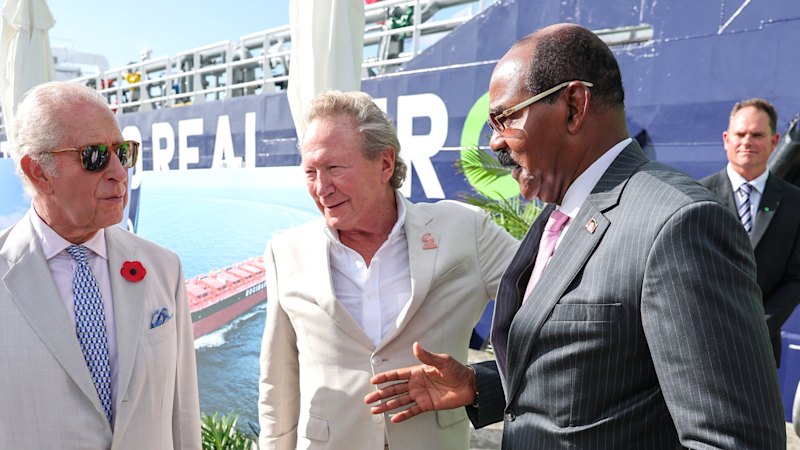
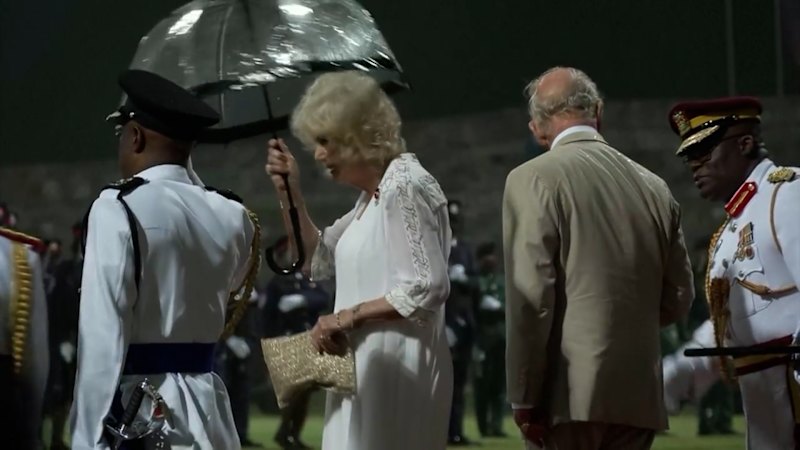
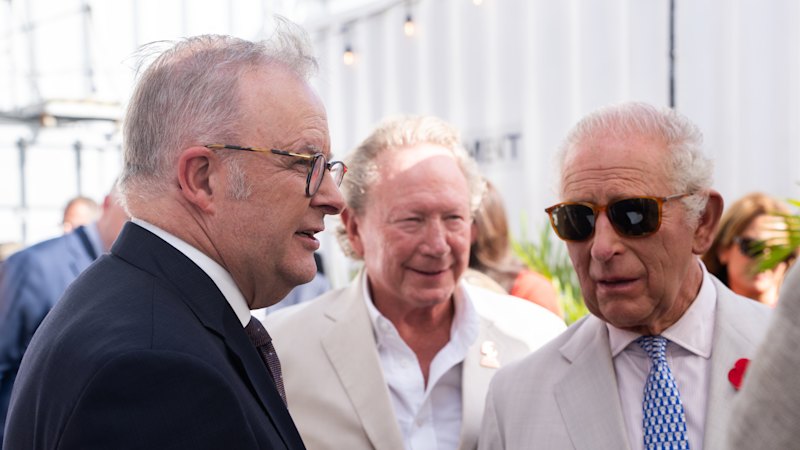
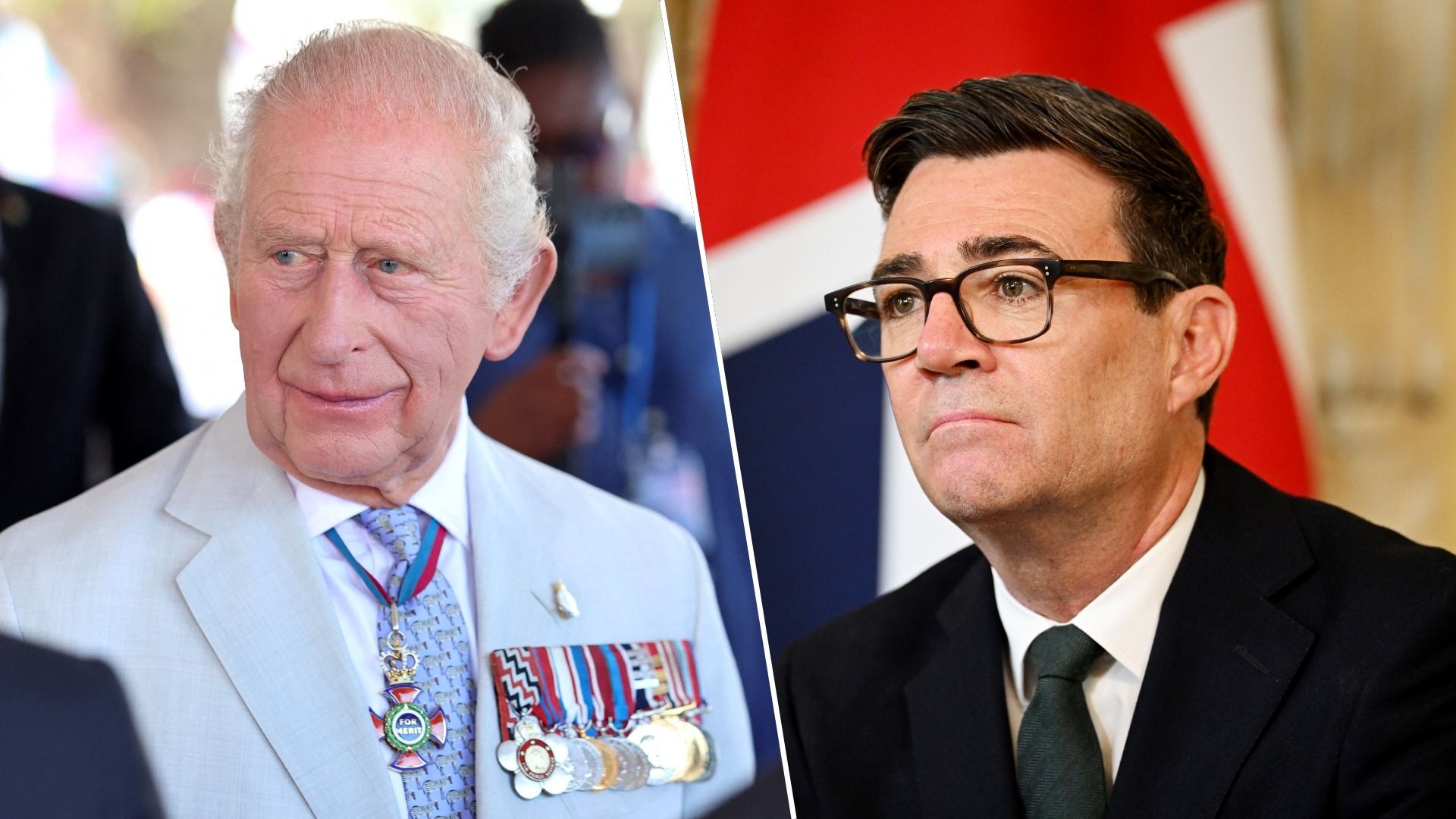
When Andy Burnham boards a plane to join King Charles III in the Caribbean, the headlines practically write themselves. The "King of the North" goes south to "reshape the Commonwealth." Pundits treat this diplomatic field trip as a masterstroke of soft power, a progressive reinvention of a post-imperial club that has been drifting toward irrelevance since the Berlin Wall fell. For another look, see: this related article.
They are completely wrong.
Sending a regional British mayor to a Caribbean summit does not reshape a 56-nation geopolitical bloc. It exposes the sheer desperation of a British establishment that still believes charm, ceremonial handshakes, and domestic political stars can paper over massive structural, economic, and historical fractures. The lazy consensus claims that the Commonwealth just needs a modern face and a fresh PR strategy to thrive in the twenty-first century. The reality is far colder: the organization suffers from a terminal lack of shared economic self-interest, and no amount of Mancunian charisma will change the balance sheet. Further analysis on this matter has been published by The Guardian.
The Illusion of the Soft Power Fix
For decades, Whitehall has operated under a comforting delusion. Whenever former colonies threaten to ditch the British monarch as head of state—as Barbados did in 2021, and as Jamaica and Belize have repeatedly signaled they intend to do—London dispatches a senior figure to remind everyone of their "shared values" and "historical ties."
Usually, that job falls to working royals. When those tours turn into public relations disasters—like Prince William and Kate Middleton’s 2022 Caribbean trip, which was dogged by protests over slavery reparations and colonial imagery—the strategy shifts. Enter Andy Burnham.
The logic from the spin doctors is obvious. Burnham is popular. He represents post-industrial Britain, not aristocratic privilege. He speaks the language of devolution, regional equality, and working-class grit. By placing him alongside King Charles, Downing Street and Buckingham Palace hope to project a modern, egalitarian Britain that understands the struggles of smaller, overlooked nations.
Here is the problem with that theory: geopolitics is not a domestic focus group.
I have watched countless corporate mergers and international trade coalitions blow millions on rebranding exercises when the underlying value proposition was broken. You cannot solve a solvency crisis with a new logo, and you cannot solve a geopolitical realignment with a likable mayor. Caribbean leaders are not looking for a sympathetic ear from Greater Manchester. They are looking for hard capital, debt restructuring, and climate adaptation funding on a scale that Britain simply cannot—or will not—provide.
Follow the Money, Not the Handshakes
To understand why the "Burnham reshapes the Commonwealth" narrative is pure fantasy, look at the actual flow of capital in the Caribbean over the last fifteen years.
While British politicians deliver speeches about parliamentary democracy and the rule of law, Beijing has been pouring billions of dollars into ports, highways, stadiums, and energy grids across the region through its Belt and Road Initiative. From Kingston to Port of Spain, infrastructure is being built with Chinese loans and Chinese state-owned enterprises.
Meanwhile, what does Commonwealth membership actually offer a Caribbean nation in hard economic terms?
- Zero binding trade advantages: The Commonwealth is not a trading bloc. It has no customs union, no single market, and no unified tariff schedule. Post-Brexit trade deals between the UK and Caribbean nations (such as the CARIFORUM-UK Economic Partnership Agreement) largely just rolled over existing EU terms rather than creating bold new wealth.
- Diminishing aid budgets: The UK slashed its official development assistance target from 0.7% of Gross National Income down to 0.5%, gutting billions from overseas aid programs. You cannot lecture nations on shared destiny while cutting the checks that fund their resilience.
- Restrictive visa regimes: Despite all the rhetoric about a "family of nations," citizens from Commonwealth Caribbean countries face steep, expensive, and notoriously hostile UK immigration and visa barriers—a wound that never healed after the Windrush scandal.
Imagine a scenario where you are the Prime Minister of a small island developing state facing existential threats from rising sea levels and crushing sovereign debt. On one side of the table sits a representative offering a multi-million-dollar concessional loan to build a deep-water port today. On the other side sits a British delegation offering a cultural exchange program, a speech about green transition goals, and a photo opportunity with the Mayor of Greater Manchester.
Which deal do you sign? Every single time, you take the port.
What Does the Commonwealth Actually Do?
People constantly ask what the Commonwealth even does anymore, and the standard textbook answer lists election monitoring, youth networks, and the Commonwealth Games. Those are pleasant peripheral activities. They are not the foundations of a serious international power bloc.
Let us define terms precisely. A geopolitical bloc requires either a shared security guarantee (like NATO), a binding economic framework (like the European Union or Mercosur), or an ideological enforcement mechanism. The Commonwealth has none of these.
Its own Charter claims a commitment to democracy, human rights, and the rule of law. Yet the organization routinely looks the other way when member states slide into authoritarianism, criminalize minority groups, or rig elections. Because the bloc operates on consensus and fears losing members to rival spheres of influence, its enforcement teeth were pulled decades ago.
Even its flagship sporting event, the Commonwealth Games, is on life support. Victoria, Australia, abruptly canceled hosting the 2026 games due to exploding costs, leaving organizers scrambling to find a scaled-down replacement in Glasgow. When countries do not even want to host your party, claiming the organization is on the verge of a grand renaissance requires Olympic-level mental gymnastics.
The Reparations Elephant in the Room
The deepest flaw in the mainstream coverage of Burnham’s Caribbean trip is how casually it sidesteps the issue of reparatory justice.
For the nations of CARICOM (the Caribbean Community), the defining diplomatic issue with the United Kingdom is not regional devolution or green tech partnerships. It is the legacy of the transatlantic slave trade. CARICOM has a formal ten-point plan demanding a full formal apology, debt cancellation, public health investments, and wealth transfer from former European colonial powers.
Both the British government and the Royal Family have spent years dodging the word "reparations," offering carefully worded expressions of "profound sorrow" instead. They know that admitting legal or financial liability opens the door to trillions of dollars in claims that the British Treasury cannot survive.
Sending Andy Burnham into this environment does nothing to resolve the core tension. In fact, it highlights the asymmetry of the relationship. Burnham’s entire political brand is built on fighting for Westminster to redistribute wealth and power to the North of England—a region neglected by London elites. Caribbean leaders are asking London to redistribute wealth and power to nations exploited by the British Empire.
The intellectual parallel is obvious, which is precisely why it is so dangerous for London. If Burnham validates the argument that centralized British wealth was built on the extraction of value from the periphery, he accidentally makes CARICOM’s case for them. If he dodges it to protect Downing Street’s Treasury line, he looks like just another establishment envoy reading from the Foreign Office script.
Why Britain Keeps Clinging to the Ghost
If the economic returns are negligible and the diplomatic friction is constant, why does the British political class remain obsessed with "reshaping" the Commonwealth?
Because without it, Britain has to confront its true post-Brexit reality: a mid-sized, debt-laden European island nation with shrinking military capacity and no obvious sphere of influence.
For eighty years, British foreign policy has relied on Winston Churchill’s famous "three circles" doctrine—the idea that Britain sits uniquely at the intersection of the United States, Europe, and the Empire/Commonwealth. Brexit severed the European circle. The "special relationship" with Washington has become entirely transactional, where London follows American lead on defense and tech policy in exchange for polite applause.
That leaves the Commonwealth as the last remaining stage where Britain gets to play the role of global convener. It is psychological comfort food for an establishment that cannot accept a diminished global footprint.
Critics of my view will argue that abandoning or downgrading the Commonwealth would be an act of diplomatic self-harm. They will point out—correctly—that having a regular forum where 56 nations, representing a third of the world’s population, sit in the same room has baseline value. Channels of communication matter, especially when smaller island nations need a platform at global climate summits like COP to amplify their survival demands.
That is a fair point, as far as it goes. Talking is better than not talking.
Stop Reshaping and Start Accepting
Where the establishment goes wrong is mistaking a networking forum for a power base.
If Britain wants actual influence in the Caribbean and across the Global South, it needs to stop treating the Commonwealth as a vehicle for British prestige and start treating member states as sovereign equals with hard commercial interests. That means replacing ceremonial diplomacy with aggressive, targeted capital investment. It means reforming punitive visa systems so Commonwealth citizens can actually study, work, and build businesses in the UK without navigating a bureaucratic maze designed to keep them out.
Most of all, it means dropping the savior complex.
Andy Burnham is a skilled politician who knows how to fix bus routes in Manchester and negotiate regional budgets with Whitehall. That does not make him an architect of global diplomacy. Putting him on a plane with King Charles will generate a few flattering headlines in the London papers, a handful of well-lit photographs on Caribbean beaches, and zero structural change to the balance of global power.
The Commonwealth does not need to be reshaped by a British mayor. It needs Britain to stop pretending it is still running the show.