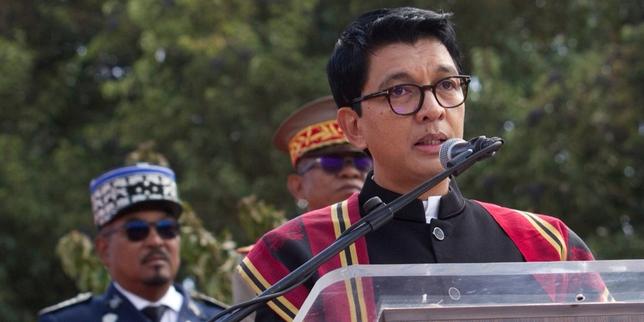
One year after fleeing Antananarivo in October 2025, ousted former President Andry Rajoelina is living largely in exile in Dubai—and still holding out hope for a political comeback on the island. That ambition runs straight into a brutal reality check. A comeback isn't just an uphill battle right now; it faces constitutional hurdles, active anti-corruption investigations, and a street movement that already toppled him once.
Anyone watching Madagascar politics closely knows this isn't Rajoelina's first brush with dramatic exits and dramatic returns. He first seized power in 2009 at age 34 with military backing, spent years in political wilderness and exile, and fought his way back into the presidency in 2019 before winning re-election. To his supporters, that history proves he has nine political lives. To his critics, it proves the island keeps paying a heavy price for power struggles that recycle the same faces. If you liked this post, you might want to read: this related article.
How the 2025 uprising and military shift forced Rajoelina out
The collapse didn't start in a backroom coup plot alone. It started in the streets over basic daily frustrations.
Starting on September 25, 2025, waves of protests—heavily driven by young Malagasy activists and Generation Z organizers—erupted across Madagascar over chronic power cuts, water shortages, inflation, and perceived corruption. When frustration hits the point where people can't keep the lights on or get clean water in Antananarivo, political speeches stop working. Dismissing the energy minister or shuffling prime ministers didn't cool things down. For another look on this story, refer to the latest update from Associated Press.
Then came the breaking point that every Malagasy leader dreads: the military broke ranks. Soldiers from the elite CAPSAT unit—the very formation that helped propel Rajoelina into power back in 2009—refused orders to crack down and sided with the momentum against him. By mid-October 2025, Rajoelina had left the country under disputed circumstances, lawmakers voted to impeach him, and CAPSAT commander Colonel Michael Randrianirina moved to take charge of the transition.
Political analyst John Joseph Chin described the events as a "coupvolution," capturing how street protests and military defection collided at once. If you've followed modern youth-led uprisings from South Asia to East and Southern Africa, that collision feels familiar. Online anger gave the movement speed and viral pressure, while security-force fractures gave it teeth.
What stands between Andry Rajoelina and a comeback in 2026
Dreaming of a return is easy from abroad. Actually pulling it off after a year away is another story entirely.
First, there's the legal and citizenship fallout. Because Rajoelina acquired French citizenship in 2014, his critics and opponents seized on nationality rules that stripped him of Malagasy nationality following his ouster. Dual citizenship has been a hot-button flashpoint in Malagasy politics for years, and losing Malagasy nationality cuts right through the basic legal foundation anyone needs to run for office or reclaim standing at home.
Second, legal exposure has tightened. In late October 2026—just past the one-year mark of the upheaval—Madagascar's High Constitutional Court confirmed the jurisdiction of the anti-corruption court to examine cases involving Rajoelina, former Prime Minister Christian Ntsay, and other former officials, including probes tied to missing gold and state funds. Even where legal proceedings are subject to due process and presumption of innocence, stepping back onto the tarmac at Ivato International Airport carries huge legal and political risk.
Third, the ground underneath his political network has shifted. A year out of office is a long time in a volatile political system where alliances bend quickly toward whoever controls state institutions, security forces, and patronage. Reporting from regional outlets in October 2026 noted that Rajoelina remains largely based in Dubai, far from the daily street and political bargaining in Antananarivo.
Why Madagascar's transition is bigger than one politician
Honesty check: focusing solely on whether Rajoelina can claw his way back misses the bigger question hanging over Madagascar in late 2026. Will the military-led transition under Colonel Michael Randrianirina actually hand power back to a credible civilian government on schedule?
Randrianirina pledged a transition roadmap aimed at returning to elections within an 18-to-24-month window, drawing mixed reactions abroad. The African Union suspended Madagascar over the unconstitutional change of government, while the Southern African Development Community (SADC) pushed for inclusive dialogue, a transition roadmap, and eventual elections. Meanwhile, major external players—from France and the World Bank to the United States, with AFRICOM officials visiting Antananarivo in early November 2026 to discuss Indian Ocean security and maritime resources—are watching how stability shapes trade and strategic leverage in the Mozambique Channel.
Yet experts at institutions like the Institute for Security Studies have pointed out a sobering continental pattern: military leaders who seize power across Africa frequently promise quick returns to civilian elections, then stretch timelines or reshape the rules. That doesn't mean Madagascar is doomed to repeat West Africa's worst delays, nor does it mean Randrianirina faces zero pressure. Domestic economic strain, power and water service demands, and regional scrutiny all press on the authorities.
Common misconceptions about Madagascar's crisis
People outside the region often flatten Madagascar's politics into a simple rivalry between two men. That's a mistake.
- Misconception: Gen Z protesters wanted a military junta. Not quite. Young protesters mobilized against bad governance, blackouts, water shortages, and corruption; military intervention changed the balance of force, but street frustration and institutional breakdown were already boiling.
- Misconception: Rajoelina's 2009 comeback proves a 2026 or 2027 return is likely. Past comebacks don't guarantee future ones. Back in 2009–2019, the political chessboard and legal barriers looked very different than they do after a 2025 impeachment, nationality disputes, and anti-corruption probes.
- Misconception: Foreign powers control every turn in Antananarivo. Outside capitals—whether in Paris, Washington, Pretoria, or elsewhere—matter for diplomacy, aid, and Indian Ocean security, yet internal Malagasy politics, military cohesion, and economic survival drive what happens day to day.
Practical ways to track what happens next
If you want to follow whether Andry Rajoelina's hopes of returning to Madagascar go anywhere—or whether the island actually reaches credible elections—don't rely on rumors from exile accounts alone. Keep an eye on concrete signals:
- Watch official transition milestones and electoral calendars: Track announcements from Madagascar's electoral authorities, national dialogue bodies, and SADC/AU communiqués to see if timelines hold or slip.
- Follow court and anti-corruption rulings: Pay attention to decisions by Madagascar's High Constitutional Court and anti-corruption authorities regarding former officials and legal eligibility.
- Check everyday indicators on the ground: Power stability, water supply, rice and living costs, and security conditions in Antananarivo and regional hubs tell you far more about political durability than grand statements from abroad.
- Cross-check multiple credible sources: Compare reporting from established international and regional outlets—such as ISS Today, TV5MONDE, and major wire services like AP—so you separate wishful thinking from verified facts.