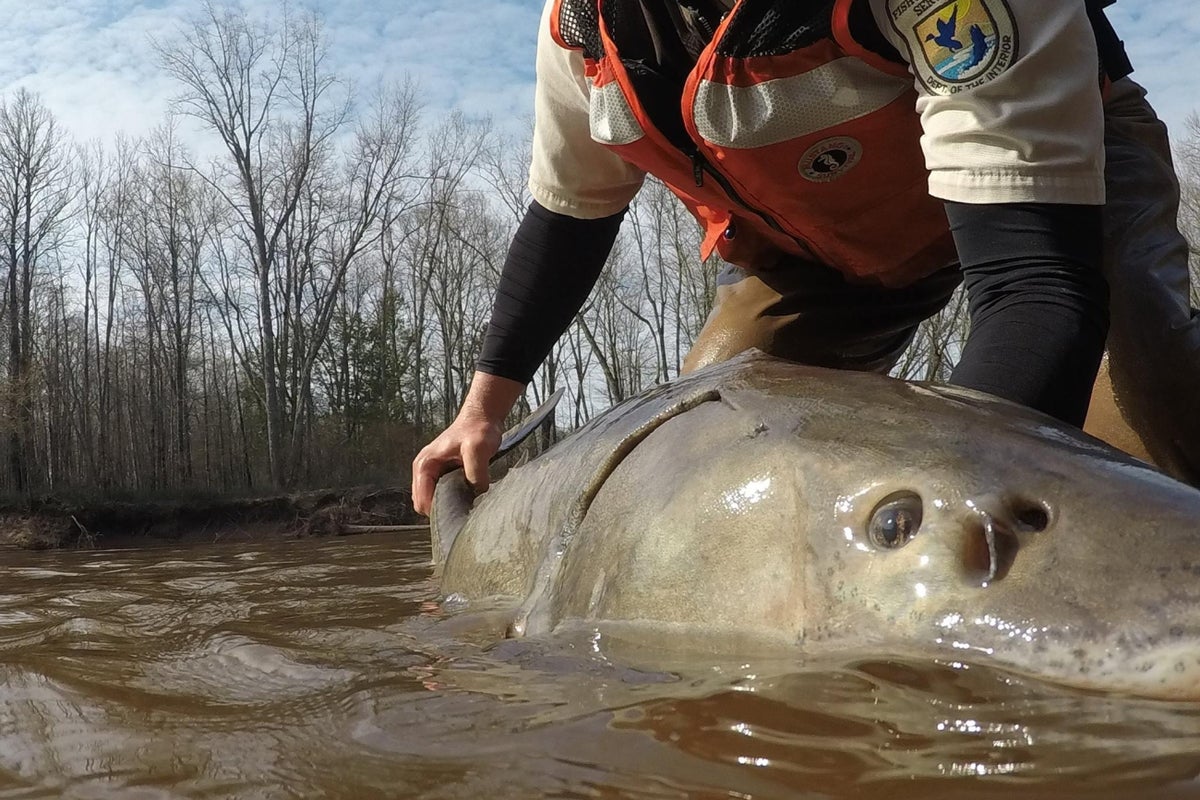
Recent scientific findings reveal that certain fish swimming in the Great Lakes could be upward of four hundred years old, rewriting our understanding of aquatic longevity in freshwater ecosystems. Lake sturgeon (Acipenser fulvescens) lurking in the cold, deep basins of North America's inland seas are quietly surviving for centuries, having hatched during an era when European powers were first mapping the continent. These living fossils represent a biological marvel, yet their extreme age exposes a grim vulnerability that resource managers have struggled to address for generations.
The Biological Engine of Extreme Longevity
How do fish survive for centuries in environments that experience brutal seasonal shifts, industrial pollution, and intense predatory pressure? The answer lies in the unique evolutionary strategy of the lake sturgeon. They possess a slow metabolic rate, delayed sexual maturity, and a cartilaginous skeleton that requires less energy to maintain than the bony structures of modern teleost fish. Females do not spawn every year; they might wait up to nine years between reproductive cycles, channeling their energy into cellular repair and sheer survival rather than rapid population turnover. Recently making headlines in related news: The Lines We Draw Across the Water.
Biologists tracking these ancient swimmers use a combination of non-destructive fin ray analysis and passive integrated transponder tagging. When researchers saw the data coming back from specimens caught in Lake Superior and the St. Clair River system, the implications were stark. These are not merely large fish. They are slow-growing archives of environmental history, accumulating heavy metals, PCBs, and shifting chemical signatures in their fin bones over hundreds of years.
A History of Industrial Devastation
The survival of four-century-old fish in the Great Lakes is nothing short of miraculous given what humanity has thrown at these waterways since the nineteenth century. Commercial overfishing decimated sturgeon populations in the late 1800s, when fishermen viewed them as nuisances that tore up nets designed for whitefish. Crews hauled tons of sturgeon onto shores simply to burn them on beaches or use them as fuel for steamboats. Further insights into this topic are covered by The Washington Post.
Dams compounded the crisis. The construction of hydroelectric facilities and shipping locks blocked access to the shallow, gravel-bottomed rivers where sturgeon migrated to spawn. A fish that can live for four centuries suddenly found its ancestral highways cut off by concrete barriers.
"When you disrupt a species that takes twenty-five years just to reach sexual maturity, you are not dealing with a standard fisheries management problem. You are managing a creature with a generational timeline that spans human empires."
👉 See also: The End of the Waiting Game
The Modern Threat Matrix
Today, sturgeon face a different kind of war. Habitat fragmentation remains a primary obstacle, but climate change introduces a destabilizing variable. Warming water temperatures in the shallow bays of the Great Lakes accelerate metabolic rates in cold-adapted species, potentially shortening the lifespan of specimens that rely on cold, oxygen-rich depths to maintain their slow-burn biology.
Furthermore, invasive species have reengineered the food web. Quagga and zebra mussels strip the water column of nutrients, altering the benthic communities where juvenile sturgeon find their primary food sources, such as chironomid midges and amphipods.
Conservation hatcheries in Michigan, Wisconsin, and Ontario are attempting to bridge the gap through stocking programs and artificial spawning reefs. Yet, these interventions are a drop in the bucket. Restoring a four-hundred-year life cycle requires protection policies that outlast political administrations and industrial cycles.
As these ancient giants cruise the dark, silent trenches of the Great Lakes, they carry the weight of centuries in their fins, waiting to see if modern society can learn to share the water before their extraordinary lineage runs out of time.