The security architecture of modern zoological facilities relies on a multi-layered containment strategy designed to isolate dangerous fauna from the public. When an unauthorized individual breaches these physical boundaries—specifically involving a high-risk apex predator enclosure like a crocodilian exhibit—the event represents a catastrophic failure of both environmental design and behavioral monitoring. Analyzing these incidents requires moving past sensationalized reporting to examine the precise mechanical, structural, and psychological variables that govern asset containment and rapid rescue deployment.
Understanding the mechanics of a containment breach involves assessing three distinct vectors: the physical barrier matrix, the predator response latency, and the emergency intervention protocol. Also making waves in this space: The Razor Edge of a Broken Promise.
The Tripartite Barrier Matrix and Vulnerability Vectors
Zoological containment systems do not rely on a single wall or fence. Instead, they operate as a redundant matrix engineered to mitigate specific risk profiles. A standard high-risk enclosure incorporates three primary defensive layers, each possessing distinct engineering tolerances and failure modes.
Perimeter Enclosure Geometry
The outermost boundary utilizes non-climbable materials, structural overhangs, or ballistic-grade viewing glass. In crocodilian exhibits, this barrier is typically optimized for vertical height and smooth surface textures to prevent the animals from escaping. However, the engineering specifications rarely account for an external force actively transporting a secondary asset over the threshold. The vulnerability here is directional; the barrier is designed to keep force in, not to prevent a malicious or irrational actor from applying external force to bypass the perimeter. More insights on this are covered by Al Jazeera.
Buffer Zones and Spatial Decoupling
Between the public viewing area and the primary animal habitat lies a structural void or moat. This buffer zone serves a dual purpose: it creates a psychological distance that reduces animal stress and provides a physical drop zone to slow down unauthorized entry. The depth and topography of this zone dictate the kinetic impact of a fall. A three-year-old child possesses a lower body mass index and different skeletal elasticity than an adult, meaning a fall into a buffer zone introduces severe deceleration trauma before any animal interaction occurs.
The Thermal and Aquatic Boundary
Crocodilian enclosures require precise microclimates, combining deep water bodies with heated basking banks. The positioning of these elements relative to the public viewing platform determines the immediate threat level during a breach. If the drop zone terminates directly in the aquatic zone, the asset faces an immediate dual threat of drowning and ambush predation. If the drop zone terminates on a basking bank, the threat profile shifts to territorial aggression.
Crocodile Predatory Mechanics and Kinetic Latency
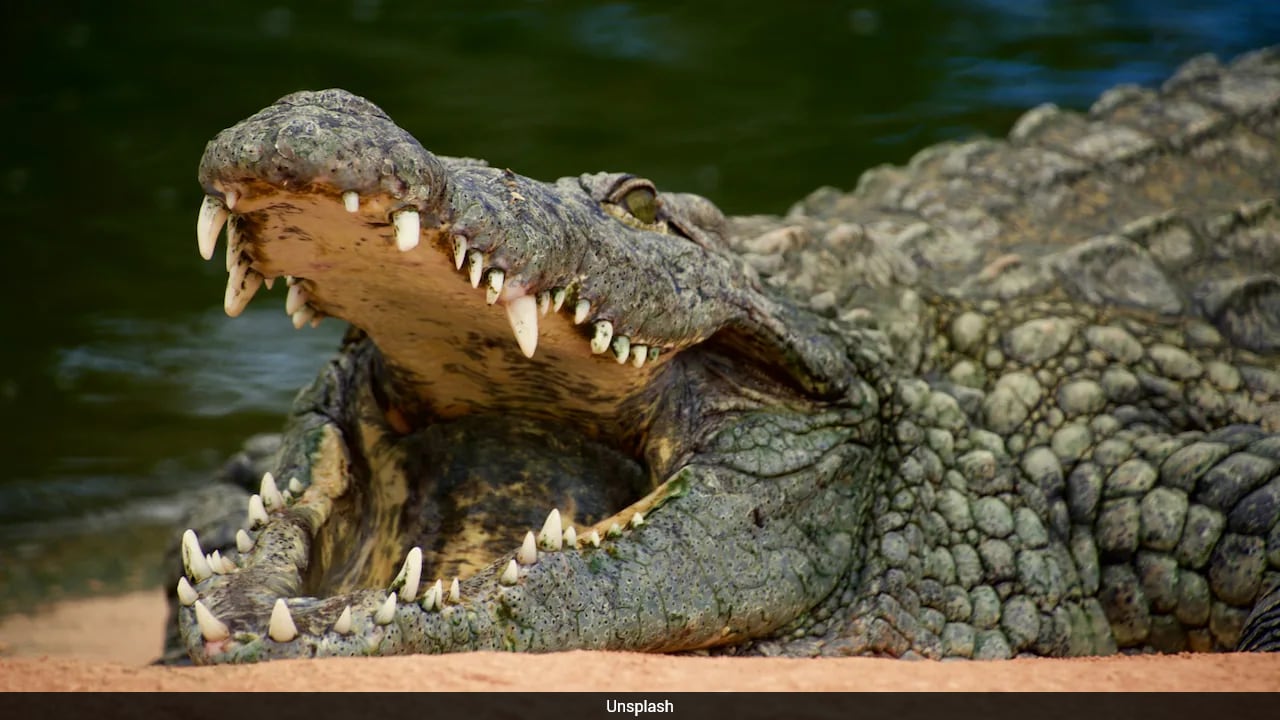
Evaluating the survival window of a human asset within a crocodile enclosure requires a cold calculation of reptilian physiology and predatory behavior. Large crocodilians, such as Nile crocodiles (Crocodylus niloticus) or Estuarine crocodiles (Crocodylus porosus), operate as opportunistic ambush predators. Their hunting strategy relies on energy conservation, meaning their response to an environmental disruption follows a predictable, highly calibrated sequence.
[Enclosure Breach]
       │
       ▼
[Kinetic Impact / Splash] ──► (Acoustic & Visual Stimulus)
       │
       ▼
[Predatory Latency Phase] ──► (Assessment of Target Mass/Movement)
       │
       ▼
[Striking Phase] ───────────► (Closing Speed: 12-15 m/s via Tail Propulsion)
       │
       ▼
[Mechanical Engagement] ────► (Crushing Force: Up to 3,700 psi / Death Roll)
The kinetic impact of an object hitting the water or ground triggers an immediate acoustic and visual stimulus. Crocodilians possess pressure-sensitive receptors (integumentary sensory organs) along their jaws that detect minute vibrations in water.
This brings us to the predatory latency phase. Unlike mammalian predators that may investigate out of curiosity, a crocodilian calculates the caloric expenditure required for a strike versus the size of the target. A small child presents a low-mass target, which can paradoxically accelerate the predatory strike sequence because the animal perceives minimal risk of self-injury during the engagement.
Once the latency phase expires, the striking phase begins. In water, a crocodile can achieve closing speeds of 12 to 15 meters per second using lateral tail propulsion. The mechanical force of a crocodilian bite is unmatched in the animal kingdom, reaching pressures up to 3,700 pounds per square inch (psi). This force is designed to crush bone and induce immediate trauma, followed by the "death roll"—a rotational maneuver used to dismember prey and submerge it to induce drowning.
The survival window for a three-year-old child dropped into this environment is therefore measured in seconds. Any successful intervention must exploit the initial predatory latency phase before the mechanical engagement phase begins.
Human Intervention Dynamics and Risk Mitigation Logistics
When an external actor intentionally creates a breach by throwing a vulnerable asset into the enclosure, the system enters an unmapped operational state. The extraction of the asset under these conditions demands a high-velocity human intervention that violates standard safety protocols to exploit the predator's brief cognitive delay.
A successful rescue relies on three distinct operational variables.
- Distraction Kinetics: Diverting the apex predator's attention requires generating a higher-intensity stimulus elsewhere in the enclosure. This can involve splashing the water surface at a distance, throwing heavy objects near the animal to trigger a defensive posture, or direct physical confrontation.
- Asset Retrieval Velocity: The rescuer must minimize time-on-target. Entering the containment area requires executing a rapid descent, securing the child using a secure hold that supports the spine against prior fall trauma, and exiting before the crocodile can recalibrate its striking vector.
- Physical Deterrence: If the crocodile closes the distance, the rescuer must target the animal's highly sensitive anatomical zones—specifically the eyes, nostrils, or the palatal valve at the back of the throat. Disrupting these areas forces a defensive release mechanism.
The primary limitation of this rescue model is the extreme asymmetry of capability. A human operator possesses no structural protection against a crocodilian strike within the enclosure. The intervention relies entirely on surprise and velocity; if the predator transitions from the latency phase to the striking phase while the rescuer is in the zone, the casualty rate doubles instantly.
Structural Redesign for Malicious Breach Prevention
Relying on human heroism to mitigate security failures is an unsustainable operational strategy. The occurrence of an intentional breach by a third party highlights a critical flaw in current zoological design standards: the assumption that public behavior is universally benign or predictable.
To permanently close these vulnerability vectors, facilities must transition from passive structural barriers to active, intelligent containment ecosystems.
Cantilevered Inward Gradients
Perimeter fences must be redesigned with an aggressive inward angle (minimum 45 degrees) combined with a high-friction, transparent shield. This geometry makes it mechanically difficult for an adult to lift and push an object or person over the top without losing their balance or leverage.
Automated Distraction Arrays
Enclosures should be outfitted with automated, non-lethal deterrent arrays. In the event of an unscheduled weight displacement in the buffer zone or water, high-frequency acoustic transducers and localized pneumatic water cannons should deploy instantly. These systems overwhelm the crocodilian’s sensory receptors, forcing them to retreat to deep water and effectively extending the rescue window indefinitely.
Segmented Habitat Zoning
Modern exhibits must implement rapid-isolation gates. By partitioning the enclosure into interlocking zones managed by automated motion-tracking cameras, the facility can drop hydraulic gates to isolate the predators from the breach zone within three seconds of an unauthorized entry detection.
The management of zoological assets requires balancing public accessibility with absolute containment integrity. When malicious human intent introduces a high-risk variable into this equation, passive systems fail. Elevating safety standards demands acknowledging these structural limitations and embedding active, automated defensive technologies directly into the architectural layout of the habitat.