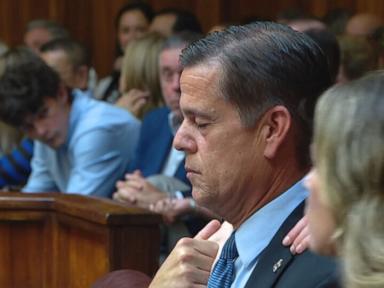
Criminal liability in high-speed maritime accidents is governed by a distinct legal reality: the absolute friction between open-water operational dynamics and the statutory thresholds required for felony convictions. The acquittal of George Pino in a Miami-Dade County courtroom—following a 2022 Biscayne Bay vessel collision that resulted in the drowning of 17-year-old Luciana Fernandez and the permanent disability of Katerina Puig—highlights a systemic challenge for prosecutors. When a 29-foot Robalo center-console boat striking a fixed concrete channel marker leads to an acquittal on charges of manslaughter and vessel homicide, it exposes the structural gap between catastrophic outcomes and criminal recklessness under maritime law.
To secure a felony conviction for manslaughter or vessel homicide under Florida law, the state must prove a standard of "gross negligence" or "reckless operation" that mirrors the criminal intent required for manslaughter on land. The defense successfully disrupted this argument by demonstrating a critical vulnerability in maritime prosecution: the difficulty of separating a tragic navigating error from criminal non-compliance when environmental variables, physical trauma, and systemic investigative gaps intersect.
The Three Pillars of Maritime Criminal Defensibility
The prosecution's failure to secure a guilty verdict after less than two hours of jury deliberation can be broken down into three distinct operational and evidentiary elements.
1. Evidentiary Void and the Absence of Objective Baseline Metrics
The foundation of any criminal impairment case relies on blood-alcohol concentration (BAC) or toxicological verification. In this instance, first responders and investigators failed to preserve a toxicological profile of the vessel operator immediately following the crash.
This investigative failure fundamentally altered the case's legal parameters. Without objective baseline metrics, the state could not argue statutory intoxication. Instead, prosecutors had to rely on a subjective narrative of behavioral impairment, trying to piece together a timeline of social alcohol consumption at an Elliott Key sandbar.
The defense capitalized on this gap by introducing testimonies from eyewitnesses who observed the operator immediately prior to the collision. These witnesses testified to a complete lack of visible impairment, creating immediate reasonable doubt. When a state's case moves from objective biochemistry to subjective observation, the probability of a felony conviction drops significantly.
2. The Biomechanical Trauma Defense
A central strategy for the defense was refuting the state's claim that the operator was "slow to assist" victims in the water—a point the prosecution used to infer a reckless disregard for human life. The defense shifted the explanation from cognitive impairment to biomechanical trauma.
Medical records, emergency medical services documentation, and hospital intake data revealed that the operator sustained severe physical trauma during the impact, including fractured teeth and a scalp hematoma requiring seven surgical staples. The defense introduced expert medical testimony to establish that the impact created a plausible mechanism for a traumatic brain injury (TBI) accompanied by immediate, documented unconsciousness.
[Vessel Impact: High-Speed Deceleration]
                  │
                  ▼
    [Maxillofacial & Cranial Trauma]
                  │
                  ▼
    [Documented Loss of Consciousness]
                  │
                  ▼
[Biomechanical Incapacity vs. Criminal Neglect]
By establishing physical and cognitive incapacity caused by the collision itself, the defense removed the element of conscious choice required to prove criminal neglect during the critical post-accident rescue window.
3. The Hydrodynamic Variables of Open-Water Navigation
Unlike highway systems with fixed lanes and highly predictable friction coefficients, the maritime environment is governed by dynamic hydrodynamics. The prosecution argued that because GPS data showed the operator had frequently traversed the specific channel near Boca Chita Key, and because the concrete channel marker was painted in high-visibility green, striking the object was inherently reckless.
The defense countered using a hydrodynamic wake theory, supported by consistent civil and criminal filings. The operator maintained that an unidentified vessel traveling northbound generated an unexpected, significant wake. In open water, a sudden wave can immediately alter a vessel's tracking, cause hull chine-walking, or disrupt line-of-sight visibility during a critical turning maneuver. Because the state could not definitively disprove the presence of this hydrodynamic variable, the striking of a fixed object was successfully reframed from criminal recklessness to an unavoidable navigation hazard.
The Systemic Disconnect in Statutory Thresholds
The legal strategy in this trial illustrates a broader challenge in maritime law: the vast gap between civil negligence and criminal culpability. While a civil lawsuit—such as the ongoing litigation filed by the Puig family—uses a lower "preponderance of the evidence" standard to determine financial liability for permanent disability, criminal homicide requires proof beyond a reasonable doubt that the operator displayed a gross, flagrant disregard for safety.
The defense actually attempted to include a lesser misdemeanor charge—violating navigation rules resulting in death—in the jury instructions. The state initially resisted, though the case had originally been brought as a misdemeanor before public scrutiny led to felony charges. The distance between these charges highlights how difficult it is for a jury to find an operator criminally reckless when:
- There is no legal speed limit in the transit channel.
- The operator's own immediate family members are on board, arguing against a conscious disregard for passenger safety.
- The environment lacks defined lanes, lighting, and uniform surface conditions.
When a vessel hits a fixed object, a casual observer assumes fault. However, a rigorous legal analysis shows that without toxicological proof or evidence of extreme speed well beyond environmental conditions, matching the physical outcome to the statutory definition of a felony remains exceptionally difficult.
The structural takeaway for maritime investigators and legal practitioners is clear: when analyzing high-speed vessel casualties, the immediate preservation of toxicological data and precise GPS telemetry is critical. If the state relies on visual navigation errors alone, those errors will consistently be reframed as environmental variables.
Future prosecutions in similar maritime casualties will likely face the same limitations unless statutory definitions evolve to create stricter liability frameworks for operators transporting minors, or unless investigative protocols make immediate sobriety testing mandatory in all fatal accidents. Until then, the intersection of open-water variables and high criminal standards will continue to favor the defense.