The spike of 100 overdoses and two suspected fatalities recorded in Regina during the first ten days of June 2026 exposes a structural failure in the local illicit drug supply chain rather than a sudden shift in consumer demand. When an ecosystem experiences a compressed surge of adverse events—highlighted by 22 emergency responses on June 5 and 17 responses on June 7—the root cause is invariably supply contamination. Media narratives frequently mischaracterize these spikes as behavioral trends. In reality, they are the direct mathematical consequence of volatile chemical blending by upstream distributors.
To mitigate the immediate mortality risk and optimize municipal resource allocation, municipal frameworks must pivot from general public health warnings toward structural supply-chain intervention. The Saskatchewan Ministry of Health public safety alert, effective through June 17, serves as an emergency stopgap. However, managing the crisis requires analyzing the exact structural mechanisms causing the toxicity, the resulting operational bottleneck on emergency services, and the limitations of current antidote protocols. For a closer look into similar topics, we recommend: this related article.
The Chemistry of Contamination: Poly-Substance Blending Dynamics
Illicit drug markets operate with zero quality control, high asymmetric information, and erratic supply inputs. The recent spikes in Regina stem from a specific supply-chain phenomenon: the introduction of a highly unpredictable multi-class chemical matrix into the retail market.
Public health intelligence indicates that the circulating substance has been distributed under false pretenses—specifically marketed as methamphetamine in at least one instance—while appearing in some cases as a pink-colored product. The severe clinical outcomes observed are caused by three compounding variables: To get more context on the matter, extensive reporting can also be found on National Institutes of Health.
- Asymmetric Substitution: Mid-level distributors frequently substitute or stretch scarce chemical inputs with cheaper, highly potent synthetic compounds. When a non-opioid consumer purchases what they believe is a pure stimulant (methamphetamine) but receives a product adulterated with synthetic opioids, their baseline biological tolerance to respiratory depressants is zero. This guarantees an immediate toxic reaction.
- The Benzodiazepine Binding Problem: Preliminary testing indicates the presence of unknown opioids mixed with benzodiazepines. Unlike pure opioids, which bind exclusively to mu-opioid receptors, benzodiazepines act on GABA receptors. When combined, these substances create a synergistic respiratory depression effect that accelerates clinical failure.
- The Homogeneity Deficit: Illicit manufacturing utilizes crude mechanical mixing techniques rather than pharmaceutical-grade homogenization. This creates the "chocolate chip cookie effect," where one retail unit contains a benign dose of a stimulant, while an identical unit from the same batch contains a lethal concentration of synthetic opioids and sedatives. This explains the extreme volatility in daily emergency call volumes.
The Operational Bottleneck: Emergency Response Capacity Limits
A compressed surge of 100 incidents in 10 days alters the operational reality of first responders, transforming a chronic healthcare challenge into an acute resource-allocation crisis. The Regina Overdose Outreach Team and Regina Fire and Protective Services face immediate capacity constraints when daily volumes spike to 22 calls, as observed on June 5.
The strain on emergency infrastructure can be modeled through an operational throughput equation. Every overdose event demands a fixed allocation of physical and human capital:
$$T_{total} = T_{dispatch} + T_{transit} + T_{stabilization} + T_{transport} + T_{turnaround}$$
During peak periods, the stabilization phase ($T_{stabilization}$) lengthens significantly due to the presence of benzodiazepines and high-potency synthetic opioids. Because benzodiazepines do not respond to standard opioid antagonists, field teams must perform extended manual ventilation, administer secondary life-support protocols, and monitor patients for prolonged periods.
This extension of $T_{stabilization}$ ties up active crews, shrinking the pool of available emergency units. The system experiences a structural bottleneck: transit times ($T_{transit}$) for subsequent priority calls inevitably increase across the entire municipality. The system moves from a state of managed risk to absolute saturation, where the marginal cost of each additional overdose is an exponential strain on municipal emergency capacity.
The Antidote Failure Vector: Countermeasure Limitations
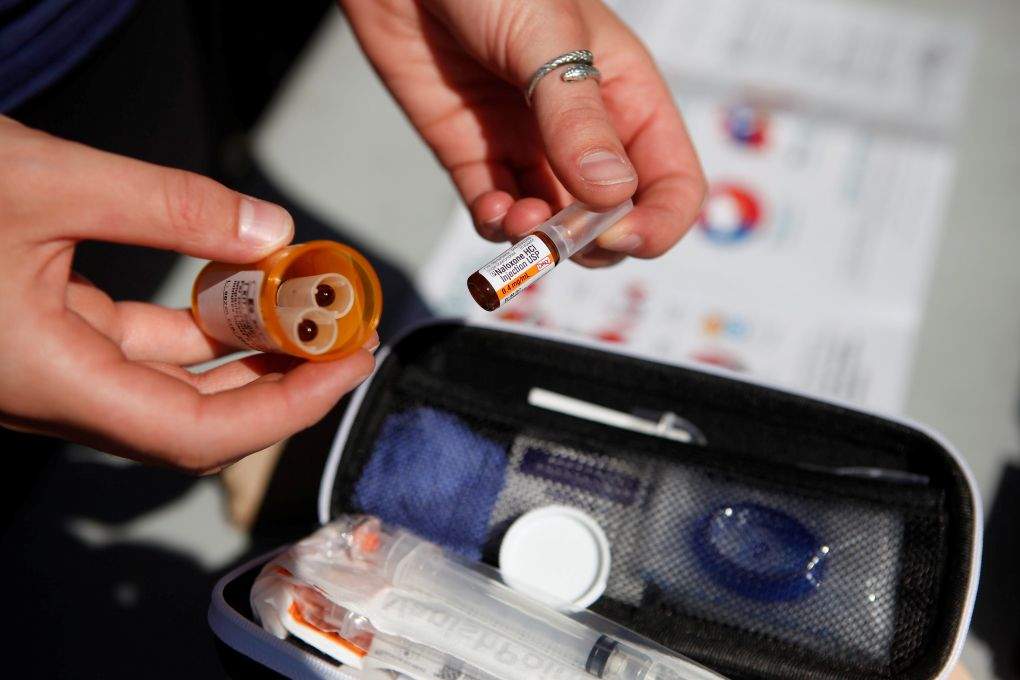
The primary tool for frontline harm reduction is Naloxone, a high-affinity mu-opioid receptor antagonist. While the Ministry of Health confirmed that Naloxone remains effective in many instances during this latest surge, relying on it as a universal fail-safe introduces a dangerous point of failure due to two distinct pharmacological limits:
Receptor Displacement Thresholds
High-potency synthetic opioids possess an equilibrium dissociation constant ($K_d$) that allows them to bind to mu-opioid receptors with extreme tenacity. Standard doses of Naloxone may lack the competitive binding energy required to displace these synthetic compounds. Frontline teams increasingly report that instead of a single intra-nasal or intramuscular dose, patients require three, four, or more successive doses to restore independent respiration. This rapid depletion of field inventory creates an immediate logistics and supply vulnerability for outreach teams.
The Non-Opioid Countermeasure Gap
Naloxone has zero pharmacological efficacy against non-opioid sedatives. When a patient overdoses on a batch containing unknown benzodiazepines, Naloxone will successfully displace the opioid component, but the patient will remain profoundly sedated and respiratory-depressed due to the unabated GABA receptor activation.
[Contaminated Drug Consumed]
            │
            ├──────────────────────────────┐
            ▼                              ▼
    [Opioid Component]             [Benzodiazepine Component]
            │                              │
            ▼                              ▼
  Mu-Opioid Receptor             GABA Receptor Activation
            │                              │
    (Naloxone Blocks)             (Naloxone Ineffective)
            │                              │
            ▼                              ▼
   Respiration Assisted          Persistent Sedation & Risk
This diagnostic ambiguity complicates field triage. First responders cannot easily determine whether a non-responsive patient requires more opioid antagonists or immediate advanced airway management to prevent hypoxic brain injury.
Strategic Interventions for Municipal Stabilization
Addressing a supply-side crisis requires abandoning passive advisory methods in favor of tactical, data-driven interventions designed to disrupt the toxicity vector and optimize emergency response.
- Deploy Quantitative Point-of-Care Drug Checking Technology
Relying on post-incident provincial health alerts introduces a critical data lag. Municipalities must deploy high-resolution testing infrastructure, such as Fourier-Transform Infrared (FTIR) spectroscopy paired with immunoassay test strips, at high-traffic community hubs. Providing consumers and frontline workers with real-time, quantitative analysis of circulating samples allows individuals to detect benzodiazepine and fentanyl contamination before ingestion, suppressing the spike at the pre-consumption phase. - Dynamically Scale Targeted Countermeasure Distribution
Static distribution models for Naloxone fail during acute supply shifts. Public health authorities must utilize emergency dispatch data to identify the precise micro-geographies experiencing volume spikes. Mobile harm reduction units must immediately flood these specific zones with high-dose Naloxone kits and oxygen concentration equipment, focusing resources directly within the active radius of the contaminated batch. - Implement an Emergency Services Triage Bypass Protocol
To prevent total saturation of the emergency medical infrastructure during a 20-plus call day, cities must authorize specialized outreach teams to treat, stabilize, and clear pure opioid overdose patients on-site without mandating transport to emergency departments. This operational change preserves hospital emergency room capacity for complex, poly-substance cases that require advanced clinical observation or intensive respiratory therapy.