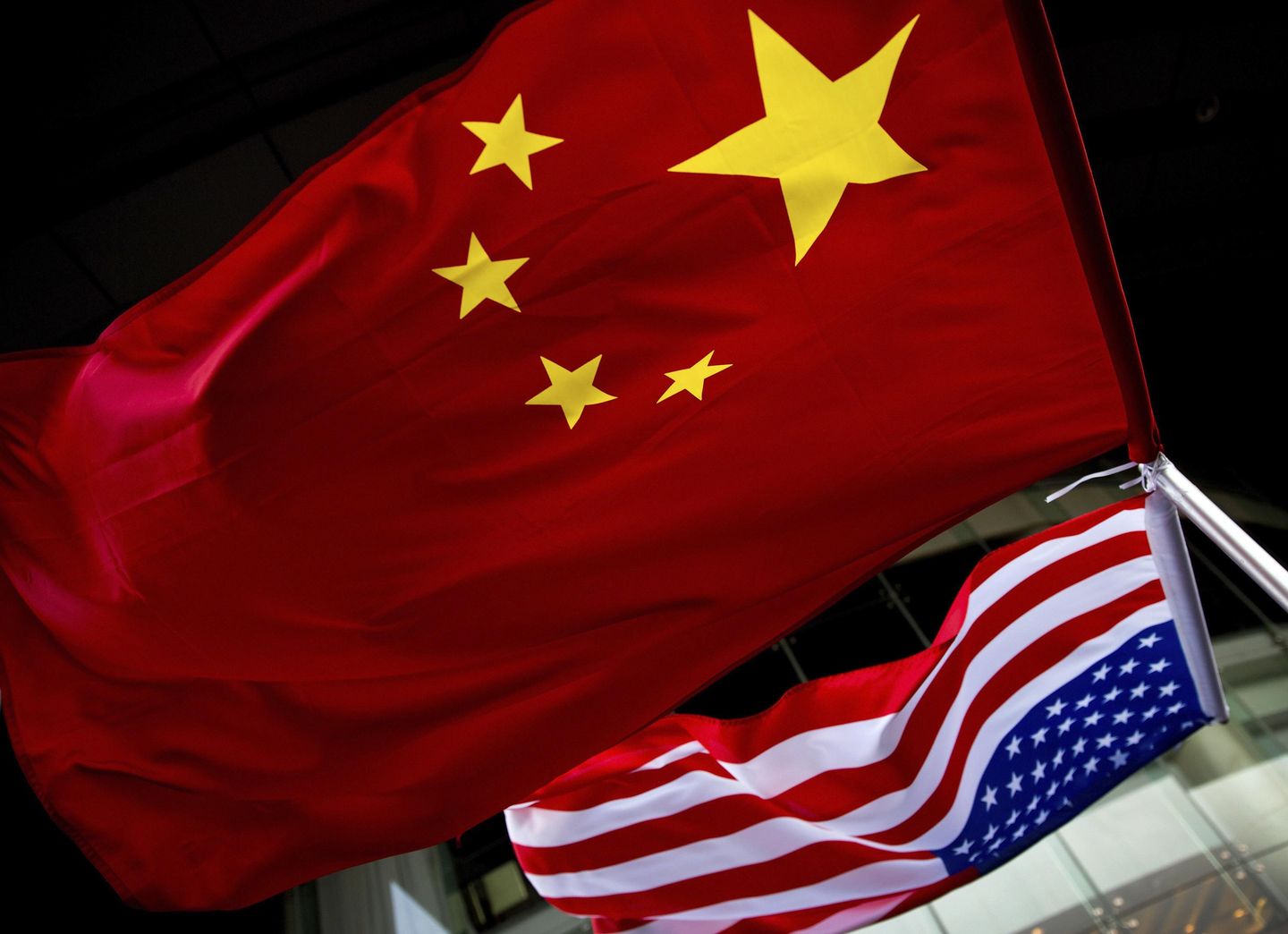
The traditional model of geopolitical espionage, historically confined to the theft of military secrets by state intelligence agencies, has been systematically replaced by a decentralized, high-volume architecture designed for asymmetric technology transfer. When the domestic intelligence leaders of the United States and the United Kingdom issue coordinated warnings, they are not describing a spike in conventional cloak-and-dagger operations. They are identifying an industrial-scale economic optimization strategy.
Western enterprise operates under a structural vulnerability: the decoupling of innovation costs from replication costs. Under conventional market conditions, a firm spends hundreds of millions of dollars on research and development, capitalizing that expense over years of projected market exclusivity. State-sponsored intellectual property theft collapses this timeline. By externalizing the cost of basic and applied research to Western competitors, the acquiring economy drives its own domestic development curve forward at near-zero marginal cost, fundamentally distorting global trade dynamics.
To defend corporate assets, security executives must look past political rhetoric and analyze the operational mechanics, structural incentives, and cost functions governing this modern intelligence apparatus.
The Asymmetric Intelligence Architecture
Modern state-directed economic espionage does not rely exclusively on professional intelligence officers. Instead, it leverages a distributed network of civil, academic, and corporate actors. This framework effectively blurs the line between legitimate commercial activity and state-directed resource acquisition.
The Civil-Military Fusion Framework
The structural engine driving this activity is the formal integration of civilian technical advancement with military modernization programs. Within this governance model, any breakthrough achieved by a private enterprise, university research lab, or joint venture is systematically accessible to state defense entities. The architecture relies on three primary vectors:
- Corporate Co-Optation: State-Owned Enterprises (SOEs) and nominally private technology champions serve as operational fronts. These entities embed intelligence requirements directly into corporate acquisition, joint venture, and procurement strategies.
- Academic Extraction: Graduate students, post-doctoral researchers, and visiting scholars are leveraged to gain access to fundamental, pre-commercial research. This is particularly prevalent in dual-use fields such as quantum computing, synthetic biology, and advanced semiconductor fabrication.
- Talent Recruitment Vehicles: Structured state incentive programs systematically target foreign-trained scientists and engineers. These programs offer significant capital injections and laboratory infrastructure in exchange for the transfer of proprietary methodologies and foundational data sets.
The Low-Threshold Valuation Model
Conventional Western counterintelligence operations are built around high-value targets: classified weapon systems, diplomatic cables, or critical infrastructure source code. The adversarial collection strategy, however, operates on a low-threshold valuation model.
Every piece of data possesses utility. A seemingly mundane dataset—such as commercial pricing structures, supply chain logistics, crop seed genetics, or software for wind turbines—carries significant strategic weight. When aggregated across an entire economic sector, these low-value data points allow state planners to map the cost structures of Western competitors, undercut global market pricing, and position domestic firms for structural dominance.
The Economics of Cyber and Human Exploitation
The scaling of this threat is an economic function. The expansion of digital networks and global professional platforms has drastically lowered the cost of both cyber intrusions and human source cultivation, creating an unfavorable cost-benefit ratio for Western defensive teams.
The Scaled Recruitment Funnel
The transition from targeted human intelligence cultivation to automated, high-volume digital outreach represents a major shift in operational efficiency. Security data reveals that state actors utilize professional networking platforms like LinkedIn to execute recruitment campaigns at an unprecedented scale.
[Target Identification] -> [Automated Digital Outreach] -> [Low-Value Information Exchange] -> [Compromise & Escalation]
The protocol follows a structured progression. First, automated scripts identify mid-level employees, researchers, or parliamentary staffers with access to specific technical or policy sectors. Second, front companies masquerading as maritime consultancies, geopolitical think tanks, or human resource agencies initiate contact, offering paid compensation for seemingly innocuous analysis papers or industry overviews.
Third, once the target accepts financial remuneration for basic information, the relationship is leveraged. The state actor increases the sensitivity of the requested data, exploiting the target's financial dependency or fear of exposure regarding their undisclosed foreign income. The marginal cost of initiating a digital connection is practically zero, allowing adversarial networks to run tens of thousands of concurrent operations globally.
Capital Insulation and Pre-Conflict Sanction Hedging
The timing and intensity of these coordinated intelligence operations point to a clear strategic objective: economic self-sufficiency ahead of a potential geopolitical crisis. State planners have closely analyzed the Western sanction regimes deployed during recent European conflicts. In response, they are executing a systematic campaign to insulate their domestic economy against similar economic containment strategies.
The objective is to eliminate strategic bottlenecks within the domestic supply chain. By acquiring foreign IP across foundational sectors—such as advanced lithography, aerospace metallurgy, and precision medical manufacturing—the state aims to build a closed-loop economic ecosystem. If a future geopolitical flashpoint, such as a conflict over Taiwan, triggers international sanctions or asset seizures, the domestic economy is insulated. Western capital and investments become stranded hostages, while the domestic market retains the copied technological infrastructure required to maintain industrial output.
Technical Exploitation Frameworks
The execution of these economic strategies relies on sophisticated technical campaigns designed to compromise both perimeter infrastructure and the integrity of corporate personnel.
Persistent Network Infiltration (Volt Typhoon and Salt Typhoon)
Advanced persistent threat (APT) groups have evolved past temporary malware deployments, focusing instead on long-term infrastructure compromise. Two distinct operational paradigms illustrate this approach:
- Volt Typhoon (Infrastructural Positioning): This operational model focuses on compromising critical infrastructure networks, including telecommunications, energy grids, and water systems. Rather than executing immediate data theft, the group uses "living off the land" techniques—employing legitimate system administration tools already present on the target network to avoid detection. The goal is to establish persistent access points that can be activated during a geopolitical crisis to disrupt defensive responses or sabotage public utilities.
- Salt Typhoon (Data Interception): This vector targets core telecommunications routing infrastructure. By compromising the core switches and routers of major network providers, actors can intercept bulk data streams, lawful intercept requests, and sensitive communications across entire geographical regions. This bypasses the need to compromise individual corporate networks, providing a centralized point of intelligence collection.
Insulated Supply Chain Compromise
When a primary corporate entity maintains an enterprise-grade security perimeter, the attack vector shifts downward to vulnerable nodes within the vendor ecosystem.
+--------------------------+
|  Tier 3 Vendor (Low Sec) | -> Compromised via Phishing / Unpatched VPN
+--------------------------+
             |
             v
+--------------------------+
| Tier 2 Component Supplier| -> Trusted Access Credentials Stolen
+--------------------------+
             |
             v
+--------------------------+
|   Primary Enterprise     | -> Network Penetrated via Trusted Tunnel
+--------------------------+
Adversarial groups target Tier 3 component suppliers, legal counsel, or regional logistics providers who possess trusted access credentials to the primary target's network. By compromising a less secure secondary node, the actor moves laterally through established virtual private networks (VPNs) or trusted software pipelines, rendering the primary firm’s expensive perimeter defenses useless.
Structural Deficiencies in Western Countermeasures
Despite the growing clarity of the threat, Western enterprise defense remains hindered by systemic weaknesses in legal, organizational, and operational frameworks.
The Statutory Prosecution Gap
Historically, Western legal systems have relied on century-old statutes designed to counter state-level military espionage, such as the UK’s legacy Official Secrets Act. These legal frameworks often require prosecutors to prove that stolen information directly harms national security or benefits a declared enemy state.
When applied to commercial technology or academic research, these outdated legal definitions frequently collapse during trial. If defense officials or enterprise executives refuse to testify in open court regarding the exact national security implications of a stolen commercial patent—often to protect ongoing operations or proprietary trade secrets—prosecutions are dropped. While updated frameworks like the UK's National Security Act attempt to close these loopholes by criminalizing actions that "materially assist a foreign intelligence service," the legal apparatus remains structurally slower than the rapid pace of digital asset extraction.
The Information Disymmetric Bottleneck
A fundamental mismatch exists between state intelligence capabilities and corporate reality. Government intelligence agencies maintain highly classified visibility into adversarial cyber infrastructure, command structures, and target lists. However, the private sector owns and operates 90% of the digital infrastructure under attack.
The mechanism for sharing this actionable intelligence remains highly restricted. When an agency sanitizes threat data to protect classified sources and methods, the resulting security alerts are often delivered to corporate security teams stripped of context, specific indicators of compromise (IoCs), or immediate operational utility. Corporate security officers are left with vague warnings to "increase vigilance," leaving them unable to justify the capital expenditure required to re-engineer vulnerable network architectures.
Defensive Resource Allocation Strategy
Relying on traditional perimeter defense models is an ineffective deployment of capital. To protect critical assets, enterprise executives must shift from passive compliance frameworks to aggressive, threat-informed risk management strategies.
Step 1: Asset Classification and Isolation
Organizations must abandon the assumption that all corporate data can be secured equally. Security teams should categorize internal assets into three distinct risk tiers:
| Asset Classification | Operational Metric | Required Security Controls |
|---|---|---|
| Tier 1: Core IP | Source code, proprietary algorithms, foundational R&D data. | Strict air-gapping, multi-party authorization keys, zero internet connectivity. |
| Tier 2: Operational Logic | Supply chain pricing, corporate strategy, vendor contract terms. | Network segmentation, ephemeral access tokens, aggressive data-retention limits. |
| Tier 3: General Corporate | Standard communications, public-facing marketing, standard financial reporting. | Standard enterprise monitoring, automated patch management. |
Step 2: Implement True Zero-Trust Architecture
Moving past marketing definitions, enterprise networks must enforce strict, continuous verification protocols. Every user device, application endpoint, and data transaction must be authenticated at the granular level.
- Micro-Segmentation: Divide internal corporate networks into isolated secure zones. A compromise within a marketing or human resources sub-network must not provide a lateral path into engineering or research databases.
- Continuous Cryptographic Verification: All internal data transfers must require cryptographic validation tied to verified user identities and healthy device states. Access should expire automatically after short windows, preventing actors from utilizing stolen persistent credentials.
Step 3: Deception Infrastructure Deployment
To counter sophisticated actors who have already breached network boundaries, organizations should deploy comprehensive internal deception environments.
- Honeypots and Canary Files: Introduce realistic, intentionally flawed technical schematics, fake source code repositories, and falsified financial models into the corporate network. These files must be configured to generate immediate, high-priority alerts to the security operations center the moment they are opened or modified.
- Behavioral Anomaly Triggers: Because advanced state actors rely on legitimate system tools rather than identifiable malware, detection must focus on behavioral deviations. Any sudden, unauthorized cross-departmental data transfer or bulk downloading of historical documentation by a single credential must trigger automatic account suspension and immediate containment protocols.
The global competitive landscape has evolved into an arena of continuous, low-threshold economic conflict. Companies that fail to treat their intellectual property as a strategic national asset will find their market positions systematically eroded by competitors operating with state-subsidized R&D. True enterprise resilience requires looking past defensive compliance checklists and directly confronting the cold economic realities of modern corporate espionage.
This video analysis details how allied intelligence coalitions are shifting their public strategies to directly counter the growing scale of corporate and economic espionage. Intelligence Chiefs Warn of Strategic Espionage Challenges