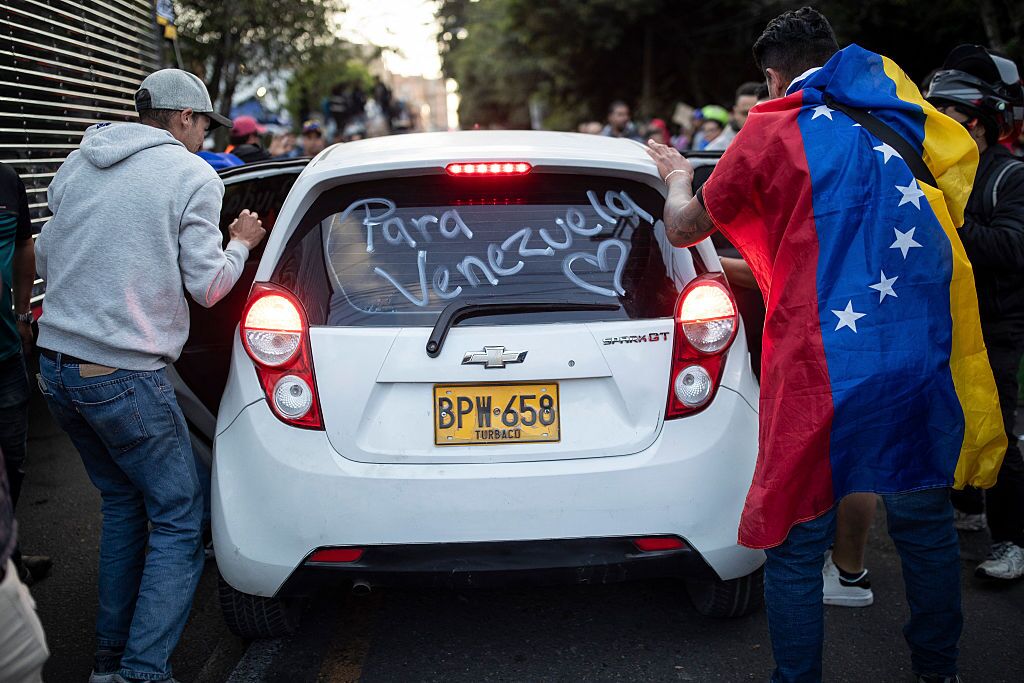
The convergence of a catastrophic double seismic event in a hyper-inflationary, debt-laden state creates an unprecedented breakdown in complex logistics. When a massive earthquake strikes a nation possessing a sovereign debt of $240 billion—roughly 200% of its annual gross domestic product (GDP)—the state's internal capacity to absorb the shock is fundamentally compromised. The initial catastrophe quickly morphs into a second-tier logistics crisis, transforming nearby cross-border diaspora hubs like Bogotá, Colombia, into vital, yet severely restricted, supply-chain endpoints.
The immediate death toll of over 900 individuals and 3,000 documented injuries understates the real structural crisis. The true constraint is a massive deficit in critical infrastructure. The failure to deploy heavy rescue machinery, combined with severe transport bottlenecks and complex geopolitical barriers, transforms private diaspora aid from a simple act of charity into a highly volatile problem of cross-border supply chain management. Read more on a connected subject: this related article.
The Three Pillars of Severe Infrastructure Failure
The failure of the immediate rescue and relief operation stems from three independent but intersecting infrastructure failures.
[Seismic Shock]
       │
       ├─► 1. Airfield Bottleneck (La Guaira Runway Failure)
       │
       ├─► 2. In-Transit Interdiction (Last-Mile Highway Security Breakdown)
       │
       └─► 3. Medical Supply Deficit (Pre-Existing Capital Starvation)
1. Airfield Bottlenecking and Last-Mile Transport Friction
The primary entry point for rapid international technical assistance, the airfield infrastructure in La Guaira, suffered catastrophic structural runway damage. This damage eliminated the possibility of landing heavy cargo aircraft near the epicenter. As a direct result, inbound personnel and machinery must divert to an operational military airfield located approximately three hours away. Further reporting by The New York Times delves into similar perspectives on the subject.
This diversion introduces a 180-minute transit delay that compounds over multiple trips. The extended path shifts the transit profile from a controlled, short-haul movement to an exposed, long-haul overland journey across poorly maintained roads.
2. In-Transit Asset Interdiction
The extended three-hour transport corridor creates a severe security risk. Because local populations face immediate, life-threatening shortages of water, food, and medical supplies, trucks traveling along the main highway are frequently stopped by desperate crowds. This creates a classic logistical paradox: humanitarian goods are intercepted and distributed to unplanned areas before reaching their designated high-density offload points.
This breakdown in route security dilutes the strategic impact of incoming aid, leaving hard-hit urban centers and collapsed ten-story public housing structures without the targeted machinery needed for deep concrete extraction.
3. Medical Capital Starvation and the "Bring Your Own Supply" Baseline
The medical system's inability to handle over 3,000 casualties is not merely an effect of the earthquake; it is the logical outcome of a ten-year period of severe capital starvation. The baseline operational model for Venezuelan hospitals requires patients to personally purchase and provide basic medical inputs—such as sterile gloves, surgical bandages, and basic anesthetics—before medical personnel can perform standard surgical procedures.
Patient Arrival ──► Hospital Stock Check (Empty) ──► Diaspora Supply Input Required ──► Surgical Intervention
When a mass-casualty event occurs, this highly fractured, decentralized supply chain breaks completely. It creates an absolute ceiling on the number of lives surgeries can save, regardless of how many medical professionals are physically present.
The Cost Function of Diaspora Aid Operations
In response to the domestic supply vacuum, the Venezuelan diaspora in Colombia—which represents the largest concentrated population of displaced Venezuelans globally—has established decentralized supply networks. However, converting small, ad-hoc individual donations into structured, reliable humanitarian cargo involves managing an extraordinarily inefficient cost function.
Mass-to-Volume Logistical Inefficiencies
Collection points in Bogotá are currently receiving unstructured consumer goods: personal clothing, individual bottles of water, energy drinks, and retail-packaged hygiene products. From a logistics perspective, shipping small, retail-sized donations is highly inefficient compared to moving standardized, palletized commercial freight.
The volumetric footprint of mismatched clothing and retail water bottles consumes disproportionate cargo space relative to its caloric or medical utility. This reality creates an immediate bottleneck during the sorting and palletization phases at regional collection warehouses.
Sovereign Regulatory Barriers
The most critical constraint on the diaspora supply chain is not collection velocity, but the regulatory approval process required for sovereign border crossings. Historically, the Venezuelan government has restricted or denied entry to private humanitarian aid shipments, particularly those organized by self-governing groups or organizations linked to political opposition factions.
Grassroots networks face a difficult dual regulatory hurdle:
- Export Clearances: Coordinating with Colombian commercial airlines to secure air cargo capacity and export manifests.
- Import Permissions: Negotiating specialized, case-by-case entry permits with Venezuelan customs authorities to prevent the outright seizure or confiscation of goods at the border.
Macroeconomic Solvency and Rebuilding Constraints
The long-term recovery of the disaster zone cannot be funded by diaspora remittances or private donations. The scale of structural destruction in dense public housing projects and critical transit corridors requires massive, structured capital injections. However, the state’s balance sheet presents an insurmountable barrier to standard international financing.
With an outstanding external sovereign debt of $240 billion against a heavily diminished GDP, the nation is completely locked out of traditional international capital markets. Every dollar generated by state-controlled oil exports must normally be split between servicing existing debt defaults and funding basic domestic government operations.
Without immediate debt restructuring, such as multi-year debt rollovers sanctioned by international credit institutions, the state cannot reallocate its core commodity revenue toward national reconstruction. The alternative is a long-term economic freeze, where damaged infrastructure remains unrepaired, forcing displaced populations into permanent camps or triggering a new, large-scale cross-border migration surge into Colombia.
Strategic Operational Recommendations
To maximize the survival rate of affected populations and stabilize cross-border supply chains over the next 90 days, international coordinators, non-governmental organizations (NGOs), and diaspora networks must abandon ad-hoc donation models and transition to a highly structured operational framework.
1. Shift Asset Allocation to Capital Procurement
Diaspora collection hubs should immediately halt the intake of physical consumer goods and clothing. Organizing, packing, and shipping miscellaneous physical items yields a net-negative return when factoring in regional air freight costs. Instead, organizations must pivot toward collecting direct financial capital to purchase bulk, standardized medical inputs directly from international distributors. These inputs can then be flown directly to the operational military airbase under established diplomatic protocols.
2. Implement a Split Hub Logistics Model
To bypass the damaged infrastructure at the La Guaira airport and avoid in-transit theft on the highways, logistics managers should set up a split-hub distribution model.
- Heavy rescue equipment and bulk medical supplies must continue using the military airfield, backed by armed, official escorts to secure the three-hour transit road.
- Light, high-value survival goods (such as water purification tablets and specialized field medical kits) should be rerouted through secure maritime points or smaller, intact regional airfields. This strategy disperses the transport footprint and reduces the vulnerability of any single supply line.
3. Establish Neutral Corporate Intermediaries
To minimize the risk of arbitrary asset seizures at customs, diaspora networks should avoid shipping goods under private or politically sensitive branding. All aid assets should be transferred to neutral, third-party corporate entities or international bodies like the International Federation of Red Cross and Red Crescent Societies (IFRC). Passing ownership through these organizations provides a neutral diplomatic layer, significantly increasing the probability of securing cross-border import permits from the Venezuelan government.