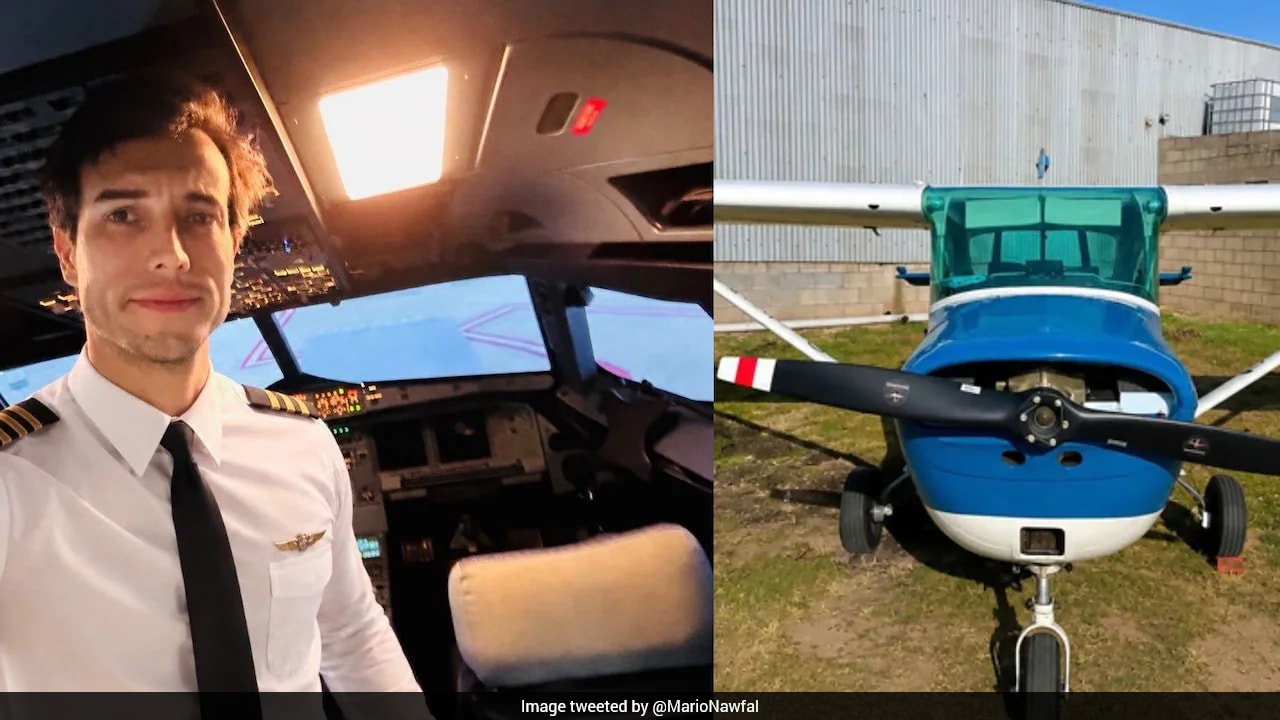
When an experienced flight instructor deliberately exits a Cessna 150 mid-flight without a parachute, the resulting crisis exposes the stark boundaries of aviation safety systems. The incident over Toledo, Argentina, involving a 42-year-old instructor and a 22-year-old student pilot, presents more than a shocking anomaly. It serves as a critical case study in human factors engineering, sudden task saturation, and the limits of psychological screening in general aviation.
Analyzing this event requires moving past sensational headlines to evaluate the precise mechanics of cockpit survivability when the primary command structure instantaneously evaporates.
The Aerodynamic and Mechanical Realities of Cockpit Decompression
Sensationalized accounts frequently overlook the physical forces required to open an aircraft door mid-flight. In a Cessna 150 traveling at a standard cruise speed of approximately 90 to 100 knots (165 to 185 km/h), the aerodynamic slipstream exerts significant positive pressure against the forward-hinged cabin doors.
To initiate egress, an individual must overcome two distinct forces:
- Aerodynamic Resistance: The high-velocity airflow acts as a continuous mechanical block, pinning the door against the fuselage. Opening it requires substantial, intentional physical exertion, comparable to forcing open a car door at highway speeds.
- The Cabin Pressure Differential: Even in unpressurized general aviation aircraft, minor pressure differentials caused by localized airflow can create a partial vacuum effect, requiring deliberate leverage to break the seal.
The deliberate sequence of actions performed by the instructor—removing the headset, unfastening the restraint harness, securing personal items, and manually overcoming slipstream resistance—demonstrates intentionality that bypasses standard accidental egress scenarios. This mechanical reality refutes any hypothesis of accidental fall due to turbulence or equipment failure.
The Task Saturation Framework in Sudden Solo Upgrades
The immediate transition from a supervised training environment to absolute command under acute emotional trauma represents the absolute limit of human cognitive processing. In aviation psychology, this is analyzed through the lens of Task Saturation.
[Aversive Stimulus: Instructor Egress]
               │
               ▼
[Acute Psychological Shock] ──► [Cognitive Narrowing / Tunnel Vision]
               │
               ▼
[System Stabilization Phase: Aviate, Navigate, Communicate]
When the instructor exited the cockpit, the student pilot was subjected to a sudden influx of sensory and cognitive demands. This specific failure mode can be broken down into three cascading phases.
Phase 1: Cognitive Shock and Auditory Exclusion
The sudden rush of air from an open door at 5,000 feet introduces extreme noise pollution, typically exceeding 100 decibels. This level of auditory disruption combined with severe psychological trauma induces immediate cognitive narrowing, or "tunnel vision." The brain prioritizes basic survival over complex analytical thinking, which frequently leads to freezing or loss of aircraft control.
Phase 2: The Aerodynamic Stabilisation Phase
A Cessna 150 is inherently stable due to its high-wing design and dihedral angle. However, the sudden shift in weight distribution and the aerodynamic drag caused by an open or unlatched door alters the aircraft's flight characteristics. The student had to immediately stabilize the aircraft's pitch and bank angles while operating in a high-noise, high-wind environment.
Phase 3: Single-Pilot Resource Management (SRM) Acceleration
The student, who possessed a basic private pilot license but lacked extensive solo experience, was forced to execute an immediate transition to SRM. This required dividing her cognitive capacity between basic aircraft control (Aviate), determining her position relative to the airfield (Navigate), and establishing emergency radio contact (Communicate).
The Tri-Partite Emergency Protocol: Aviate, Navigate, Communicate
The student’s successful landing at Coronel Olmedo Airport provides a clear validation of core aviation safety doctrine. When standard operating procedures disintegrate, pilots are trained to fall back on a strict hierarchical framework.
- Aviate: The student maintained pitch, bank, and power settings. Despite the open door and extreme distraction, she prioritized airspeed control, avoiding the critical risks of an aerodynamic stall or a spin.
- Navigate: She oriented the aircraft toward the nearest suitable runway, avoiding terrain and restricted airspace in the Córdoba province.
- Communicate: By contacting air traffic control (ATC), the student successfully distributed her cognitive load. ATC acted as an external processing unit, handling calculations, monitoring weather variables, and clearing the airspace, which allowed the pilot to focus exclusively on manipulating the flight controls.
The physical undamaged state of the Cessna 150 upon landing indicates that the student maintained stabilized approach metrics (airspeed, glide path, and alignment) until touchdown. This level of performance under extreme stress highlights a rare proficiency in emotional regulation and procedural adherence.
The Blind Spots in General Aviation Regulatory Screening
This incident exposes a systemic vulnerability in how the global aviation industry assesses the mental fitness of flight crew members. While commercial airline pilots face rigorous, recurring psychological evaluations, general aviation and flight school environments operate under less stringent frameworks.
The instructor possessed a valid medical certificate and a strong professional reputation in both Chile and Argentina. Reports indicating he had previously sought neuropsychiatric treatment highlight a critical failure point: the reliance on self-reporting.
General aviation medical examinations are highly effective at detecting structural physiological flaws, such as cardiac irregularities or visual degradation. They are structurally unequipped, however, to detect acute psychiatric distress or hidden suicidal ideation if the pilot actively conceals them. The social and financial stigma associated with grounding a pilot creates a strong counter-incentive for individuals to disclose mental health struggles to regulatory medical examiners.
Strategic Imperatives for Flight Training Operations
Relying on the exceptional composure of a student pilot is not a viable safety strategy. To mitigate the risks exposed by this event, flight schools and regulatory bodies must implement structural changes to their operational risk management:
- Dual-Pilot Interventions: Flight training curricula should explicitly include scenarios where the primary instructor becomes completely incapacitated or unavailable, training students to handle abrupt transitions to solo command without advanced warning.
- De-stigmatized Psychological Support: Training institutions must establish confidential, non-punitive mental health reporting channels to ensure instructors can seek psychiatric support without facing immediate, permanent career termination.
- ATC Emergency Integration: Air traffic control protocols should be updated to ensure that when a student pilot declares an emergency involving instructor loss, controllers immediately use simplified, step-by-step verbal checklists to guide the pilot through a stabilized approach.