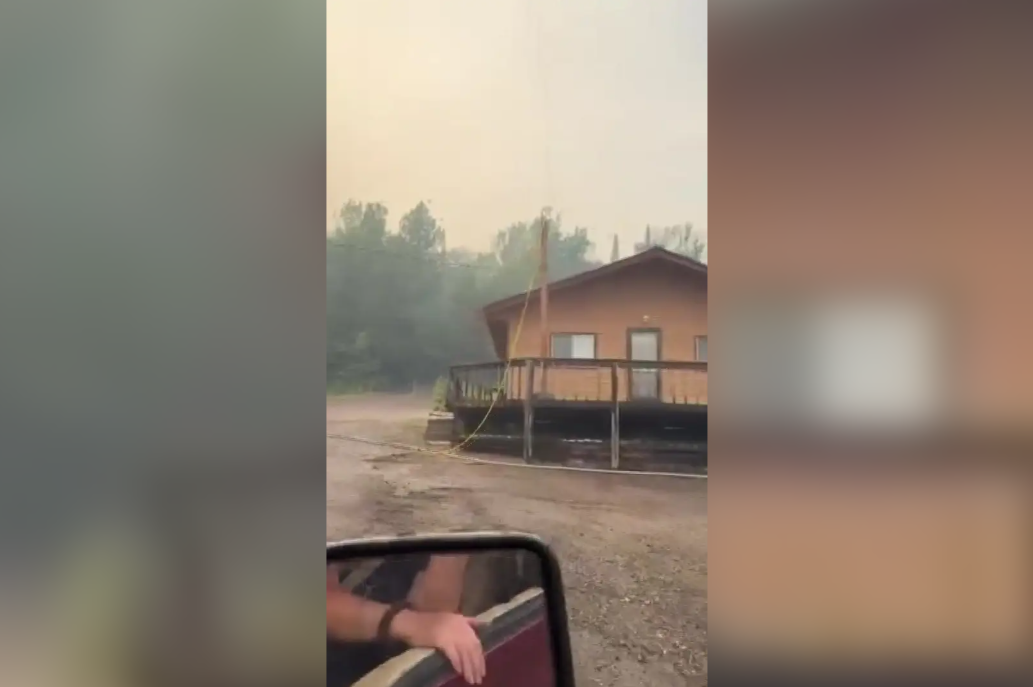
Operating a remote commercial lodge in northern Ontario requires managing a complex matrix of natural dependencies, thin margins, and highly seasonal revenue. When wildfire crises occur, they expose systemic vulnerabilities in emergency response protocols, regulatory structures, and standard commercial insurance policies.
The catastrophic fires in northwestern Ontario—which forced evacuations across remote communities like Armstrong and Collins First Nation, and destroyed multiple wilderness resorts—demonstrate that the primary threat to these operations is not merely the physical fire, but the structural bottlenecks built into regional emergency management frameworks.
Understanding the operational survival of these remote businesses requires analyzing the mechanisms of wildfire spread, the regulatory structures governing emergency declarations, and the structural friction inherent in commercial insurance contracts.
The Velocity Bottleneck: Why Remote Detection Fails to Prevent Crisis
Remote operators face a fundamental informational asymmetry during wildfire season. For instance, at the Lac Des Mille Lodge outside of Upsala, Ontario, active fires were observed and reported to the Ministry of Natural Resources (MNR) on June 30. Yet, the transition from a distant, observable threat to an immediate operational hazard occurs with non-linear speed.
Wildfire propagation in boreal forests is governed by three primary variables:
- Fuel Load and Composition: The high density of coniferous trees (such as black spruce and jack pine) provides a continuous, highly flammable canopy.
- Fuel Moisture Content (FMC): Extended periods of high temperatures and low relative humidity deplete fuel moisture, lowering the ignition threshold of forest litter.
- Wind and Convective Weather: Wildfires of sufficient scale generate localized convective currents, which transport burning embers kilometers ahead of the main fire front. This process, known as spotting, bypasses physical barriers and rapidly accelerates the rate of spread.
When these factors align, the physical boundary between a distant plume of smoke and an immediate threat collapses rapidly. The experience of operators watching smoke drift for a week before it abruptly descends upon their properties highlights a systemic limitation in tracking tools. Standard satellite thermal detection and aerial reconnaissance are frequently delayed by cloud cover, heavy smoke canopy, and long administrative cycles. This administrative latency means that local operators often possess more current, granular spatial data than the centralized agencies tasked with coordinating suppression efforts.
The Insurance Evacuation Paradox
The critical bottleneck for a remote business during a disaster is the financial and legal mechanism that triggers operational shutdown. In Ontario, commercial insurance policies covering business interruption and property evacuation are bound by strict legal parameters.
Many wilderness lodge operators encounter a severe structural flaw in standard commercial packages: the requirement of a formal government-issued evacuation order to trigger business interruption coverage.
This dynamic creates a high-stakes waiting game characterized by divergent incentives:
[Threat Escalation]
       │
       ▼
[Operator Priority: Early Evacuation for Safety]
       │
       ▼
[Insurance Hurdle: No Coverage Without Formal Order]
       │
       ▼
[Government Action: Evacuation Order Delayed for Regional Prioritization]
       │
       ▼
[Operational Crisis: Evacuating Under Active Fire Conditions]
The operator’s priority is immediate safety and asset mitigation. Conversely, government emergency services evaluate declarations based on regional risk models, resource availability, and broad civic infrastructure safety. Because of this, formal evacuation orders are often delayed until the fire is just kilometers away.
Forcing an operator to remain onsite during high-risk conditions simply to preserve their right to insurance compensation is a dangerous systemic failure. If an operator evacuates ahead of an official order to protect staff and clients, they risk bearing 100% of the associated financial losses. If they wait for the official declaration, they are forced to execute evacuation logistics under zero-visibility conditions, with roads potentially blocked and regional infrastructure failing.
Infrastructure Resilience and Private Mitigation
When wildfire suppression resources are stretched thin across hundreds of active fires—as was the case in the northwest region with over 120 active fires—government agencies must prioritize. Critical public infrastructure, high-density residential areas, and life-safety operations are prioritized over remote commercial properties.
In this resource-constrained environment, the preservation of private assets depends heavily on localized, active defense systems.
Structural Sprinkler Systems
Following active fire passage, the installation of high-volume sprinkler systems on remaining structures is highly effective. These systems work by continuously wetting roofs and immediate surroundings, elevating the localized relative humidity, and extinguishing embers before they can ignite dry surfaces.
Fuel-Free Buffer Zones
Maintaining a clear, non-combustible perimeter (typically 10 to 30 meters) around all primary structures is the most critical passive defense. This involves removing underbrush, low-hanging limbs, and highly flammable vegetation, thereby breaking the continuous fuel path required for a fire to reach a building.
Independent Power and Water Supply
Remote operators cannot rely on public utility grids, which are often the first infrastructure components to fail during a fire. Effective defense requires dedicated, diesel-powered water pumps and backup generators that can run continuously without human intervention during an evacuation.
The Long-Tail Economic Depletion of Remote Tourism
The destruction of a wilderness lodge does not merely impact the property owners; it disrupts a highly interconnected regional economy. Remote tourism operators act as the primary economic engine for northern communities.
                  ┌──────────────────────────────┐
                  │   Remote Lodge Operation     │
                  └──────────────┬───────────────┘
                                 │
         ┌───────────────────────┼───────────────────────┐
         ▼                       ▼                       ▼
┌─────────────────┐     ┌─────────────────┐     ┌─────────────────┐
│ Local Suppliers │     │ Transport &     │     │ Local Municipal │
│ (Fuel, Food,    │     │ Outfitting      │     │ Tax Revenues &  │
│ Maintenance)    │     │ (Aviation, Rail)│     │ Tourism Levies  │
└─────────────────┘     └─────────────────┘     └─────────────────┘
The loss of four major resorts in a single fire event creates immediate downstream economic friction. First, the local supply chain suffers. Lodges purchase significant quantities of fuel, food, equipment, and maintenance services from surrounding towns. When these operations cease, local merchants experience immediate revenue drops.
Second, remote tourism relies heavily on repeat international clientele, particularly American anglers and outdoor enthusiasts. The destruction of lodges forces these high-spending visitors to seek alternative destinations. Once a client alters their seasonal travel habits and establishes a relationship with a competitor in a different region, recapturing that market share is exceptionally difficult and expensive.
The recovery process for destroyed lodges like Open Bay Lodge is further complicated by long development timelines. Rebuilding remote cabins, main lodges, and associated trailer parks requires transporting construction materials over vast distances, often via gravel roads or watercraft. This extended reconstruction phase means a business may lose multiple consecutive operating seasons, magnifying the long-term economic damage far beyond the initial physical loss.
Tactical Protocol for Remote Property Operators
To navigate this operational environment, remote operators must transition from a reactive posture to a structured risk-mitigation framework. Relying on provincial emergency response is a losing strategy when resources are stretched across a province.
- Establish Independent Monitoring Networks: Operators should deploy localized environmental sensors to track wind speed, humidity, and temperature on-site. Do not rely solely on regional agency updates.
- Negotiate Custom Insurance Endorsements: Work with specialized brokers to decouple business interruption coverage from municipal evacuation orders. Seek policies that trigger based on proximity metrics (e.g., an active fire within a 15-kilometer radius) rather than formal government declarations.
- Invest in Redundant Safety Equipment: Every client and staff member should be equipped with satellite-enabled communication devices. In remote areas where cellular networks are non-existent, satellite messengers are the only reliable tool for coordinating emergency evacuations with private aviation or search-and-rescue teams.
- Draft a Private Evacuation Plan: Do not assume government-sponsored transport will be available. Establish formal, pre-negotiated contracts with private bush pilots, water taxi operators, or heavy equipment transport companies to guarantee evacuation capacity when regional roads are closed.