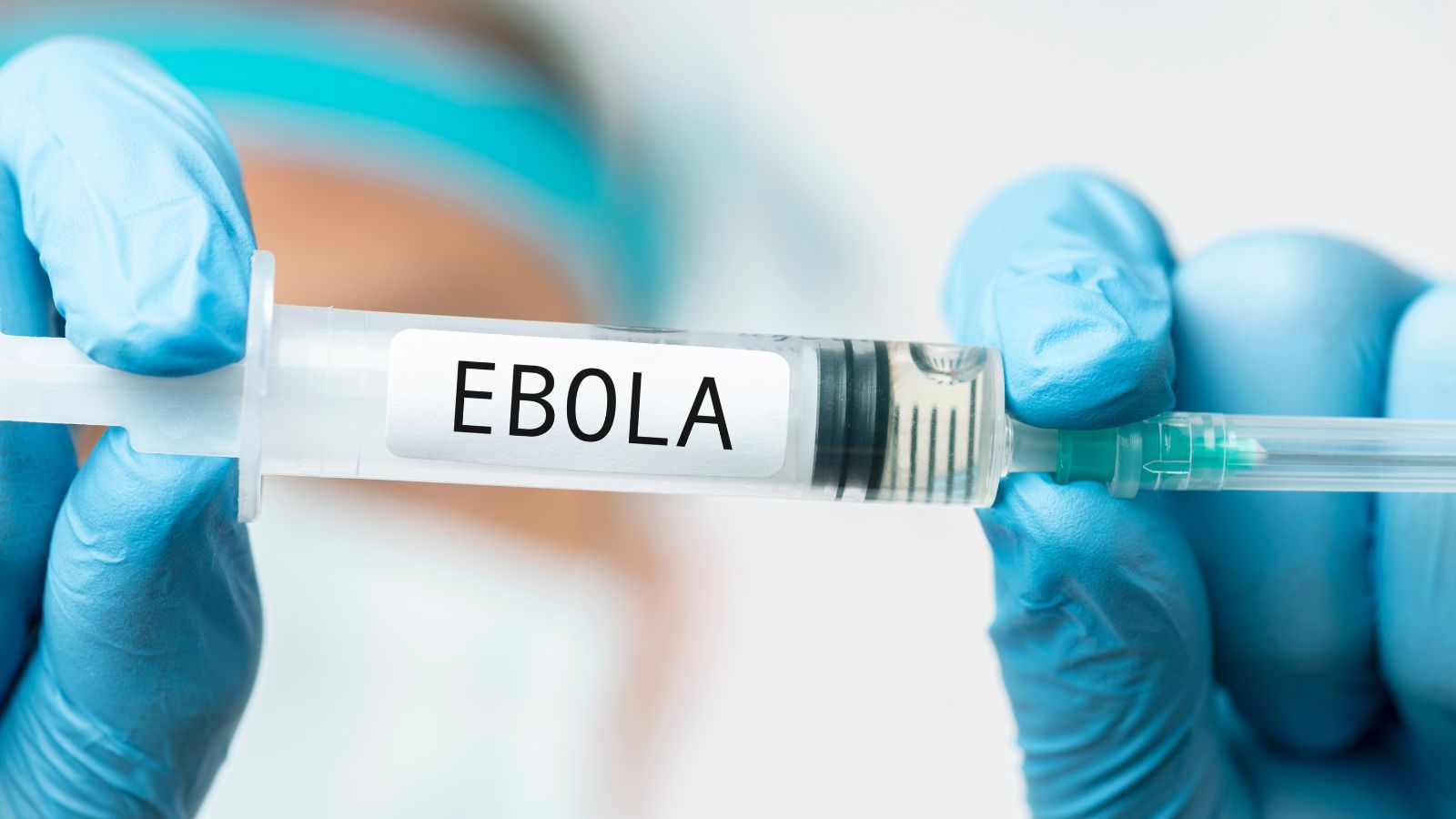
The World Health Organization’s (WHO) decision to declare the Ebola outbreak in the Democratic Republic of the Congo (DRC) a Public Health Emergency of International Concern (PHEIC) represents a quantitative tipping point, not just a reactive administrative gesture. While mainstream reporting focuses on the raw mortality count—specifically the threshold of 80 deaths—this metric alone fails to explain the strategic necessity of the declaration. A PHEIC is triggered when a localized biological threat transitions into a systemic global risk characterized by geometric transmission vectors, cross-border permeability, and institutional containment failure.
Understanding the mechanics of this escalation requires moving past sensationalism and analyzing the operational bottlenecks, epidemiological variables, and structural realities that govern outbreak containment in high-risk zones.
The Triad of Epidemic Escalation
The transition of a localized viral outbreak into a global health emergency is governed by three specific operational vectors. When these vectors intersect, localized containment strategies fail, necessitating international intervention.
1. Geometric Transmission and Geolocation Risk
The primary indicator of an uncontrollable outbreak is the geometric expansion of cases outside the initial index zone. In the DRC, containment is compromised when the virus moves from isolated rural communities into high-density urban centers or transit corridors. Urban environments act as force multipliers for transmission due to population density, fluid informal economies, and strained sanitation infrastructure.
2. Cross-Border Permeability
The geographic positioning of the DRC’s affected regions presents an immediate transnational risk. Borders in these sectors are highly porous, characterized by daily economic migration, refugee movements, and regional trade with neighboring nations such as Uganda, Rwanda, and South Sudan. The moment contact tracing networks lose visibility over mobile populations, the reproductive rate ($R_0$) of the virus increases exponentially across national boundaries, changing the calculus from local mitigation to international suppression.
3. Institutional Containment Failure
A PHEIC declaration explicitly signals that local and national healthcare infrastructure can no longer manage the volume or complexity of the outbreak. This institutional failure is rarely just a shortage of medical supplies; it is a breakdown in operational security, logistical supply lines, and community compliance.
The Logistical Friction of Ebola Mitigation
Epidemiological models frequently underestimate the operational friction encountered in active conflict zones or complex political environments. In the DRC, the deployment of medical countermeasures faces severe structural bottlenecks that cannot be solved by capital allocation alone.
Vaccine Cold Chain Integrity
Modern Ebola countermeasures rely heavily on highly effective ring vaccination strategies using vaccines like Ervebo. However, these vaccines require strict cold-chain management, maintaining temperatures between $-60^\circ\text{C}$ and $-80^\circ\text{C}$ throughout transport and storage.
In regions lacking stable electrical grids, this requirement introduces a massive logistical vulnerability. The deployment relies on specialized solar-powered freezers and generator-backed mobile cold hubs. A single breakdown in this chain neutralizes the biological efficacy of the countermeasure, rendering field teams ineffective and wasting scarce resources.
The Geography of Conflict
Security is a foundational variable in health outcomes. The presence of armed groups in the eastern DRC introduces physical peril to epidemiological teams. When field workers face active violence:
- Contact tracing ceases: Personnel cannot safely track exposed individuals over the critical 21-day incubation window.
- Decontamination protocols fail: Specialized burial teams cannot access communities, leading to traditional, high-risk funeral practices that drive super-spreader events.
- Data collection gaps emerge: The mathematical models used to predict viral trajectory become inaccurate due to missing field reports, forcing health agencies to operate with flawed data.
The Economic Cascades of International Declarations
A PHEIC declaration functions as a dual-ended economic instrument. While it unlocks international capital and coordinates global institutional responses, it simultaneously imposes severe economic penalties on the host nation.
[PHEIC Declaration]
       │
       ├──► (+) Rapid Influx of International Capital & Technical Personnel
       │
       └──► (─) Immediate Capital Flight, Trade Reductions, & Border Restrictions
Capital Allocation vs. Local Deprivation
The immediate financial benefit of a WHO emergency declaration is the activation of the Contingency Fund for Emergencies (CFE) and the mobilization of international donor capital. This funding is critical for purchasing personal protective equipment (PPE), establishing Ebola Treatment Centers (ETCs), and financing field operations.
However, the rapid influx of foreign humanitarian capital often distorts local economies. Inflation rises within urban hubs, and scarce medical personnel are drawn away from routine health services (such as malaria suppression and maternal care) toward the well-funded Ebola response. This creates a secondary mortality vector where more individuals die from neglected endemic diseases than from the primary outbreak.
Trade Contraction and Border Restrictions
The long-term economic damage stems from the immediate reduction in trade and international isolation that follows a PHEIC. Despite explicit WHO recommendations against unnecessary travel and trade restrictions, regional and international actors routinely implement unilateral border closures and enhanced screening protocols that slow commercial logistics.
For an economy heavily reliant on mineral exports and agricultural trade, these restrictions disrupt supply chains and reduce national revenue exactly when capital is needed most for internal stabilization. The fear of economic strangulation often incentivizes local authorities to underreport initial case counts, delaying the global response during the critical early weeks of transmission.
Structural Blind Spots in Global Health Governance
The international community's response mechanism remains fundamentally reactive, exposed by systemic vulnerabilities in how global health agencies assess and manage risk.
- Over-reliance on Binary Indicators: The current PHEIC architecture operates on a binary scale—either an emergency exists or it does not. This lacks the nuance required to signal rising sub-critical risks, preventing early preventive funding before an outbreak reaches crisis proportions.
- Data Asymmetry: Institutional decision-makers rely on localized reports that are structurally delayed by weak diagnostic laboratory networks. By the time a sample is collected, transported to a reference lab, sequenced, and verified, the real-world transmission chain has already advanced by multiple generations.
- The Trust Deficit: Top-down international interventions frequently ignore local sociopolitical dynamics. When foreign medical teams arrive with security escorts without engaging trusted community structures, they generate friction. This friction manifests as community resistance, evasion of medical personnel, and the proliferation of alternative transmission pathways outside institutional visibility.
Quantifying the Threshold of Intervention
To optimize future interventions, international bodies must move from reactive metrics toward a predictive framework. The decision to escalate an intervention should be dictated by a composite index of specific, measurable variables rather than a raw death toll.
Intervention Urgency Index = (R0 × Population Density × Border Porosity) / (Local Hospital Bed Capacity × Logistical Security Score)
Where:
- $R_0$: The basic reproduction number of the specific viral strain in the local environment.
- Population Density: The concentration of individuals per square kilometer in the active transmission zone.
- Border Porosity: A metric scoring the daily volume of unmonitored cross-border crossings within a 100-kilometer radius of cases.
- Local Hospital Bed Capacity: Available isolation beds staffed by trained personnel equipped with appropriate PPE.
- Logistical Security Score: An index measuring the safety and stability of transit corridors for medical supply deployment.
When this index exceeds a standardized critical threshold, international resources should deploy automatically, bypassing the bureaucratic delays inherent in manual declaration processes.
Strategic Playbook for Containment Optimization
To permanently suppress the outbreak and stabilize the region, global health infrastructure must shift execution away from centralized, bureaucratic mandates toward decentralized, operationally resilient field tactics.
Decentralize Diagnostic Infrastructure
The centralized laboratory model must be replaced by the widespread deployment of rapid point-of-care molecular diagnostics. Deploying automated GeneXpert systems directly to rural health clinics compresses the turnaround time for blood sample analysis from days to under two hours. Eliminating the logistical delay in testing stops transmission chains before exposed individuals leave the local area.
Institutionalize Localized Ring Vaccination
Rather than relying on large, visible international teams that draw security risks and local distrust, deploy trained local community health workers to administer ring vaccination protocols. Local actors possess the cultural fluency and geographical knowledge required to map contact networks quickly and discreetly, significantly increasing vaccination compliance and reducing operational friction.
Implement Adaptive Logistics Corridors
Establish dedicated, militarily secured transport lanes exclusively for medical supplies and personnel. By decoupling humanitarian logistics from standard commercial transit corridors, the international response can maintain cold-chain integrity and ensure a continuous supply of therapeutics to frontline clinics, completely independent of local security fluctuations or regional border closures.