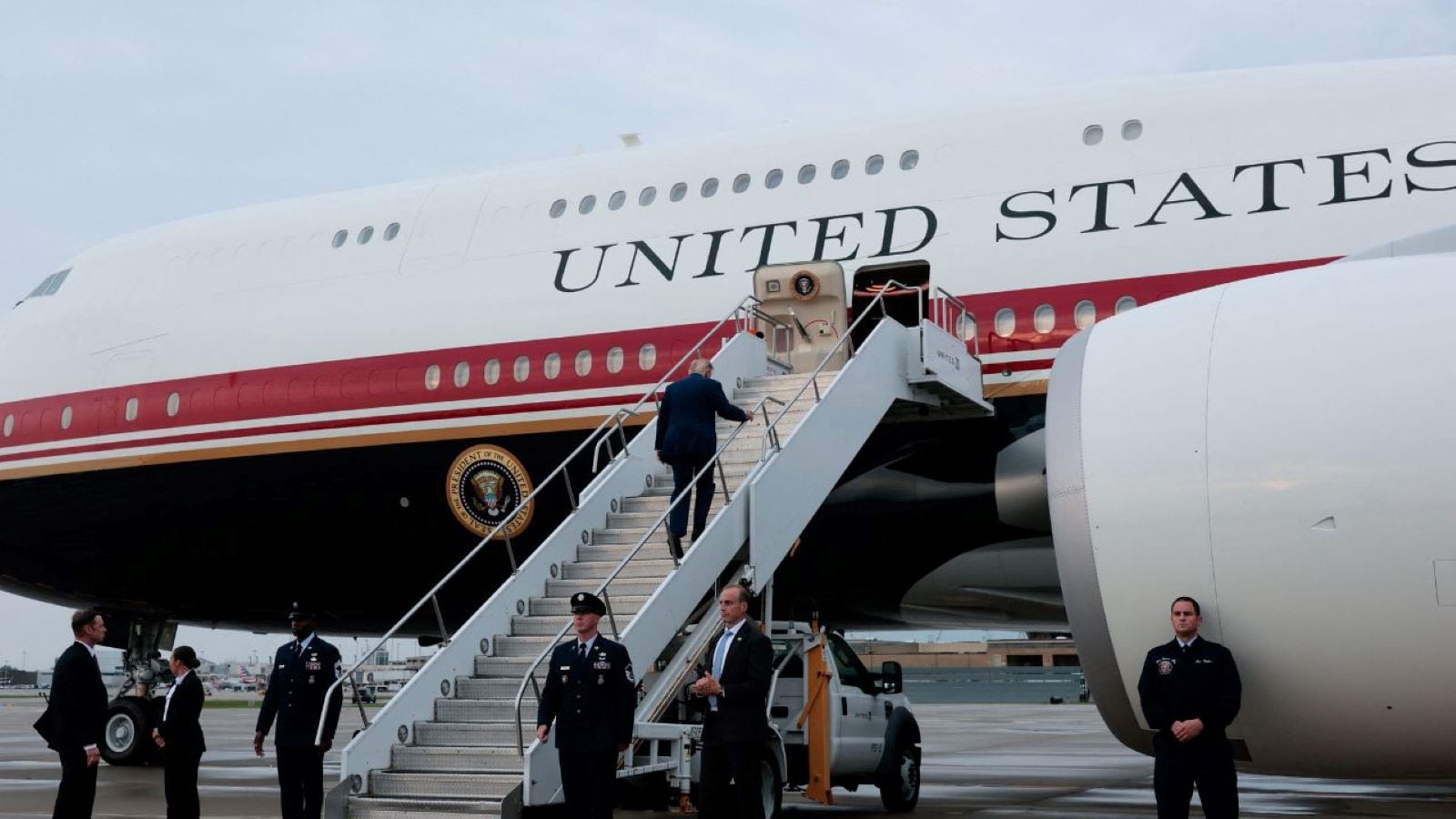
National security operations involving heads of state operate under strict threat-mitigation protocols where standard transportation logic is intentionally inverted. When intelligence indicators point to a high-probability surface-to-air or targeted assassination vector, protecting the principal requires complex decoy architectures. The departure of United States leadership from the NATO summit in Ankara, Turkey, provides a case study in executive protection logistics, featuring deliberate asset segregation, decoy staging, and continuity-of-government positioning.
Deconstructing this operation reveals the underlying mechanics, structural trade-offs, and risk distribution models utilized by the United States Secret Service and military. If you liked this article, you should read: this related article.
The Threat Vector and the Cost Function of Executive Mobility
Executive transport security is governed by a continuous cost-benefit function balancing operational transparency against tactical concealment. When handling international movements for a high-value political target with a verified threat profile, the defensive calculus shifts entirely toward ambiguity.
Intelligence assessments regarding potential hostile actions—specifically surface-to-air capabilities or localized targeting vectors during departure phases—impose an immediate operational constraint. A stationary aircraft on a foreign tarmac represents a high-entropy vulnerability window. To neutralize this risk, security forces executed a multi-tiered diversion strategy during the Ankara turnaround: For another perspective on this event, refer to the latest update from Al Jazeera.
- Asset Diversion: Utilizing an alternative aircraft to function as a high-visibility decoy while routing the principal through an unpublicized channel.
- Operational Compartmentalization: Restricting knowledge of the primary movement vector to a minimal circle of security personnel and select cabinet members.
- Vector Masking: Exploiting standard ground-support infrastructure—such as catering logistics—to obscure physical transfers away from public and press observation points.
This framework illustrates how security architectures prioritize principal survival over administrative continuity or public perception, accepting the secondary risk of exposing decoy passengers to elevated probabilistic hazards.
Structural Architecture of the Decoy Deployment
The Ankara transit utilized a dual-aircraft configuration designed to split threat attraction surfaces. The mechanics of this operation depended on distinct actor categorization and spatial separation.
The Decoy Vector
The primary aircraft—publicly designated as the movement vehicle for the principal—carried a high-value manifest, including Secretary of State Marco Rubio and Treasury Secretary Scott Bessent. Operating under constitutional succession guidelines, housing high-ranking cabinet officials alongside members of the press corps and secondary staff on the primary profile aircraft creates a dual-purpose asset.
From an analytical perspective, this configuration serves two distinct functions:
- It preserves the behavioral baseline expected by hostile observers monitoring ground telemetry and visual queues.
- It tests the adversary's targeting commitment by presenting a high-value political footprint that mirrors standard presidential movements.
Secretary Rubio maintained awareness of the tactical switch and the underlying threat parameters, while other high-ranking officials remained compartmentalized to limit operational leakage. This selective awareness highlights the internal hierarchy of intelligence distribution during active threat responses.
The Primary Principal Vector
Concurrently, the head of state, accompanied by Defense Secretary Pete Hegseth and core operational aides (including Dan Scavino, Walt Nauta, and Natalie Harp), executed a physical transfer via an airport service vehicle into a secondary military transport (specifically an Air Force C-32A class aircraft).
The utilization of a standard service asset for the transfer bypasses the visual signatures associated with primary motorcades. By masking the movement within routine airport provisioning traffic, security forces minimized the signature profile of the transfer window, effectively neutralizing real-time visual tracking by hostile intelligence assets on the perimeter.
Operational Trade-Offs and Systemic Vulnerabilities
While the decoy protocol successfully executed the immediate extraction, the mechanics of the operation introduced severe risk asymmetries that warrant analytical scrutiny.
The most prominent vulnerability lies in the ethical and physical exposure of the decoy vector's occupants. By positioning cabinet members—specifically the fourth and fifth figures in the presidential line of succession—and journalists on the publicly advertised target aircraft, the security apparatus effectively utilized them as an active shield. If a hostile actor possessed real-time telemetry or intelligence capable of penetrating the initial ruse, the decoy aircraft presented an attractive target profile precisely because it carried high-ranking state officials.
Furthermore, the operational friction caused by managing multi-aircraft logistics under tight time constraints exposes limitations in fleet flexibility. The presence of the newly introduced Qatari-gifted aircraft in Turkey, contrasted with the tactical choice to revert to older-model transport frames or smaller military jets, demonstrates how equipment standardization can be compromised by urgent threat mitigation demands.
Strategic Assessment and Forward Execution
The Ankara transit operation validates the doctrine that executive survivability overrides all secondary diplomatic or administrative conveniences. The deployment of a decoy airframe under active threat conditions demonstrates an uncompromising adherence to worst-case contingency planning.
Future executive movements in high-threat theaters will increasingly rely on non-standard ground-transfer mechanisms and automated decoy scheduling to defeat modern persistent-surveillance capabilities. Security architectures must evolve past traditional visible motorcades, integrating decentralized boarding vectors and dynamic asset substitution as standard baseline protocols rather than exceptional contingencies.
Trump's Air Force One Switcheroo: Inside His Secret Escape From Turkiye After NATO Summit
This video provides an overview of the logistics and reporting surrounding the covert departure from Ankara following the NATO summit.