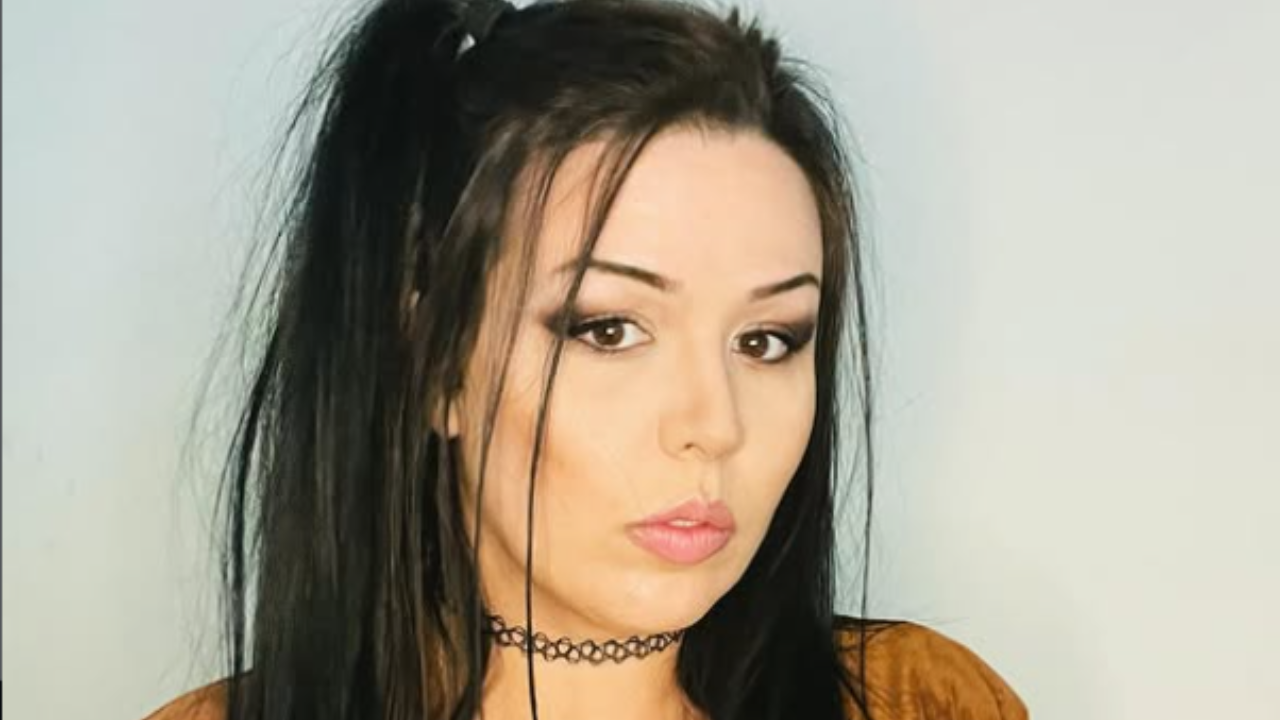
Platform enforcement on live-streaming networks operates not as a transparent judicial system, but as a risk-mitigation engine designed to protect corporate equity and advertiser alignment. When a high-profile creator account like Kaceytron (Kacey Caviness) goes offline, public discourse immediately shifts to speculation regarding specific behavioral infractions. This analytical breakdown bypasses the surface-level rumors to dissect the structural mechanisms governing Twitch’s enforcement protocol, the financial liabilities driving platform decisions, and the compounding risk profiles of veteran broadcasters.
Understanding platform enforcement requires mapping the tension between a creator's audience monetization and the platform’s systemic liabilities. If you enjoyed this article, you should check out: this related article.
The Tri-Lateral Framework of Content Moderation
Platforms assess creator violations through a matrix of three distinct risk pillars. When an account is suspended without public explanation, the action can invariably be traced to a structural failure in one or more of these domains:
- Systemic Operational Liability: Violations that compromise public safety or broadcast unlawful activities. The prevailing public hypothesis surrounding the July 2026 suspension points to a widely circulated clip allegedly depicting driving while intoxicated (DWI). From an operational standpoint, streaming while operating a vehicle under the influence forces a platform's legal team to intervene to prevent secondary liability and brand contagion.
- Advertiser Contagion: Content that violates the core brand safety guidelines established by major ad-buying networks. This mechanism was explicitly observed during Kaceytron’s indefinite suspension in March 2020, where satirical commentary regarding the transmission of COVID-19 to vulnerable socio-economic demographics breached Twitch’s "Hateful Conduct and Threats of Violence" policy.
- Intellectual Property Protection: Automated or manual DMCA enforcement. The secondary hypothesis for the 2026 suspension involves the unauthorized broadcasting of copyrighted feature films. Unlike behavioral infractions, copyright moderation is largely transactional, governed by federal safe harbor statutes that force immediate platform compliance to avoid direct liability.
The Friction Function of Content Moderation Strategy
The core structural bottleneck for users trying to understand moderation actions is Twitch's asymmetric information policy. The platform deliberately maintains a policy of non-disclosure regarding specific enforcement details. This creates an enforcement black box. For another perspective on this event, check out the recent update from The New York Times.
[Creator Infraction] ──> [Asymmetric Information Loop] ──> [Public Speculation Market]
                                 │
                        [Platform Silence]
This silence is an optimization strategy to minimize legal exposure. Publicly declaring the precise cause of an infraction invites contractual disputes and opens the platform to defamation claims if facts are litigated differently in court. By issuing a uniform "violating Twitch's Community Guidelines or Terms of Service" landing page, the platform internalizes the PR friction but eliminates structural legal risks.
The Composing Risk Matrix of Long-Term Creators
Data from historical enforcement tracking demonstrates that content moderation is cumulative rather than episodic. An analysis of Kaceytron’s account telemetry reveals a pattern of escalating operational friction:
| Metric | Historical Value |
|---|---|
| Total Tracked Lifespan Bans | 5 |
| Longest Historical Ban Length | 10 days |
| Primary Structural Triggers | Hateful Conduct (2020), Terms of Service Violations (2023-2026) |
A creator's risk profile compounds over time. For an early-era broadcaster who pioneered a provocative, satirical persona, the evolution of platform guidelines presents a structural challenge. Content architectures that yielded high engagement in 2014 generate prohibitive compliance liabilities in 2026.
The primary structural bottleneck for a creator with multiple historical strikes is the compressed timeline of the enforcement ladder. A first-time offender might receive a 24-hour warning for a behavioral infraction. A fifth-time offender facing identical allegations triggers an automated or manual escalation to an indefinite or long-term suspension while manual review occurs.
The Strategic Play for Broadcasters
To mitigate systemic de-platforming risk, high-density live-streaming operations must shift from reactive compliance to proactive portfolio diversification. Relying on a single distribution pipeline creates a single point of failure with binary outcomes (zero revenue during suspension).
Broadcasters operating in high-variance content categories must establish secondary distribution channels on alternative networks, decoupling their community infrastructure from a singular platform’s algorithmic and manual moderation enforcement loops. Without this structural insulation, a creator's entire digital enterprise remains vulnerable to sudden, unannounced deprecation.