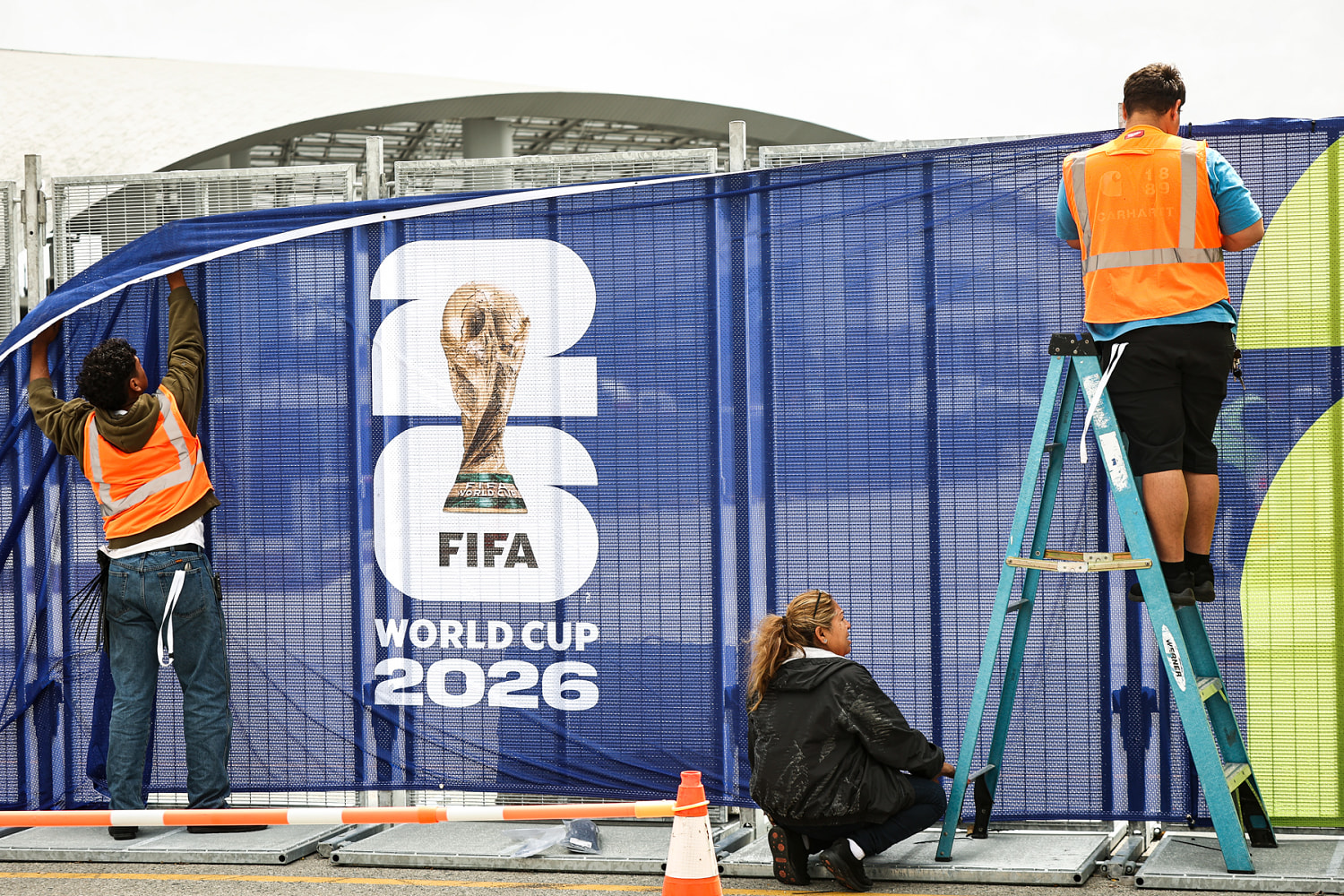
The operational blueprint for hosting a modern mega-event relies on a fundamental miscalculation: the assumption that executing a single-sport tournament scales linearly into managing a multi-sport olympiad. As Los Angeles prepares to host eight matches for the FIFA World Cup, municipal planners and the LA28 organizing committee have positioned the tournament as a live stress test for the 2028 Olympic and Paralympic Games. This operational comparison is structurally flawed. The World Cup and the Olympic Games operate on entirely distinct logistical, geographical, and risk-management functions. While the tournament provides baseline data on crowd movement and regional transit corridors, treating it as an accurate proxy for the Olympics underestimates the geometric scaling laws of multi-sport logistics.
To build a resilient strategy for 2028, organizers must look beyond the superficial similarities of high fan volumes and international arrivals. Quantifying the actual operational delta between these two events requires analyzing the constraints across three core vectors: spatial concentration, transit network capacity, and jurisdictional security infrastructure.
The Scaling Metric: Single-Node vs. Multi-Node Complexity
The structural divergence between the two events begins with venue topology. The World Cup operates on a highly concentrated, single-node system within the Los Angeles metropolitan area. All eight matches occur at a single premium venue: SoFi Stadium in Inglewood.
This creates a highly predictable demand curve. Planners manage a singular, high-capacity endpoint with known ingress and egress bottlenecks. The operational challenges are limited to specific, isolated match days, separated by days of structural resetting.
The Olympic Games introduce an entirely different mathematical order of complexity. The event is a multi-node, asynchronous system operating across approximately 50 distinct competition venues throughout Southern California. The mathematical difference in operational touchpoints can be categorized through three distinct metrics:
- Athlete Processing Volume: The World Cup brings a limited number of national squads to the market at any given time, utilizing established professional training facilities. LA28 requires the simultaneous processing, housing, and securing of roughly 15,000 Olympic and Paralympic athletes across a unified Olympic Village.
- Event Scheduling Density: The tournament features eight discrete windows over a five-week period. The Olympics compress 36 sports and more than 800 individual events into a high-density 17-day window, eliminating the recovery periods inherent in the FIFA schedule.
- Asset Allocation Variety: A football tournament requires uniform asset deployment (pitch maintenance, specific media broadcast configurations). The Olympics require specialized configurations for vastly different sporting types, from velodromes to open-water courses, spread across multiple municipal boundaries.
The primary limitation of using the World Cup as a baseline is that a single-node system cannot yield data on the ripple effects of concurrent events. If an infrastructure bottleneck occurs at SoFi Stadium during a match, regional transit authorities can divert rolling stock from other lines. During the Olympics, those secondary lines will already be operating at peak capacity to feed simultaneous events in Long Beach, the San Fernando Valley, and downtown Los Angeles.
The Micro-Transit Bottleneck and Thermal Load Functions
Los Angeles is executing a temporary transit strategy to handle the immediate influx of global travelers. The regional plan relies heavily on bus rapid transit (BRT) overlays, dedicated shuttle lanes, and synchronized traffic signaling along key corridors connecting Los Angeles International Airport (LAX) and the central fan zones to Inglewood.
This model encounters a significant geographical friction point: SoFi Stadium lacks a direct, high-capacity fixed-rail connection. The K Line and C Line pass near the sports complex but require a secondary bus or shuttle transfer to bridge the final mile. This creates a predictable physical bottleneck during peak egress windows when 70,000 spectators exit simultaneously.
The challenge is compounded by environmental variables. Operating a massive mass-transit system in the peak of southern California's summer introduces a significant thermal load function. The regional environment features large expanses of asphalt, low canopy cover, and exposed transit stops that intensify heat retention.
During the tournament, the city's mitigation strategy is strictly reactive: pop-up hydration stations, temporary shade sails, and public messaging campaigns. These measures do not alter the underlying infrastructure deficit. They merely buffer the consumer experience against systemic strain.
For the Olympics, this reactive approach is non-viable due to the sheer duration of exposure and the volume of non-vehicular movement. The transit strategy for LA28 requires moving hundreds of thousands of spectators across disparate geographic zones daily without the luxury of multi-day cool-down periods. The thermal stress on both the physical rolling stock and the waiting passengers scales exponentially when wait times at transfer hubs increase. A failure in the shuttle-to-rail link during the World Cup will result in delayed departures; a similar failure during the Olympics will trigger a cascading gridlock across the entire county transit network.
Jurisdictional Security Fragmentation and Visa Mechanics
A profound systemic difference between the two events lies in the federal security designation and the scope of international diplomacy required. The tournament matches do not automatically trigger the highest tier of domestic security infrastructure. In contrast, the Olympic Games are a designated National Special Security Event (NSSE).
An NSSE designation fundamentally shifts the command architecture. It places the United States Secret Service in charge of security design, the FBI in charge of intelligence and counterterrorism, and FEMA in charge of consequence management. The operational transition from a locally coordinated, multi-agency model used for standard sporting events to a federalized NSSE apparatus introduces rigid bureaucratic protocols. The logistical protocols utilized during the World Cup will have to be completely rewritten to comply with federal NSSE mandates two years later.
Furthermore, the diplomatic scale introduces an acute operational challenge regarding international visa processing. The tournament involves teams that have cleared regional qualification rounds, representing a predictable and politically manageable subset of nations. The Olympic Games operate under a mandate to host delegations from every National Olympic Committee on earth, regardless of current geopolitical alignments.
Managing arrival operations at LAX requires the Department of State and local organizers to coordinate entry protocols for nations with which the United States does not maintain formal diplomatic relations. This creates an immediate operational strain on immigration processing infrastructure. It demands specialized screening frameworks, secure transit corridors for high-risk delegations, and diplomatic coordination protocols that are absent from standard tournament planning.
The Strategic Path Toward 2028
The World Cup should not be viewed as a dress rehearsal, but rather as an isolated data collection mechanism for discrete subsystems. To convert the insights gained from the tournament into actionable strategic value for LA28, organizers must implement a rigorous post-event translation framework.
First, planners must establish clear sensors at the primary transfer nodes during the tournament to measure the exact velocity of pedestrian throughput. This empirical data on how international crowds navigate the multi-modal shift from rail to shuttle buses must then be injected into dynamic simulation models. These models must simulate a multi-node distribution, assuming 10 concurrent nodes operating at equal or greater density than SoFi Stadium.
Second, the temporary thermal mitigation tactics used must be audited for cost-to-benefit efficiency. Rather than relying on pop-up structures for 2028, the data gathered regarding peak heat vulnerability along transit paths must be used to target permanent infrastructure deployments—such as high-albedo bus shelters and permanent shade trees—along the specific corridors identified as highest-risk.
Finally, the relationship established between local organizers and international sporting bodies must be codified. The operational data shared by FIFA regarding fan behavior, international arrival distributions, and stadium security clear times must be systematically cataloged. This information must then be adapted to fit the much more rigid command structure dictated by the incoming federal NSSE authorities.
The ultimate success of LA28 depends on the immediate recognition that the tournament represents the floor of operational complexity, not the ceiling. Planners must use the upcoming matches to stress-test isolated components, while acknowledging that the true challenge of the Olympic Games lies in an interconnected network that has yet to be built.