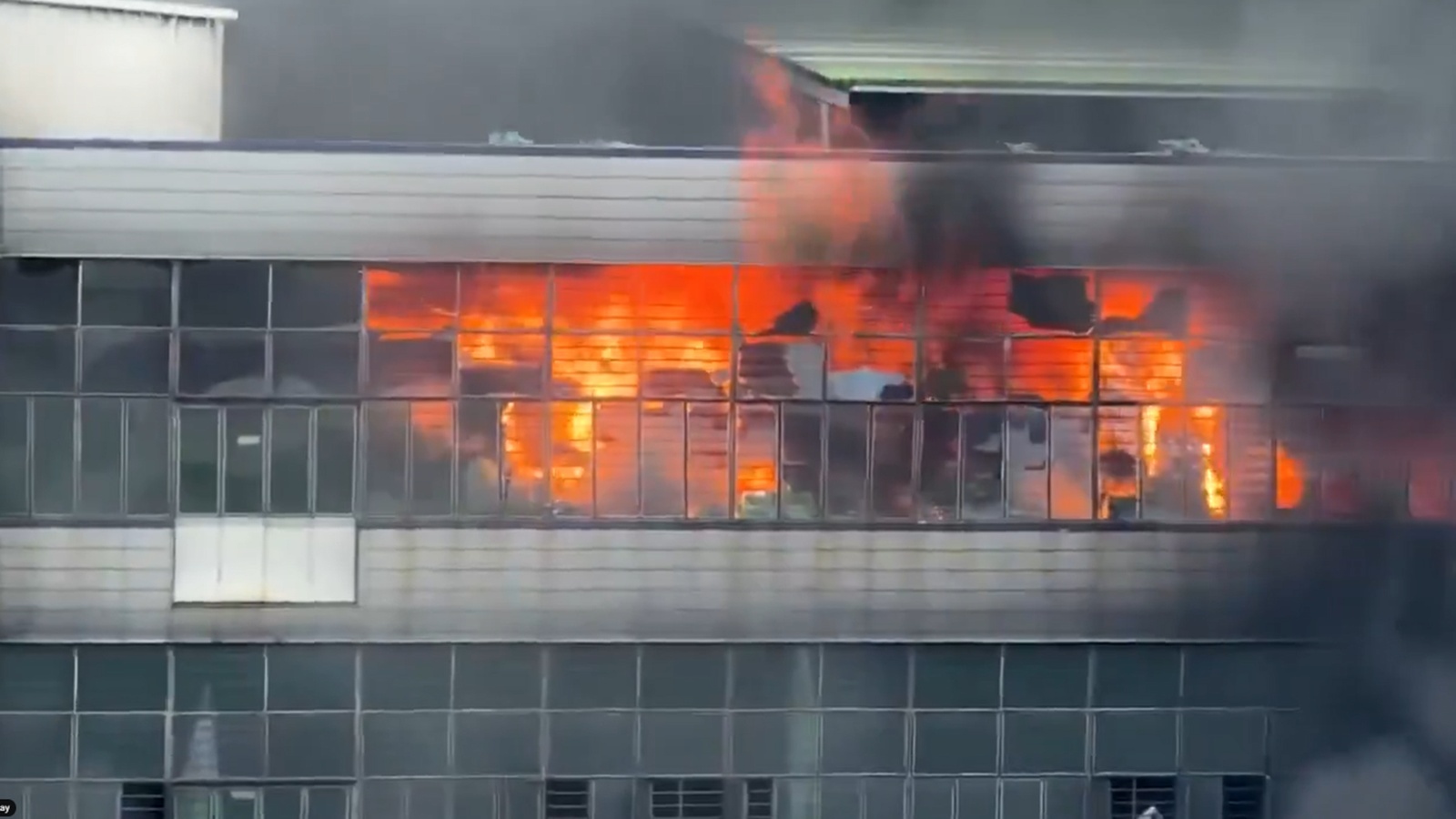
Industrial disasters in concentrated manufacturing hubs are predictable compounding failures rather than isolated accidents. The July 2026 fire at the Huiteng Shoes factory in Jinjiang, Fujian province, provides a stark case study in how supply chain optimization intersects with lethal structural vulnerabilities. Jinjiang produces roughly one-fifth of global footwear output, yielding over 1.2 billion pairs of shoes annually. This extreme consolidation of manufacturing capacity amplifies the consequences when safety mechanisms fail. Assessing this incident requires moving past the basic narrative of a localized blaze and examining the underlying mechanical, chemical, and structural vectors that dictate industrial risk in the global footwear supply chain.
The Chemistry of Rapid Propagation
The velocity of an industrial fire is directly tied to the fuel load present within the structure. Preliminary investigations indicate the fire originated on the ground floor of the multi-story Huiteng facility. In light manufacturing, particularly footwear production, the ground floor typically serves as the primary intake and storage zone for raw materials. This creates a specific vulnerability because of the chemical composition of modern footwear components.
The fuel profile of a shoe factory is defined by three high-risk material classes:
- Polymer Substrates: Ethylene-vinyl acetate (EVA) foams, polyurethane (PU), and synthetic rubbers used for midsoles and outsoles represent highly concentrated petroleum derivatives. Once ignited, these solids undergo rapid thermal degradation, transitioning into liquid fuel fires that spread across horizontal surfaces.
- Volatile Organic Solvent Adhesives: Polychloroprene or polyurethane glues require organic solvents like toluene, acetone, or methyl ethyl ketone for viscosity control. These solvents possess low flash points and vaporize at room temperature. A ground-floor failure means these vapors ignite almost instantly, transforming localized sparks into explosive flash fires.
- Cellulosic Packaging: Massive volumes of corrugated cardboard box flats and paper packing inserts provide an abundance of Class A tinder, allowing low-energy ignition sources to scale to the thermal threshold required to ignite the tougher polymers and solvents.
When these three material classes are stored in close proximity without physical firewall isolation, the fire achieves instantaneous vertical propagation. The ground floor becomes a thermal engine. Heat and toxic gases do not move leisurely; they are forced upward through stairwells, elevator shafts, and utility conduits via the stack effect, trapping workers on upper floors within minutes of the initial ignition.
Structural Bottlenecks and Evacuation Failure
The physical layout of multi-story light industrial factories in East Asian manufacturing corridors frequently balances maximizing floor-space efficiency against emergency egress capacity. When a fire originates at the base of a multi-story structure, the egress architecture determines the mortality rate.
[Ground Floor Ignition]
       │
       ▼
[Vertical Thermal Draft via Conduits & Stairwells]
       │
       ├─► [Horizontal Smoke Infiltration on Upper Floors]
       │
       ▼
[Egress Cutoff: Ground Floor Exits Blocked]
       │
       ▼
[Vertical Upward Retreat to Rooftop Zone]
Reports from state broadcaster CCTV indicated that during the Huiteng fire, multiple workers were forced to retreat upward to the rooftop as flames and thick smoke cut off descending exit routes. This behavior points to a fundamental failure in structural containment and egress isolation.
The mechanism of this entrapment relies on a predictable sequence of structural failures. First, standard stairwells in these facilities lack positive-pressure ventilation systems designed to keep smoke out. As the ground-floor fire burns through volatile solvents, the stairwells act as chimneys, filling with carbon monoxide and hydrogen cyanide gas. Second, the heavy, pungent smoke generated by burning synthetic rubbers and adhesives reduces visibility to near-zero within seconds, causing disorientation.
When descending becomes lethal, the roof becomes the only viable survival zone. However, horizontal roofs on multi-story manufacturing blocks are tactical dead-ends for rescue operations. They isolate workers from ground-based ladder trucks if the building's height exceeds standard ladder reaches or if perimeter access is obstructed by narrow industrial alleyways.
The Rescuer’s Dilemma: Hazardous Entry Mechanics
The deployment of 183 firefighters and 35 vehicles to the Jinjiang site highlights the sheer scale of the containment effort, but structural realities severely limit the efficacy of raw manpower. By late afternoon, open flames were largely contained, yet search and rescue personnel remained locked out of critical interior zones due to structural and atmospheric hazards.
The operational bottleneck for rescue teams in a chemical-heavy industrial fire involves two specific friction points:
Structural Compromise Under Thermal Stress
Reinforced concrete and steel-frame manufacturing buildings lose structural integrity rapidly when subjected to the sustained high temperatures of polymer and solvent fires. Steel beams lose roughly 50% of their structural strength when heated to 600°C—a temperature easily surpassed within the first 30 minutes of a concentrated chemical blaze. Rescuers cannot enter deep interior bays when the threat of catastrophic floor collapse remains unquantified.
Atmospheric Toxicity and Corrosive Fumes
The combustion of polyurethane and synthetic adhesives releases a complex cocktail of gases, including highly toxic hydrogen cyanide (HCN), carbon monoxide (CO), and acrolein. Furthermore, the burning of chlorinated polymers releases hydrogen chloride gas, which turns into hydrochloric acid upon contact with moisture in the eyes, throat, and lungs. Even with self-contained breathing apparatus (SCBA), the corrosive nature of the smoke reduces visibility and degrades personal protective equipment, slowing search-and-rescue operations to a crawl.
Systematic Enforcement Deficits and Supply Chain Realities
The Huiteng factory disaster occurs in a broader context of regulatory friction. Following a massive fire in high-rise structures in Hong Kong that claimed 168 lives, and a subsequent residential blaze in Guangdong that killed 12, China launched an aggressive national campaign targeting fire hazards. Despite these sweeping high-level directives, localized manufacturing facilities regularly slip through enforcement cracks.
The failure is economic and structural, rather than purely bureaucratic. In highly competitive consumer goods markets like footwear manufacturing, profit margins are exceptionally thin. Factory operators face constant pressure to lower production costs. This economic environment incentivizes three specific vectors of non-compliance:
- Sub-optimal Spatial Zoning: Mixing storage zones (warehousing flammable adhesives and raw materials) directly into production buildings rather than segregating them in specialized, fire-rated external structures.
- Deferred Fire Suppression Capital Expenditure: High-quality, automated deluge sprinkler systems require significant capital investment and routine maintenance. In older industrial zones, these systems are either absent, turned off to prevent accidental water damage to stock, or poorly maintained.
- Egress Compromise for Security: Factory managers frequently lock auxiliary exit doors or block egress pathways with raw material overflow to prevent inventory theft or manage interior traffic, transforming designated escape routes into traps during a crisis.
The immediate mandate issued by President Xi Jinping—demanding an exhaustive search-and-rescue effort, comprehensive family support, and strict accountability—indicates that the political cost of industrial negligence is rising. In China's current regulatory posture, "strict accountability" typically translates to criminal charges for factory owners, safety managers, and local municipal inspectors who signed off on non-compliant structures.
Operational Imperatives for Global Brands
For international enterprises sourcing footwear from the Jinjiang corridor, the Huiteng fire exposes significant compliance liabilities. Relying purely on paper audits or scheduled third-party inspections has proven ineffective at identifying dynamic daily hazards like blocked exits or improper solvent storage.
To mitigate supply chain disruptions and human risk, organizations must shift toward real-time operational metrics. This means mandating the physical separation of ground-floor logistics zones from upper-floor production spaces, verifying the presence of functional, independent fire-water reserves, and implementing unannounced, uncoordinated third-party safety audits. If the underlying material risks and structural bottlenecks inherent to multi-story light manufacturing are not addressed directly, structural containment will continue to fail, turning standard production facilities into catastrophic industrial traps.