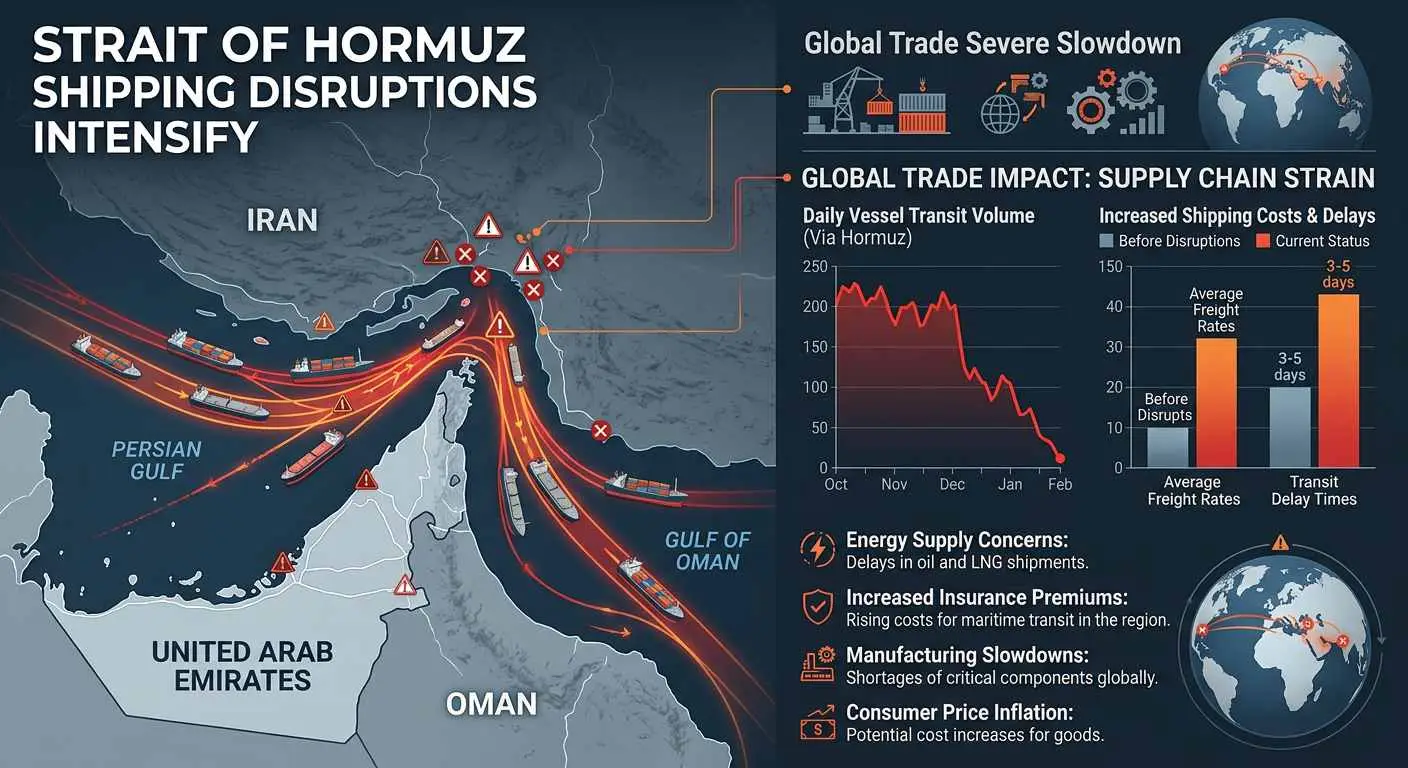
The recent operational pause and subsequent cargo resumption at Saudi Arabia's primary Persian Gulf oil terminals expose the acute structural vulnerabilities governing global energy transit through the Strait of Hormuz. When state-owned energy giant Saudi Aramco suspended loadings following tanker fleet security incidents during the recent United States-Iran escalation, the global market did not merely experience a temporary shipping delay. Instead, the three-week loading gap triggered a profound disruption in the supply chain of specific dense hydrocarbon grades, forcing a complete reassessment of maritime risk management, fleet deployment, and alternative routing economics.
Deconstructing this event requires analyzing three distinct operational vectors: the primary chokepoint reactivation mechanics, the heavy crude yield deficit, and the systemic failure of Mediterranean bypass alternatives.
The Mechanics of Gulf Resumption and Fleet Adaptation
Physical export activity from the Ju'aymah and Ras Tanura terminals resumed when tracking data confirmed that very large crude carriers—specifically the Malaysian Prosperity, Algerian Prosperity, and Singapore Prosperity—each extracted two million barrels between August 12 and 16. This initial pulse terminated a twenty-day operational blackout. However, restarting transit through a contested chokepoint demands specialized commercial and logistical choreography.
To mitigate direct asset exposure, Saudi Aramco deployed a dual-track evacuation strategy:
- Utilizing third-party vessels, notably Sinokor-managed tonnage, to absorb initial spot market allocations.
- Positioning state-operated Bahri supertankers just outside the immediate zone of maximum friction—floating off the coasts of the United Arab Emirates and Oman—while routing secondary hulls toward the Fujairah anchorage.
Concurrently, the introduction of ship-to-ship transfers off the coast of Fujairah allows the state exporter to clear spot market cargoes of Arab Medium and Arab Heavy without requiring every receiving vessel to navigate deep into the Persian Gulf interior. This operational segmentation isolates primary terminal loading from final customer maritime transit, creating a buffer zone designed to reassure skippers and charterers operating under elevated war-risk insurance premiums, which remain near ten percent of hull value.
The Refining Economics of the Heavy Crude Deficit
Market observers frequently misinterpret crude oil as a homogenous commodity, ignoring the specific downstream utility of denser hydrocarbon fractions. The multi-week Hormuz outage disproportionately starved Asian refiners of Arab Medium and Arab Heavy. These grades possess high concentrations of residual fuel oil, an essential feedstock for marine bunker fuels and deep-conversion complex refineries capable of cracking heavy molecules into higher-margin gasoline and diesel.
When heavy sour streams vanish from the spot market, refiners face a severe margin compression loop. Light sweet alternatives cannot simply replace heavy sour crude without leaving expensive coking and hydroprocessing units underutilized.
The structural impact of this deficit operates through three distinct economic friction points:
- Primary distillation yields drop in residual output, forcing regional bunker blending pools to scramble for scarce blending components.
- Complex refineries optimized for high-sulfur heavy grades must substitute feedstock, often enduring lower volumetric product recovery rates.
- Spot market premiums spike violently as buyers compete for the first available physical barrels emerging from the cleared terminals, decoupling spot prices from paper futures benchmarks.
The Economic Failure of the Sidi Kerir Bypass
Faced with Persian Gulf vulnerability, energy strategists historically rely on overland pipelines and alternative marine terminals to bypass maritime chokepoints. During the peak of the recent tensions, Saudi export vectors attempted to rely on the Sumed pipeline system terminating at Egypt's Mediterranean port of Sidi Kerir, alongside Red Sea routes via Yanbu.
However, this alternative routing mechanism suffers from insurmountable cost penalties. While Sidi Kerir liftings for Asian destinations climbed to approximately 670,000 barrels per day, this volume represents a minor fraction of historical Red Sea throughput capacities. The economics of the Mediterranean bypass fail due to the compounding cost function of geography and freight rates:
- Transiting crude from Yanbu or Sidi Kerir around the African cape or managing the extended maritime haul back toward East Asian markets adds weeks of voyage time.
- Supertanker charter earnings for Middle Eastern routes have surged toward historical highs, frequently touching or exceeding half a million dollars per day as vessel scarcity intensifies.
- Chinese and other core Asian refiners face negative netbacks when factoring the bloated freight expenditure against the delivered value of the crude, rendering the Sidi Kerir alternative commercially non-viable for sustained volume displacement.
Consequently, buyers refuse to absorb the extended shipping timelines and elevated logistics overhead, forcing exporters back into the high-risk, high-reward waters of the Persian Gulf.
Strategic Execution for Downstream Operators
Refining conglomerates and trading desks must permanently factor chokepoint friction into their asset allocation models. Relying on just-in-time maritime delivery schedules through narrow straits creates an unacceptable tail risk of sudden inventory starvation. Procurement teams should mandate structural diversification by anchoring baseline feedstocks in regional basins outside the Persian Gulf, while simultaneously establishing dynamic freight-hedging overlays that automatically trigger when war-risk insurance surcharges cross historical volatility thresholds. Operators failing to price these maritime choke costs directly into their crude acquisition formulas will continue to absorb severe margin erosion during localized geopolitical escalations.