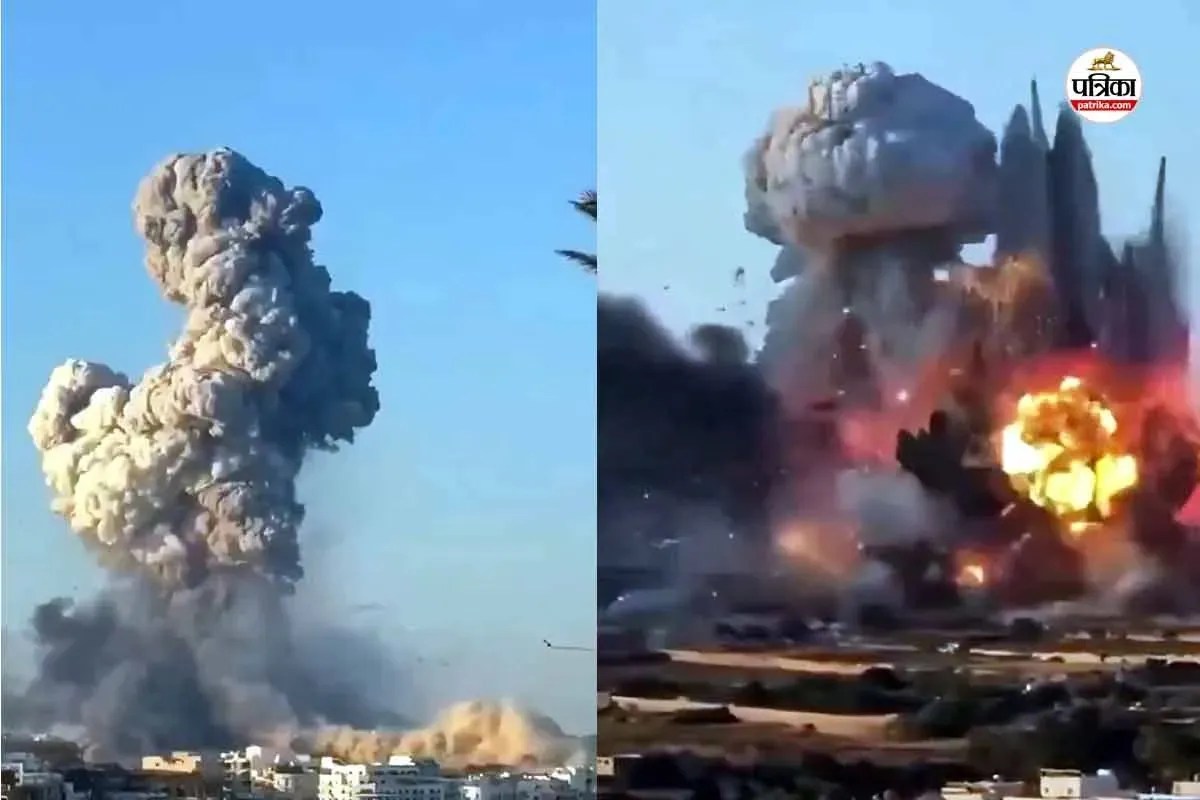
The renewal of the United States blockade on the Strait of Hormuz and the subsequent escalation into daytime kinetic strikes inside sovereign Iranian territory mark a fundamental shift in Middle Eastern conflict dynamics. Where previous cycles of violence relied on proxy engagement and deniable sabotage, the current theater operates on direct, high-intensity state-on-state confrontation.
Iran’s state apparatus, via government spokesperson Fatemeh Mohajerani, claims that recent US airstrikes in southern provinces have resulted in over 30 civilian casualties, alongside military losses including seven soldiers killed at a garrison in Bampur. From a strategic consulting perspective, evaluating these events requires moving past the immediate media narrative of "tit-for-tat retaliation." Instead, we must map the underlying operational frameworks, the cost functions of both actors, and the geopolitical choke points that dictate the limits of this escalation.
The Strategic Triad: Mapping the Theater of Operations
To understand the trajectory of this conflict, we must deconstruct the operational goals of both combatants into a structured three-part framework:
                  ┌────────────────────────────────────────┐
                  │          THE STRATEGIC TRIAD           │
                  └───────────────────┬────────────────────┘
                                      │
         ┌────────────────────────────┼────────────────────────────┐
         ▼                            ▼                            ▼
┌──────────────────┐        ┌──────────────────┐        ┌──────────────────┐
│   US Objective   │        │  Iran Objective  │        │   Choke Point    │
│  Degrade & Force │        │ Asymmetric Veto  │        │ Strait of Hormuz │
│   Negotiation    │        │  & Cost Export   │        │ Escalation Pivot │
└──────────────────┘        └──────────────────┘        └──────────────────┘
1. The US Strategy: Degradation and Coercive Compellence
The United States is executing a dual-track strategy of military degradation and coercive diplomacy. Centered around a renewed naval blockade, US Central Command (CENTCOM) is targeting coastal defense systems, radar installations, and missile storage sites near the Strait of Hormuz.
The primary tactical objective is to dismantle Iran's anti-access/area-denial (A2/AD) envelope to ensure unhindered commercial shipping. The strategic objective, however, is compellence: using the threat of systemic infrastructure destruction—specifically power grids, transport bridges, and hardened nuclear facilities like "Pickaxe Mountain"—to force Tehran back to the negotiating table on highly unfavorable terms.
2. The Iranian Strategy: Asymmetric Veto and Cost Exportation
Faced with conventional inferiority, Iran's doctrine relies on asymmetric warfare designed to export economic and political costs back to the US and its regional allies. Rather than attempting to match US air power, Tehran utilizes its geographic advantage along the Persian Gulf to threaten global energy transit.
Simultaneously, Iran distributes the theater of conflict by executing retaliatory missile and drone strikes against US hosting infrastructure in regional states, including Bahrain, Jordan, and Kuwait. This seeks to exploit political fractures within host nations and increase the domestic political cost for Washington.
3. The Choke Point: The Strait of Hormuz
As the transit route for approximately 20% of the world's liquefied natural gas (LNG) and petroleum, the Strait of Hormuz acts as the physical pivot of this conflict. Any blockade or counter-blockade is not merely a regional military maneuver; it is a direct intervention in global energy markets. The strategic calculation for both sides rests entirely on how they price the risk of a prolonged maritime closure.
Tactical Target Selection and the Cost Function of Kinetic Strikes
A critical deficiency in standard reporting is the failure to analyze target selection. The transition of US air operations from night missions to daytime strikes signals a calculated shift in command intent.
The Operational Rationale of Daytime Strikes
Night strikes traditionally leverage US technological superiority in night-vision, thermal imaging, and stealth, minimizing exposure to ground-based air defenses. Conducting daytime strikes indicates two strategic developments:
- Suppression of Enemy Air Defenses (SEAD): US forces have sufficiently degraded southern Iranian radar and surface-to-air missile (SAM) networks to operate without the cover of darkness.
- Psychological Signaling: Daytime bombardment maximizes the visibility of the strikes to both the local population and Iranian military command, intensifying pressure on the leadership in Tehran.
The Bampur Garrison Engagement: Case Study in Precision targeting
The strike on the 388th Brigade garrison in Bampur County (Sistan and Baluchestan province) illustrates the highly targeted nature of the campaign. According to military statements, 13 precision-guided missiles struck specific infrastructure: the barracks, the guesthouse, and guard posts, resulting in seven military deaths.
This target set indicates an operational choice. Rather than striking ammunition depots (which would cause massive secondary explosions and high casualties), the strike targeted command infrastructure. This is designed to disrupt localized command-and-control while remaining below the threshold that would trigger an all-out, unconstrained Iranian response.
The Economic Vector: Energy Under Siege
Iran's immediate response to the renewed blockade has been the threat to halt all Middle Eastern energy exports. This is not empty rhetoric; it is a structured economic defense mechanism designed to activate global pressure on Washington.
The Mechanism of Global Market Contagion
If Iran successfully disrupts shipping through the Strait of Hormuz, the global economy faces a supply-side shock.
- Insurance Premium Escalation: Maritime war risk premiums for tankers transiting the Persian Gulf would spike exponentially, rendering commercial shipping economically unviable even without physical damage to vessels.
- Supply Shortfall: The immediate removal of 15 to 20 million barrels of oil per day from global markets cannot be easily offset by spare capacity in non-Gulf producers (such as the US or West Africa) due to infrastructure bottlenecks.
- Logistical Redirection: Rerouting tankers around the Cape of Good Hope adds roughly 10 to 14 days to transit times, tying up global shipping capacity and driving up dry bulk and container freight rates globally.
The Limits of Iranian Leverage
However, this leverage has a sharp double edge. Iran’s own economy is heavily reliant on smuggled petroleum exports, primarily to East Asian markets. Completely closing the strait would self-inflict economic damage on Tehran, potentially alienating its remaining economic lifelines.
Thus, the Iranian state must balance its threats of closure with the survival requirements of its domestic economy, pointing to a strategy of highly managed, periodic disruptions rather than a permanent shutdown.
Escalation Scenarios: Assessing the Paths Forward
To evaluate the trajectory of the crisis, we must analyze three potential escalation pathways based on the current military posture of both nations.
Scenario A: Limited Degradation and Diplomatic De-escalation
In this scenario, the US continues localized maritime strikes to degrade Iran's coastal defenses until shipping safety reaches an acceptable baseline. Iran maintains localized asymmetric responses via regional proxies but avoids direct actions that would trigger a full-scale domestic infrastructure strike.
- Probability: Moderate.
- Triggers: Behind-the-scenes diplomatic mediation by third-party nations (e.g., Oman or Switzerland) combined with a temporary suspension of the US blockade.
- Outcome: A return to a tense, militarized status quo with elevated shipping costs.
Scenario B: Total Infrastructure Degradation
Should Tehran reject negotiations and continue targeting commercial vessels and regional US bases, the US executes its threatened expansion of the target list. This includes striking inland power plants, transport bridges, and key elements of the domestic energy grid.
- Probability: Moderate-High.
- Triggers: A mass-casualty kinetic strike by Iranian-aligned forces against a major US base in Bahrain or Jordan.
- Outcome: Severe degradation of Iran’s industrial capacity, leading to severe domestic instability, coupled with a major spike in global energy prices and sustained regional warfare.
Scenario C: The "Pickaxe Mountain" Strike
The absolute escalation ceiling involves kinetic strikes against Iran's hardened, underground nuclear facilities. Striking these sites requires specialized deep-penetration munitions (such as the GBU-57 Massive Ordnance Penetrator) and would represent a declaration of intent to permanently disable Iran’s strategic deterrent capabilities.
- Probability: Low-Moderate.
- Triggers: Definitive intelligence indicating Iran is preparing to cross the weaponization threshold, or sustained regional hostilities that remove all diplomatic pathways.
- Outcome: Unconstrained regional war, potential collapse of the Non-Proliferation Treaty (NPT) framework, and long-term destabilization of global security architectures.
The Asymmetric Equilibrium
The current posture reveals a fundamental mismatch in tactical calculus. The United States is attempting to apply a classic conventional deterrence framework to an adversary that operates entirely on asymmetric, distributed cost-exportation.
While US precision munitions can systematically dismantle physical radar sites, coastal batteries, and military barracks, they cannot easily neutralize the decentralized drone and missile production facilities hidden deep within Iran's interior or the ideological networks of its regional proxies.
Conversely, Iran's civilian population bears the immediate brunt of the economic blockades and kinetic collateral damage. The reported civilian deaths in the southern provinces represent a growing domestic pressure point for the Iranian government.
The critical vulnerability for Tehran is not the loss of military hardware, but rather the potential for domestic economic exhaustion to trigger internal political instability. The regime's survival depends on its ability to project external strength while preventing domestic economic collapse under the weight of the blockade.
For global analysts, the key metric to monitor is not the daily strike count, but the operational status of the Strait of Hormuz and the volatile pricing of maritime insurance markets. The conflict will not be decided by tactical victories on the ground, but by which actor reaches its domestic political and economic breaking point first.