Closing every land crossing between Israel and the occupied West Bank on a national election day is not a routine administrative adjustment; it is a high-friction perimeter containment protocol designed to insulate domestic political infrastructure from kinetic disruption. Standard wire reports treat the October 27, 2026 Knesset election lockdown as a binary reaction to a single security breach—specifically, the October 23 shooting near Hebron that killed two Israeli soldiers and wounded three others. That framing misses the structural mechanics of how Israeli defense planners synchronize tiered labor restrictions, urban counter-insurgency sweeps, and total border closures to manage risk during peak democratic vulnerability.
To understand the decision, one must separate immediate tactical retaliation from systemic perimeter management. The closure operates across three distinct layers: phased labor strangulation, localized territorial clearance, and total transit quarantine. Meanwhile, you can explore other stories here: Two Numbers on a Screen and the Weight of a Continent.
The Architecture of Phased Perimeter Containment
Military closures of the West Bank during Israeli national holidays and Knesset elections follow a predictable operational doctrine, yet the October 2026 deployment escalated faster and cut deeper than standard statutory lockdowns. Rather than flipping a single switch at midnight on election day, the Israel Defense Forces (IDF) and political echelon implemented a staggered compression schedule.
- Phase One: Settlement and Valley Decoupling (October 25–26). Forty-eight hours prior to polls opening, authorities prohibited Palestinian workers from entering Israeli settlements across Judea and Samaria and the Jordan Valley. During this initial window, movement into designated joint industrial zones remained open under heightened screening. The operational objective was to reduce daily human friction inside residential enclaves while preserving baseline supply chain continuity before the main event.
- Phase Two: Total Transit Quarantine (October 27). On election day itself, the exemption for industrial zones evaporated. All land crossings between Israel and the West Bank—along with internal transit nodes connecting Palestinian labor to Israeli-controlled economic zones—were sealed entirely.
- Phase Three: Post-Poll Decompression. Unlike open-ended military sieges, the border closure carries an explicit expiration tied to the closing of ballot boxes and initial vote tabulation, contingent on threat assessments.
This two-step tightening solves a core logistical problem for security forces. Locking down hundreds of thousands of commuters instantaneously creates chaotic bottlenecks at checkpoints, turning transit terminals into concentrated targets for opportunistic attacks. By bleeding off commuter volume over two days before sealing the perimeter completely, the IDF clears the transit arteries ahead of peak troop redeployment. To see the bigger picture, we recommend the detailed article by BBC News.
Force Allocation and the Electoral Security Dilemma
A national election forces a state's security apparatus to split its bandwidth across two competing priorities: external perimeter defense and internal civic protection. On October 27, 2026, Israeli police, Border Police, and intelligence units had to secure thousands of polling stations, transport hubs, and public gathering spaces inside Israel proper against potential lone-wolf or cell-based attacks.
Every soldier stationed at a West Bank crossing to screen vehicles and check permits represents a unit unavailable for domestic rapid-response reserves or active urban raids. Sealing the crossings altogether is a force-multiplication tactic. By reducing the operational mandate at the Green Line from selective screening to total denial of passage, commanders slash the manpower required to hold the line.
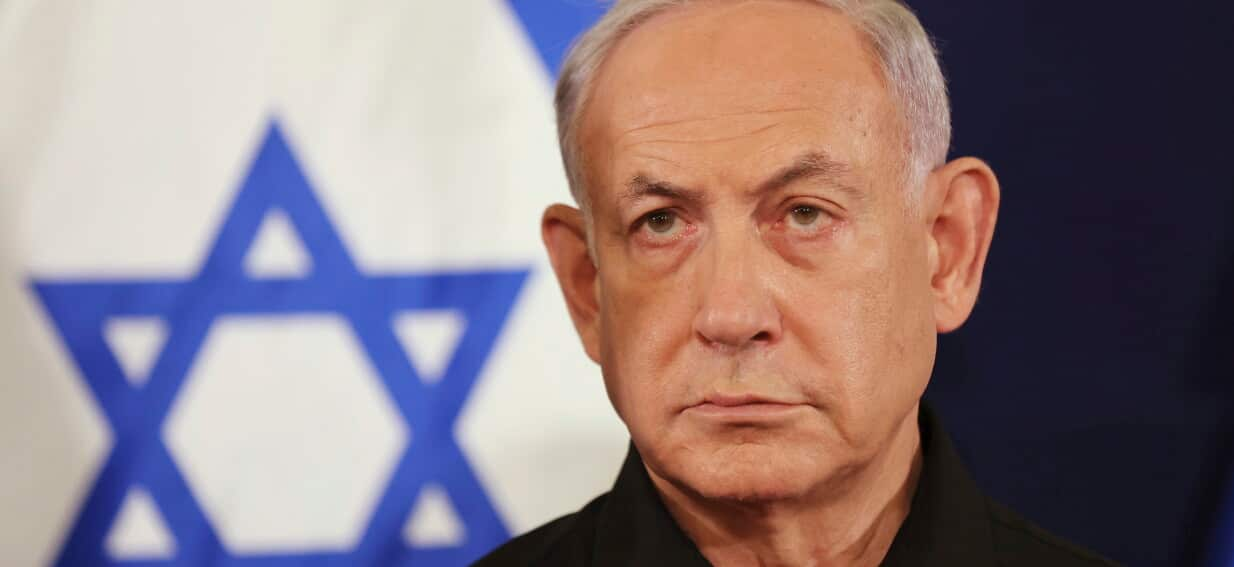
The trade-off is severe economic and humanitarian friction, which defense planners calculate as an acceptable short-term cost compared to the political shockwave of a mass-casualty attack during voting hours. In Israeli politics, security failures immediately preceding or coinciding with an election directly alter voter turnout and coalition arithmetic. Prime Minister Benjamin Netanyahu, entering the 26th Knesset race with his traditional security credentials severely damaged since October 7, 2023, faced acute political pressure to demonstrate absolute territorial control. Defense Minister Israel Katz reinforced this posture through explicit deterrence messaging, tying border access and civilian return directly to the eradication of militant infrastructure.
The Hebron Catalyst and Asymmetric Clearance Mechanics
While election-day closures are recurring policy tools, the October 2026 lockdown was fused directly to an active counter-insurgency campaign in the southern West Bank. Following the October 23 firefight at the northern checkpoint of Hebron—in which two attackers were killed by return fire after killing two soldiers—the IDF initiated a sweeping operational surge.
The scale of the October 23–24 sweep reveals how tactical containment transitions into structural disruption:
- Geographic Saturation: Security forces executed simultaneous raids across roughly 40 distinct areas throughout the territory.
- Target Inspection: Troops searched approximately 400 sites within a 48-hour window, mapping subterranean routes, workshops, and safe houses.
- Network Disruption: Authorities detained around 40 suspects alleged to have operational ties to Hamas and Palestinian Islamic Jihad.
- Physical Infrastructure Alteration: Engineering units blocked arterial roads and demolished structures deemed illegal or tactically advantageous to militants.
This operational tempo produced immediate secondary effects on the civilian population. Local Palestinian authorities and international wire reporting documented the displacement of over 2,600 residents from Hebron neighborhoods as troops cleared sectors under loudspeaker evacuation orders. Israeli officials framed these evacuations as temporary operational necessities until Hamas networks in the city were neutralized. Palestinian officials characterized the same actions as forced displacement and collective punishment.
Analytically, the distinction between the Hebron operation and the election-day border closure lies in their temporal horizons. The border closure is a fixed-duration quarantine mechanism. The Hebron clearance is an open-ended attrition campaign. Combining them creates a closed-loop containment environment: troops flush suspects out of urban neighborhoods in Hebron while sealed crossings prevent operatives from exfiltrating into Israel or dispersing across regional transit corridors.
Economic Friction and the Cost Function of Closure
A total closure of West Bank crossings acts as an immediate circuit breaker on cross-border commerce and labor markets. Even when limited to a single day of total lockdown preceded by two days of partial restriction, the economic shock ripples through three interconnected channels.
First, wage loss for daily permit holders hits immediately. Palestinian laborers working in Israeli construction, agriculture, and industrial zones generally operate on daily or hourly compensation models. A three-day interruption wipes out roughly 12 to 15 percent of a worker's monthly earning window, compounding existing liquidity shortages in the West Bank economy.
Second, industrial zone halts disrupt joint supply chains. By extending the October 27 ban to cover industrial zones inside the West Bank and Jordan Valley, authorities paused manufacturing, warehousing, and logistics operations that rely on mixed workforces. Unlike software or financial services, physical fabrication and agricultural processing cannot recover lost shift hours without paying overtime premiums or absorbing spoilage losses.
Third, internal mobility degradation impairs essential civic services inside the West Bank. When external crossings close alongside internal roadblocks around flashpoints like Hebron, ambulance transit times lengthen, supply deliveries to clinics stall, and school attendance drops across adjacent governorates. The Palestinian Authority, lacking sovereign control over Area C roadways that connect major Palestinian urban centers, has zero institutional capacity to reroute civilian traffic around IDF checkpoints.
Separating Verified Facts from Strategic Hypotheses
Rigorous intelligence and policy analysis requires stripping away partisan rhetoric to separate confirmed operational realities from strategic inference.
Confirmed Operational Facts:
- Two Israeli soldiers were killed and three wounded in a shooting attack near Hebron on October 23, 2026; two Palestinian gunmen were killed at the scene.
- Between October 23 and October 24, the IDF conducted raids in roughly 40 locations, searched 400 sites, detained approximately 40 suspects, and forced the evacuation of more than 2,600 residents in the Hebron area.
- The Israeli political and military leadership ordered a phased closure: banning Palestinian workers from settlements and the Jordan Valley on October 25–26, followed by a complete closure of all West Bank land crossings and industrial zones on October 27.
- Defense Minister Israel Katz explicitly conditioned the return of displaced Hebron residents on the completion of military operations against Hamas infrastructure in the city.
Educated Strategic Hypotheses:
- Deterrence Signaling vs. Tactical Necessity: While intelligence warnings almost certainly spiked following the Hebron attack, the sweeping rhetoric surrounding a "historic" scale operation serves a dual domestic political function. Locking down the entire territory projects decisive executive command to undecided right-wing voters ahead of a razor-thin election.
- Preemptive Cell Isolation: The inclusion of industrial zones in the election-day ban—despite those zones normally remaining open during moderate security alerts—indicates intelligence concerns that militant cells might exploit commercial transit permits to smuggle weapons or operatives toward Israeli population centers during election distractions.
- Post-Election Escalation Risk: Prime Minister Netanyahu's public framing of the Hebron sweep as a prelude to broader military action suggests that the lifting of the election-day border closure on October 28 will not coincide with a de-escalation inside the West Bank. Instead, incoming or caretaker leadership will likely sustain high-intensity brigade-level raids into November.
Limitations of the Containment Model
Treating border closures as a comprehensive security solution ignores fundamental structural vulnerabilities in the West Bank theater. Sealing official land crossings stops documented workers and commercial trucks, not determined adversaries operating outside the permit system.
The West Bank separation barrier spans hundreds of kilometers across rugged terrain, containing numerous unmonitored gaps, damaged fencing sections, and subterranean drainage culverts. When official crossings slam shut, illicit transit shifts toward smuggling corridors that require continuous aerial surveillance and mobile ground patrols to interdict. A lockdown reduces legitimate traffic noise—making unauthorized movement easier to spot—but it does not create an impenetrable physical wall.
Hard perimeter closures also generate long-term blowback that degrades intelligence collection. Palestinian cooperation with security coordination mechanisms relies heavily on economic stability and predictable access to livelihoods. Repeated, multi-day suspensions of work permits—paired with mass residential evacuations and property demolitions—accelerate economic desperation. Over a multi-quarter horizon, acute economic contraction expands the recruitment pool for militant factions, trading short-term election-day quiet for heightened medium-term insurgency pressure.
Strategic Execution for Institutional Operators
Organizations managing personnel, logistics, or risk exposure across Israel and the Palestinian territories cannot treat election-day lockdowns as isolated 24-hour anomalies. Operational continuity requires anticipating the three-day compression window before official military orders hit wire services.
- Front-Load Cross-Border Freight by T-Minus 72 Hours: Logistics managers moving goods between Israeli ports and West Bank distribution hubs must clear all customs and checkpoint inspections at least 72 hours prior to any Israeli national election or major security anniversary. Assume industrial zones will be swept into the closure order regardless of initial military exemptions.
- Shift Workforce Scheduling to Asynchronous Remote or Stockpiled Shifts: Manufacturers operating in mixed industrial zones must build inventory buffers during the week preceding an election and budget for mandatory paid or unpaid downtime across the 72-hour lockdown window.
- Decouple Medical and Essential Staff Transit from General Checkpoints: NGOs, diplomatic missions, and healthcare networks operating in southern West Bank cities like Hebron must pre-register emergency movement coordinates with the Coordinator of Government Activities in the Territories (COGAT) before phased roadblocks lock down urban arteries. Waiting until a checkpoint closes to negotiate humanitarian passage guarantees multi-hour delays.
- Model Post-Election Operational Persistence: Risk analysts must separate border reopening from internal security normalization. Even after land crossings reopen on October 28, internal encirclements, night raids, and localized curfews in flashpoint governorates will persist until military commanders declare tactical objectives complete.