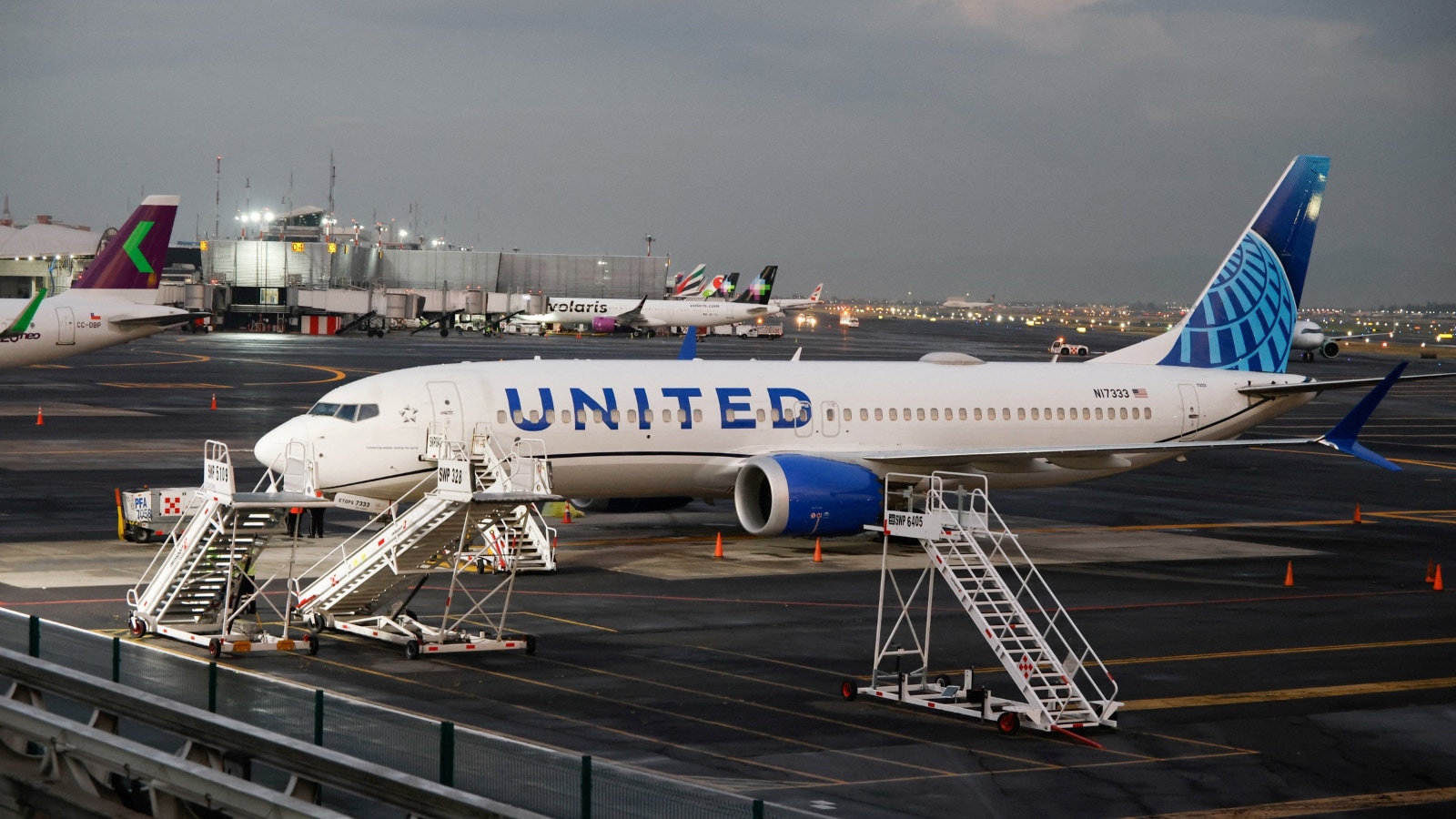
Systemic failures in national airspace infrastructure expose a stark operational divide between rigid procedural compliance and decentralized, improvised service recovery. When a nationwide ground stop halts commercial and general aviation simultaneously, the resulting friction impacts two distinct tiers of the aviation ecosystem: low-hour student pilots operating on narrow fuel and training margins, and commercial carriers managing high-density passenger frustration inside pressurized cabins. Analyzing these concurrent phenomena—a stranded student pilot requesting emergency routing assistance and touring rock bands performing impromptu acoustic sets for delayed commercial passengers—reveals the underlying mechanics of operational bottlenecks, human factors under stress, and brand equity preservation during cascading logistical collapses.
The Mechanics of Airspace System Failures
To understand why a single regulatory or technical disruption paralyzes thousands of aircraft, one must examine the architecture of modern air traffic management. National airspace systems operate as tightly coupled networks. Unlike loosely coupled systems, where a failure in one node remains isolated, a tightly coupled network transfers shockwaves instantaneously across every connected sector.
When a critical failure occurs—such as a Notice to Air Missions (NOTAM) database outage, a telecommunications trunk collapse, or severe convective weather locking down major hubs—the Federal Aviation Administration (FAA) institutes a ground stop. A ground stop is a blunt-force traffic management initiative. It halts all departures to a specific airport or across the entire airspace to prevent airborne saturation. If aircraft continue launching without clear routing protocols or functional safety advisories, terminal radar approach control facilities and air route traffic control centers exceed their maximum sector capacity.
The immediate consequence of a ground stop is an asymmetrical distribution of risk:
- Airborne traffic faces immediate fuel burn constraints, holding pattern congestion, and diversion airport saturation.
- Ground-bound commercial traffic experiences gate lock, crew duty-time expirations, and cascading schedule disintegration.
- General aviation and flight training operations lose access to real-time meteorological and infrastructure data, turning routine cross-country flights into high-stakes navigational exercises.
Operational Vulnerability of the Student Pilot
The predicament of a student pilot caught in a nationwide flight halt illustrates the sharp edge of operational vulnerability. Flight training relies on predictable regulatory and technical scaffolding. A student pilot operating on a solo cross-country flight possesses limited total flight hours, restricted instrument proficiency, and a cognitive load capacity already operating near its threshold.
Cognitive Load and Task Saturation
Under normal operating conditions, a student pilot allocates mental bandwidth across three primary tasks: aviate, navigate, and communicate. A sudden system-wide flight halt disrupts this equilibrium.
First, the navigational baseline shifts. If the halt stems from an information system outage, the pilot loses automated pre-flight and in-flight updates regarding runway closures, navigational aid outages, and temporary flight restrictions. The pilot must transition from automated verification to manual cross-checking via Flight Service Stations or direct air traffic control (ATC) queries.
Second, communication channels saturate. During a ground stop, ATC frequencies become congested with commercial aircrews requesting updated clearance delivery times, fuel-burn recalculations, and alternate airport vectors. A low-time pilot attempting to interject a request for basic routing assistance or airspace clarification faces high transmission density and rapid-fire phraseology. Hesitation on the radio compounds stress, increasing the probability of missed instructions or airspace violations.
Fuel Reserves and Diversion Economics
Unlike commercial airliners carrying dispatch-calculated contingency fuel and supported by ground-based operations centers, a single-engine training aircraft operates with finite endurance and zero external dispatch support. When a ground stop forces an unscheduled landing or holds a student pilot at an unfamiliar regional airfield, the financial and logistical friction escalates rapidly:
- Ramp and Tie-Down Fees: Fixed-Base Operators (FBOs) at non-towered or regional airports charge overnight parking, handling, and fuel surcharges that disrupt flight school budgets.
- Aircraft Utilization Bottlenecks: Flight schools operate on tight dispatch schedules. An aircraft stranded three hundred miles away delays subsequent training blocks for dozens of other students, creating a localized supply shock in training capacity.
- Regulatory Currency: Student pilot endorsements for solo cross-country flights carry strict meteorological and time-window parameters. If a ground stop delays a return leg past sunset or into deteriorating visual flight rules (VFR) conditions, the student becomes legally grounded, requiring a certified flight instructor to travel to the diversion airport to retrieve both the student and the airframe.
Seeking external help during such a halt is not a sign of incompetence; it is a textbook execution of Aeronautical Decision Making (ADM). Recognizing personal and aircraft limitations early, querying ATC for progressive taxi or flight following, and diverting before fuel reserves breach legal minimums represent the primary defense mechanisms against accident chains.
Commercial Cabin Containment and Service Recovery
While the student pilot manages acute navigational and regulatory friction, commercial airlines face a fundamentally different problem: mass containment. When a ground stop traps passengers inside a narrow-body fuselage for hours, the airline loses control over its primary product—schedule reliability—and must pivot immediately to managing passenger psychology.
The Cost Function of Tarmac Delays
Regulatory frameworks, specifically Department of Transportation (DOT) tarmac delay rules, impose severe financial penalties on carriers that hold aircraft on the tarmac beyond three hours for domestic flights without offering passengers the opportunity to deplane. Every minute past the two-hour mark forces airline operations centers into a complex optimization calculation:
- The Cost of Return: Pulling back to a gate forfeits the aircraft's position in the departure queue, guarantees missed passenger connections, and risks pushing the flight crew past their federally mandated Flight Duty Period (FDP) limits. Once a crew times out, the flight cancels outright, stranding 150 to 200 passengers and displacing the airframe for the next morning's departure bank.
- The Cost of Holding: Remaining in the departure queue preserves takeoff priority once the ground stop lifts, but escalates cabin tension, depletes onboard catering and potable water, and risks catastrophic regulatory fines if the ground stop extends unexpectedly.
During this limbo, standard airline service recovery tools—vouchers, frequent flyer miles, and automated rebooking emails—fail to address the immediate environmental stressor: physical confinement and helplessness.
Decentralized Intervention: The Mid-Air Performance Dynamic
The intervention of touring musicians performing impromptu sets aboard delayed or disrupted flights functions as an unintentional, high-leverage behavioral intervention. From a service operations perspective, this phenomenon alters the cabin environment through three distinct mechanisms.
First, it breaks the temporal monotony of the delay. Cognitive psychology demonstrates that unoccupied time feels significantly longer than occupied time. When passengers sit in silence staring at seatbacks, perceived wait times expand, amplifying cortisol levels and interpersonal friction. Live acoustic music introduces a novel sensory stimulus that captures collective attention, compressing perceived duration.
Second, it shifts the social dynamic of the cabin from atomized frustration to shared experience. Commercial air travel typically enforces strict social isolation; passengers wear noise-canceling headphones and avoid eye contact. An unscripted performance dissolves these barriers, transforming a collection of isolated, irritated consumers into a cohesive audience. This collective shift dramatically reduces the likelihood of unruly passenger incidents, which historically spike during prolonged ground delays and irregular operations (IROPS).
Third, it generates asymmetric brand equity at zero marginal cost to the carrier. In a standard crisis, airlines spend millions on public relations and customer compensation to mitigate brand damage. When a high-profile or charismatic band performs mid-flight, passenger-captured video spreads rapidly across social media ecosystems. The narrative shifts from systemic infrastructure failure and corporate incompetence to human resilience and spontaneous joy. The airline captures positive sentiment and earned media impressions simply by permitting the crew to tolerate a temporary suspension of rigid cabin quietude.
Structural Limits of Improvised Solutions
While viral moments of onboard entertainment and successful student pilot diversions highlight human adaptability, relying on improvised heroism to mask systemic fragility is an operational failure. Both scenarios expose severe structural limitations in current aviation management.
The Fallacy of Organic Service Recovery
Airline executives cannot build a repeatable service recovery protocol around the chance presence of touring musicians. Relying on organic passenger interventions creates dangerous inconsistency:
- Safety and Compliance Conflicts: Cabin crew primary duties center on safety and emergency readiness. An impromptu performance blocks aisles, complicates beverage cart movement, and can obscure passenger attention during critical safety announcements or sudden clear-air turbulence events. Flight attendants must constantly balance passenger morale against Federal Aviation Regulations (FARs) regarding cabin security.
- Zero Scalability: Across thousands of daily flights affected by a national ground stop, 99.9% of cabins contain no entertainers. For the vast majority of travelers, the reality of a system halt remains cramped seating, stale air, and opaque communication from the cockpit.
Information Asymmetry in General Aviation
Similarly, the student pilot's reliance on ad-hoc assistance during a system outage points to an enduring flaw in aviation data distribution. Legacy systems like NOTAMs remain notoriously cluttered, written in archaic abbreviations, and difficult to parse even for seasoned airline transport pilots. When primary digital dissemination pipelines fail, the burden of data synthesis falls entirely on the individual pilot via voice radio.
Voice communication is a low-bandwidth, high-latency medium. Expecting ATC facilities—already overwhelmed by commercial diversion traffic—to act as real-time flight-planning consultants for low-time pilots introduces single-point-of-failure risks. If a controller misinterprets a student's fuel state or positional awareness due to frequency congestion, the safety margin evaporates.
Strategic Mandates for Aviation Stakeholders
To eliminate the operational fragility exposed by system-wide flight halts, aviation authorities, commercial carriers, and flight training organizations must move beyond reactive improvisation and execute structural upgrades.
- Modernize Airspace Data Redundancy: Aviation regulators must decouple critical flight safety data from single-point legacy databases. Implementing decentralized, satellite-linked cockpit weather and airspace status feeds directly to general aviation avionics ensures that even during a ground-based telecommunications or database collapse, student and private pilots retain independent situational awareness without saturating ATC voice frequencies.
- Establish Tiered ATC Priority Protocols: During irregular operations, air traffic control facilities require automated dynamic frequency splitting. Dedicating a specific, low-congestion clearance and flight-following frequency exclusively for general aviation and training aircraft prevents low-time pilots from getting locked out of communication loops by commercial carrier traffic.
- Deploy Active Cabin De-escalation Frameworks: Airlines must train flight crews to treat prolonged tarmac delays as acute environmental psychology challenges rather than passive waiting periods. Standardized protocols—requiring cockpit updates at strict 15-minute intervals regardless of whether new information exists, immediate distribution of emergency water and snacks before the 60-minute mark, and empowering crews to relax non-safety cabin restrictions—reduce passenger agitation systematically rather than waiting for viral luck.
- Enforce Dynamic Flight Training Dispatch Rules: Flight schools must integrate system-health metrics into pre-flight risk assessment matrices. Dispatchers should mandate higher fuel reserves—increasing standard VFR reserves from 30 minutes to a hard 60-minute floor—whenever national airspace congestion indices or degraded infrastructure advisories appear, ensuring student pilots possess the endurance to outlast localized ground stops safely.