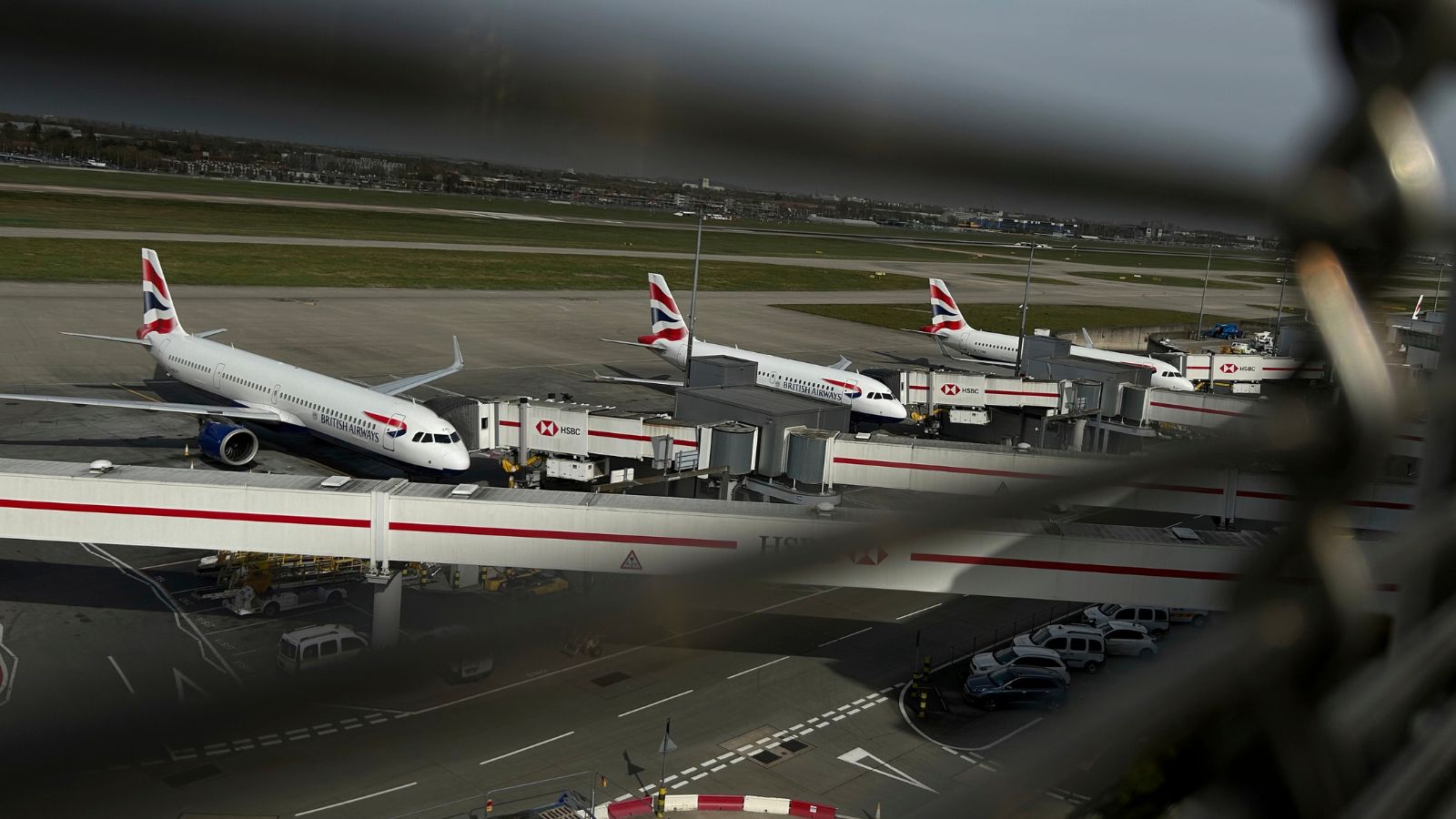
Modern airspace management operates on razor-thin margins of computational certainty, where a localized software anomaly within flight-processing infrastructure instantly cascades into a national network failure. When the United Kingdom National Air Traffic Services experienced a critical technical breakdown in its primary flight-processing architecture, more than 625 flights were cancelled and thousands more stranded across primary hubs like Heathrow and Gatwick.
This event demonstrates why evaluating modern aviation incidents requires moving past superficial descriptions of technical glitches. Catastrophic disruptions stem from structural vulnerabilities in centralized scheduling, tight equipment coupling, and asymmetric recovery velocity between air navigation service providers and commercial airlines.
The Mechanics of Capacity Throttling
Air traffic control systems do not operate on an all-or-nothing binary; rather, they regulate throughput by managing instantaneous system capacity against environmental and computational loads. When the National Air Traffic Services flight processing system failed, the core computation engine lost its automated ability to track and project flight trajectories safely.
Because airspace safety depends on maintaining precise vertical and horizontal separation minima, the loss of automated processing forced controllers to revert to manual safety procedures. Manual data processing fundamentally changes the operational throughput function.
Processing capacity drops precipitously, compelling air traffic managers to restrict departures deliberately to prevent airborne sector saturation. The resulting ground stops are not safety failures in themselves, but rather protective circuit breakers designed to prevent mid-air risk by shifting the backlog entirely onto airport tarmac infrastructure.
The Cascading Cost Function of Displaced Assets
Commercial airlines operate under highly optimized, tightly wound scheduling loops designed to maximize asset utilization through high daily aircraft rotations. When departure restrictions freeze fleets at origin airports, a severe time-space displacement vector is introduced into airline balance sheets.
The economic fallout of a ground stop compounds via three distinct cost multipliers:
- Crew Duty Limitations: Aviation regulations strictly cap duty hours for flight decks and cabin crews. Ground delays consume these legal limits without generating revenue, forcing mid-sequence cancellations once crews time out.
- Fleet Misplacement: Aircraft tied down at non-base stations cannot operate evening rotations or morning bank departures on the following day, decoupling inventory from consumer demand across international networks.
- Re-accommodation Liabilities: Passengers stranded mid-journey trigger mandatory duty-of-care expenses, including hotel accommodations, ground transport, and rebooking obligations on competing carriers.
These variables explain why a technical fault lasting only a couple of hours generates residual operational chaos persisting long after engineers patch the underlying code. The recovery phase is mathematically bound by the time required to re-sync displaced crews and reposition unallocated airframes back to their primary hubs.
Systemic Fragility in Centralized Air Navigation
The recurring vulnerabilities exposed across national air navigation systems point toward structural architectural debt. Centralized flight-processing models create single points of failure. Even with redundant failover environments, software logic errors or corrupted data feeds can propagate rapidly across primary and backup nodes if the underlying architecture shares codebase dependencies.
Decentralized routing architectures or distributed ledger verification protocols remain largely absent from civil aviation infrastructure due to rigorous certification timelines and high capital expenditure thresholds. Consequently, air navigation service providers rely on monolithic software builds that are exceptionally difficult to update, test, or patch without introducing systemic risk.
Commercial aviation prioritizes ultra-conservative reliability standards, which paradoxically discourages rapid iterative software modernization. This creates an evolutionary mismatch where aging infrastructure architectures attempt to manage exponentially increasing traffic densities fueled by modern airline scheduling algorithms.
Operational Resilience and Network Recovery
Restoring equilibrium to a disrupted aviation network requires managing queue clearance rates under severe terminal capacity constraints. Airports like London Heathrow operate at near one hundred percent capacity during peak operational windows. They possess virtually no buffer to absorb pent-up departure demand once a system bottleneck clears.
When National Air Traffic Services announced that a technical fix had been implemented and systems were recovering, the physical airspace did not instantly snap back to nominal flow rates. Instead, air traffic controllers faced a congested queue requiring sequenced prioritization. Priority is typically granted to emergency flights, long-haul intercontinental arrivals, and repositioning aircraft essential for downstream schedule integrity, leaving short-haul domestic and European services at the back of the queue.
Airlines manage this recovery window by executing schedule triage, proactively cancelling flights with high asset-loss ratios to preserve the stability of the remainder of their network. Passengers caught in these windows experience secondary cancellations even after the air navigation service provider declares the primary technical fault resolved.
To mitigate future systemic shocks, air navigation authorities must transition from reactive patching models to resilient, fault-isolated micro-architectures that compartmentalize software anomalies before they require nationwide airspace throughput throttling. Until capital investment matches the complexity of modern airspace demands, network-wide disruptions will remain an inevitable byproduct of localized technical failures.