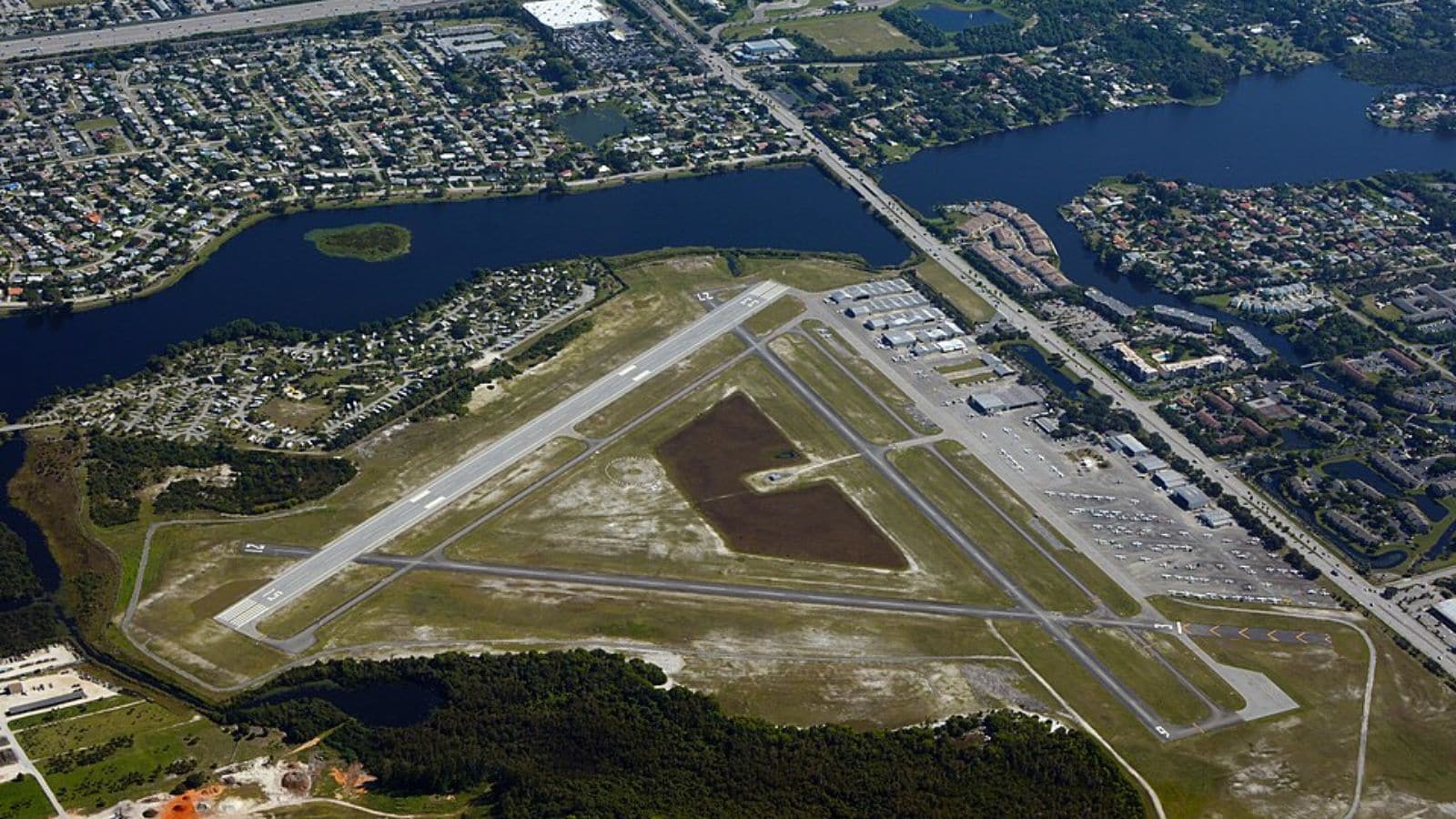
The renaming of Palm Beach International Airport (PBI) to President Donald J. Trump International Airport illustrates how political jurisdiction can override local municipal asset control. While public commentary focuses heavily on the symbolic friction of the change, the true mechanics of this transition rest on a complex interaction between state statutory preemption, Federal Aviation Administration (FAA) operational protocols, and commercial trademark licensing frameworks. This transition establishes a precedent as the first instance of a commercial service airport being renamed after a sitting United States president during their active term.
Understanding the structural execution of this rebrand requires breaking down the legislative catalysts, the operational decoupling of aviation codes, the financial cost functions, and the legal constraints governing the intellectual property. Also making headlines in related news: The Aluminum Giants Are Coming Home.
The Statutory Catalyst and Jurisdictional Preemption
The primary mechanism driving the rebranding was not a municipal resolution, but a top-down legislative intervention by the State of Florida. On March 30, 2026, Governor Ron DeSantis signed legislation amending Section 332.0075 of the Florida Statutes. This amendment executed a specific legal maneuver: it preempted to the State of Florida the sole authority to name major commercial service airports within its borders, effectively stripping Palm Beach County of its naming rights over its own asset.
The statutory directive forced Palm Beach County, as the owner and operator of the infrastructure, into a mandatory compliance framework. The law dictated that the county must diligently pursue all necessary federal and private approvals to implement the name change. This creates a distinct separation between branding rights and operational ownership; while the state dictates the name on the terminal, Palm Beach County retains 100 percent of the financial, operational, and legal liabilities of running the facility. The asset’s governance, policy structure, and revenue generation models remain entirely localized. Additional information regarding the matter are detailed by Condé Nast Traveler.
The Operational Decoupling of Aviation Codes
The most critical operational risk in any major airport rebrand is the synchronization of international aviation databases. For this specific transition, the aviation ecosystem faces a structural bottleneck caused by a 40-day asynchronous rollout between operational codes and passenger-facing reservation systems.
The transition architecture is divided into two distinct technical phases:
- Phase I: Operational and Tactical Realignment (Effective July 9, 2026). The FAA Locational Identifier (LID) and the International Civil Aviation Organization (ICAO) identifier transitioned simultaneously. The FAA LID shifted from PBI to DJT, while the ICAO code shifted from KPBI to KDJT. This phase governs air traffic control, flight planning, aeronautical publications, and pilot communications.
- Phase II: Commercial and Consumer Realignment (Effective August 18, 2026). The International Air Transport Association (IATA) code—the three-letter identifier utilized by consumers for flight searches, ticketing, GDS (Global Distribution Systems), and baggage routing—will remain PBI until its hard cutover date.
This 40-day delta introduces a dual-system friction point. Pilots and air traffic controllers operate under the "DJT" designator, while commercial airlines, booking engines, and baggage handlers continue to route inventory under the "PBI" designator. To mitigate the risk of systemic ticketing failures, major legacy carriers operating at the facility (including Delta, United, American, JetBlue, and Southwest) collectively petitioned IATA to accelerate the code synchronization.
Until the August 18 cutover, commercial carrier websites must employ a digital alias framework: routing consumer queries for "PBI" directly to the newly named "DJT" terminal assets behind the user interface to prevent drop-offs in regional tourism search volume.
The Capital Allocation and Cost Function of Rebranding
Rebranding a medium-hub commercial airport incurs a significant capital requirement driven by physical asset replacement and digital infrastructure updates. The total projected cost function for this transition is estimated at $5.5 million.
The capital expenditure is distributed across three primary operational areas:
- Fixed Wayfinding and Roadway Infrastructure: Replacing overhead highway signage on state roads and local access arteries, along with perimeter airport markers.
- Terminal Retrofitting: Swapping physical branding across check-in counters, flight information display systems (FIDS), baggage claim carousels, and terminal architecture.
- Digital and Software Overhauls: Updating internal county databases, public-facing websites, localized security networks, and municipal communication assets.
The financing mechanism for this expenditure relies on a combination of localized airport revenues and anticipated state appropriations. Because airport revenues are strictly governed by FAA federal grant assurances, local authorities must ensure that these expenditures do not violate federal diversion-of-revenue principles. To minimize friction with taxpayers, local property tax revenues have been explicitly isolated from funding the rebrand.
Trademark Licensing and Commercial Constraints
A unique operational layer of this transition is the intellectual property framework. Because "President Donald J. Trump International Airport" involves a trademarked personal identity, Palm Beach County could not legally alter its signage without formal authorization from the trademark owner, the Trump Organization.
To resolve this, the Palm Beach County Board of County Commissioners executed a Naming Rights and License Agreement on May 5, 2026. The contract isolates the municipality from commercial exploitation while granting the necessary legal clearance to implement the state mandate.
The structural components of the licensing agreement include:
- Zero-Royalty Structure: The Trump Organization is strictly prohibited from collecting royalties, licensing fees, or direct revenue shares from airport operations, terminal concessions, or terminal-adjacent commerce.
- Asset Marketing Rights: The airport retains the legal right to utilize the name, image, and likeness associated with the trademark exclusively for marketing, advertising, and promoting the aviation facility's services.
- Commercial Merchandise Insulation: The agreement prevents the monetization of trademarked merchandise through official airport retail channels to avoid conflicts of interest regarding public property utilization.
Strategic Forecast and Regional Impact
The immediate strategic priority for the airport administration is navigating the operational duality of the coexisting brand elements. Over the next several weeks, passengers will encounter a fragmented visual environment where classic "PBI" branding and new "DJT" elements overlap within the terminal.
The long-term economic outcome depends on balancing regional market realities against potential consumer polarization. The facility handles approximately 8.6 million passengers annually and generates an estimated $4.6 billion in direct and indirect economic impact for the South Florida region. Because the facility sits in a highly competitive aviation market, flanked by Fort Lauderdale-Hollywood International (FLL) and Miami International (MIA), any sustained consumer friction or corporate avoidance could shift market share southward.
The ultimate operational play requires the airport administration to completely decouple the political optics of the name from the functional efficiency of the terminal. The facility's ability to maintain its high rankings in passenger satisfaction will depend entirely on keeping TSA wait times low, maintaining baggage routing integrity through the August 18 IATA code transition, and ensuring that the $5.5 million capital expenditure does not delay broader airfield capacity expansions.