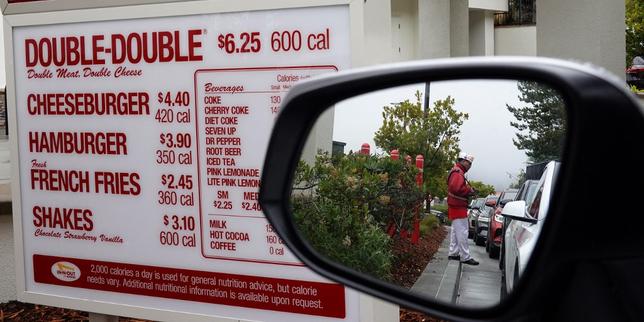
Municipal zoning boards across the United States are quietly executing a radical strategy to reshape American infrastructure. They are banning drive through windows for fast food chains.
For decades, the automobile-centric design of American cities made the drive through lane an untouchable sacred cow of suburban convenience. Today, local governments from California to New Jersey are pushing back against the endless lines of idling sedans, pedestrian safety hazards, and suburban monotony. This regulatory shift represents a major friction point between corporate expansion models and local quality of life concerns.
The Infrastructure Trap
Urban planners designed post-war American suburbs around the car. Fast food operators perfected a business model that relied entirely on high-volume vehicular throughput. The drive through lane became the primary revenue engine for giants like McDonald's, Wendy's, and Taco Bell, often generating over seventy percent of total store sales.
How American Suburbs Started Banning Drive Through Fast Food
business, news, lifestyle
Urban planners call it the geometry of circulation. Drivers call it convenience. For decades, the engine of American suburban sprawl relied on a simple architectural contract: you pull off the highway, idle your engine, order a burger through a squawk box, and drive away without ever unbuckling your seatbelt. It was efficient. It was profitable. It also completely destroyed the human scale of American towns.
Now, a quiet municipal rebellion is spreading across the United States. Local governments from California to New Jersey are systematically banning new drive-thru windows. City councils are passing ordinances that outlaw the very infrastructure that built modern fast food empires.
This is not a sudden health crusade against saturated fats or sodium counts. This is a cold, calculated reckoning over real estate, traffic gridlock, and the financial bankruptcy of auto-centric design.
The Architecture of Attrition
To understand why local municipalities are drawing the line at the drive-thru lane, you have to look at what happens to a corridor when every parcel of land is optimized for vehicles idling at ten miles per hour.
A standard drive-thru lane requires immense space. Stacking lanes must accommodate anywhere from six to twelve idling vehicles behind the ordering speaker to prevent backups onto public thoroughfares. That means acres of prime commercial real estate are paved over just to store cars waiting for french fries. The resulting footprint creates massive gaps in the urban fabric. Pedestrians face a gauntlet of crossing curb cuts where drivers looking over their shoulders for oncoming traffic routinely ignore people on foot.
Urban economists have pointed out that this land-use pattern is remarkably inefficient from a tax revenue perspective. A drive-thru parcel generates low property tax yields per acre compared to mixed-use developments, yet it places a heavy burden on municipal infrastructure through increased traffic congestion, asphalt wear, and pedestrian safety hazards. Towns are realizing that prioritizing asphalt storage for fast food is a terrible long-term economic strategy.
Traffic Engineering Gone Wrong
The immediate catalyst for most of these bans is not aesthetic theory. It is gridlock.
When a popular fast-thru concept launches a new location or runs a viral marketing promotion, the demand inevitably spills out of the stacking lane and onto public streets. Municipal traffic engineers have watched helplessly as auxiliary queues block turning lanes, obstruct emergency vehicles, and back up traffic for blocks.
Local police departments spend an ungodly amount of time managing fast-food traffic snarls during peak lunch and dinner hours. When a local government has to deploy municipal resources just to manage the queue for a chicken sandwich, the system has failed. Banning new drive-thrus becomes a matter of public safety and basic municipal sanity. By forcing patrons to park and walk inside, restaurants naturally throttle the rate of transactions. The bottleneck moves from the public street to the interior counter, where it belongs.
The Pushback From Corporate Boardrooms
Naturally, the quick-service restaurant industry is not taking these municipal clampdowns lying down. For major chains, the drive-thru window is not merely an amenity. It is the primary engine of their business model.
During the global health disruptions of the early 2020s, drive-thru lanes accounted for up to seventy percent of sales for major brands. Corporate strategies aggressively pivoted toward double-lane drive-thrus, digital pre-order pickup windows, and smaller dining rooms that eliminated indoor seating entirely. To tell these corporations that they can no longer build drive-thru windows is an existential threat to their expansion models in suburban markets.
Industry lobbyists argue that these bans disproportionately harm working-class consumers who rely on speed and convenience during tight work breaks, as well as parents with young children who find unbuckling toddlers to walk inside an establishment impractical. Yet, municipal leaders are increasingly calling the bluff. They argue that a town designed exclusively for the convenience of motorists inside metal boxes is a town that fails its actual residents.
The Shift Toward Walkable Density
The towns enacting these restrictions are signaling a broader cultural pivot. The American suburb is growing up, or at least attempting to re-engineer itself for a post-car-centric future.
Communities are replacing strip mall templates with pedestrian-first zoning codes. They are requiring buildings to sit right up against the sidewalk, with parking tucked discreetly in the rear or eliminated entirely in favor of shared municipal lots. When a fast-food corporation applies for a permit in these newly zoned districts, they are met with a wall of bureaucracy designed to force them into a pedestrian-friendly urban form.
Some brands are adapting. They are opening compact, walk-in urban units in downtown districts without a single vehicle lane in sight. Others are choosing to bypass restricted municipalities altogether, focusing their aggressive expansion on exurban highway interchanges where local zoning codes remain permissive.
The battle lines are drawn. On one side sit multinational conglomerates optimized for speed, convenience, and vehicular throughput. On the other side sit neighborhood associations, urban planners, and local politicians trying to salvage what is left of community character and street safety. The drive-thru window was once the ultimate symbol of American automotive freedom. Now, it stands as the focal point of a grassroots revolt to reclaim public space from the automobile.