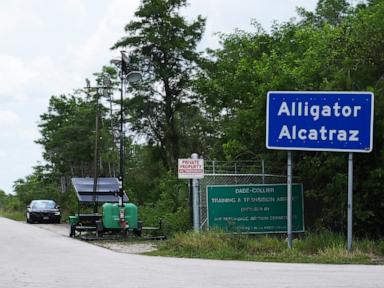
The swamp is finally pushing back. After months of headlines detailing "inhumane" conditions and a price tag that would make a seasoned defense contractor blush, Florida is reportedly pulling the plug on Alligator Alcatraz. This isn't just another routine facility closure. It's the collapse of a high-stakes, high-cost experiment in "hardline" immigration enforcement that basically set hundreds of millions of taxpayer dollars on fire in the middle of a swamp.
If you've been following the saga of the South Florida Detention Facility, you know it wasn't built to be subtle. It was built to be a statement. Located at the Dade-Collier Training and Transition Airport—right in the muck of the Big Cypress National Preserve—it earned its "Alligator Alcatraz" nickname from the literal predators circling the tents. But as it turns out, the most dangerous thing about the camp wasn't the pythons; it was the sheer cost of keeping the lights on in a place humans were never meant to live.
The billion dollar burn rate
Let’s talk numbers, because that’s the real reason this place is shutting down. Governor Ron DeSantis originally pitched this as a temporary fix that the federal government would pay for. It didn't work out that way.
The facility has been burning roughly $1.2 million every single day. Since it opened in July 2025, the total cost has ballooned toward the $1 billion mark. Florida requested a $608 million reimbursement from the feds, but that money has been tied up in legal challenges and environmental red tape.
Essentially, Florida taxpayers have been footing the bill for a "temporary" camp that costs more to run than most permanent prisons. DeSantis admitted last week that the facility was never meant to be permanent, but the "abrupt" nature of the closure—telling vendors to pack up by June—suggests the state has finally hit a financial wall. They're pivoting because they can't afford not to.
A failed experiment in human suffering
Critics didn't just hate the location; they hated what happened inside. Amnesty International and local advocates have spent months documenting what they call "harrowing" violations. We aren't just talking about bad food.
- The Box: Reports emerged of a 2x2 foot cage where detainees were allegedly forced to stand for hours in the Florida heat as punishment.
- The Elements: Living in soft-sided tents in a hurricane-prone swamp meant constant exposure to heat, insects, and humidity that these structures weren't designed to handle.
- Zero Oversight: Because it was a state-run facility holding federal detainees under a complex web of "emergency" contracts, traditional oversight was basically non-existent.
I’ve seen plenty of "tough on crime" projects, but Alligator Alcatraz felt different. It felt like a theater of deterrence. The Trump administration even used it as a backdrop for a "model" of future enforcement. But you can't run a model that costs $400,000 per year per detainee. That’s not policy; it’s a vanity project with a tragic human cost.
The environmental disaster nobody mentions
You can't just drop a massive detention center in the middle of the Everglades and expect the ecosystem to be cool with it. Groups like Friends of the Everglades and the Miccosukee Tribe have been screaming about this since day one.
The facility sat on 39 square miles of land that’s supposed to be protected. You have thousands of people, literal tons of waste, and a fleet of supply trucks rolling through a delicate watershed. The lawsuits weren't just "activism"—they were based on the fact that the state bypassed almost every standard environmental review to get those tents up in eight days.
Shutting it down is only half the battle. The real question is who pays for the remediation. You can't just pull up the stakes and walk away. The damage to the Big Cypress National Preserve will take years to fix, and the state is looking at even more legal fees as the Miccosukee Tribe continues to push for full restoration of the site.
What happens to the detainees
There are about 1,400 people still held at the site. The plan is to have them all out by June 1, 2026. But "out" doesn't mean "free."
Sources say these individuals will likely be shuffled to other ICE facilities across the country or fast-tracked for deportation. This "shell game" of moving people from one over-capacity facility to another doesn't solve the underlying issue; it just hides it better. If you have family members held there, the next few weeks will be a chaotic scramble to figure out where they've been sent.
Practical steps for those affected
If you are an advocate or have a loved one currently detained at Alligator Alcatraz, don't wait for an official notice.
- Monitor the ICE Locator: Once the transfer begins, the Online Detainee Locator System is your best bet, though it often lags by 24-48 hours.
- Contact Legal Counsel Immediately: Transfers often precede rapid deportations. If there’s a pending asylum claim, your lawyer needs to file a stay before the move happens.
- Pressure State Reps: The "demobilization" process is going to be messy. Accountability for the millions spent—and the treatment of those inside—needs to happen now, before the tents are folded and the evidence is gone.
The closure of Alligator Alcatraz isn't a "pivot" in strategy. It's an admission that you can't run a shadow prison system on the back of a fragile ecosystem without the whole thing collapsing under its own weight. The lights are going out in the swamp, and honestly, it’s about time.