The screen does not flicker with malice. It glows with a sterile, efficient blue light, casting long shadows across a quiet room where men in pressed uniforms sit inches away from absolute power. To them, the war looks like a spreadsheet. It looks like a cluster of green and red nodes blinking against a high-contrast satellite map. A coordinate is generated. A threshold is crossed. A calculation is completed in milliseconds.
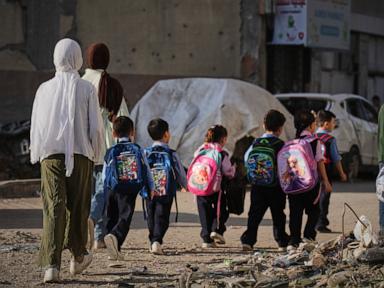
And then, somewhere three thousand miles away beneath the concrete dust of an evening in Gaza, a roof caves in.
We have spent decades romanticizing the precision of modern warfare. We were promised a cleaner theater of conflict, one where surgical strikes replaced indiscriminate fire, where machines stripped away human error, fear, and fatigue. But the documentary NAZA pulls back that antiseptic curtain to reveal something far more terrifying than chaos. It reveals a system where cold, unfeeling code has been granted the final authority over life and death.
Consider what happens when a machine is given a quota.
Imagine a young data analyst, let us call him Tariq—though he could be anyone sitting in a windowless room illuminated by monitors—staring at a processing queue. His job is not to pull a trigger. His job is to trust the system. The system, carrying names like Lavender or The Gospel, digests terabytes of intercepted communications, location telemetry, social network graphs, and movement patterns. It ingests thousands of lives reduced to metadata.
In this digital ecosystem, a human being is no longer a neighbor, a father, or a baker baking bread in the damp morning air. They are a probability score. They are a confidence interval of ninety-five percent. They are a variable in an equation that balances operational speed against acceptable collateral damage.
The machine does not hate. The machine does not hesitate. The machine also does not care that its error margin means a child sleeping under a thin blanket will never see the morning sun.
Speed is the seductive argument behind automated warfare. In past conflicts, military intelligence officers choked on data. There were too many targets, too many hours required to vet a single individual, too many human bottlenecks between observation and execution. Artificial intelligence solved that bottleneck. It turned target generation into an assembly line.
Where humans might take hours to cross-reference a suspect’s affiliation, a neural network does it in seconds. Where a human commander might balk at authorizing a strike on a residential building because a low-level militant might be inside alongside twenty civilians, the software calculates the math. It weighs the rank. It applies a mathematical formula to the value of a human life, categorizing collateral damage as a predictable coefficient rather than an unspeakable tragedy.
This is the hidden cost of algorithmic efficiency. We have traded the messy, agonizing burden of human judgment for the cold comfort of automated certainty.
When you watch NAZA, the most chilling aspect is not the explosions. It is the silence that precedes them. It is the eerie calm of men watching automated recommendations pop up on a screen like targeted advertisements on a browser window. Buy this shoe. Drop that bomb. The interface is clean. The UX is intuitive. The moral distance between the person who wrote the training weights for the algorithm and the person whose home has just collapsed into dust is measured in light-years.
We are told this is progress. We are told that machines make fewer mistakes because they do not panic under fire. But panic is sometimes the only thing standing between a human being and atrocity. Panic forces a pause. Fear makes a soldier’s hand shake. Doubt creates a split second of hesitation where a conscience can whisper: *Wait. Look closer. Is that