The air in Abu Dhabi carries a specific weight. It is thick with the scent of sea salt, warm asphalt, and the invisible, high-voltage hum of a city that was willed into existence from nothing but sand and vision. On the eve of a high-stakes diplomatic arrival, that hum grows louder. It isn't just about the motorcades or the fluttering flags lining the Corniche. It is about the chemistry between two men who have decided that the old maps of global power are obsolete.
When UAE Minister of State for International Cooperation, Reena Al Hashimy, speaks about Indian Prime Minister Narendra Modi, she doesn't use the sterilized vocabulary of a typical bureaucrat. She describes him as a "true treasure for leadership." That choice of words is deliberate. A treasure is something you find, something you protect, and something that possesses intrinsic value regardless of the market’s fluctuations.
The relationship between the United Arab Emirates and India has moved past the era of simple buyer-seller dynamics. We aren't just talking about barrels of oil moving one way and labor moving the other. We are witnessing a fusion.
The Weight of the Handshake
Consider a young engineer in Bengaluru. He spends his days coding for a fintech startup, dreaming of global expansion. Across the ocean, a logistics manager in Dubai’s Jebel Ali Port watches a shipment of spices arrive from Kochi. Ten years ago, these two individuals were connected by a thin thread of necessity. Today, they are part of a massive, integrated nervous system.
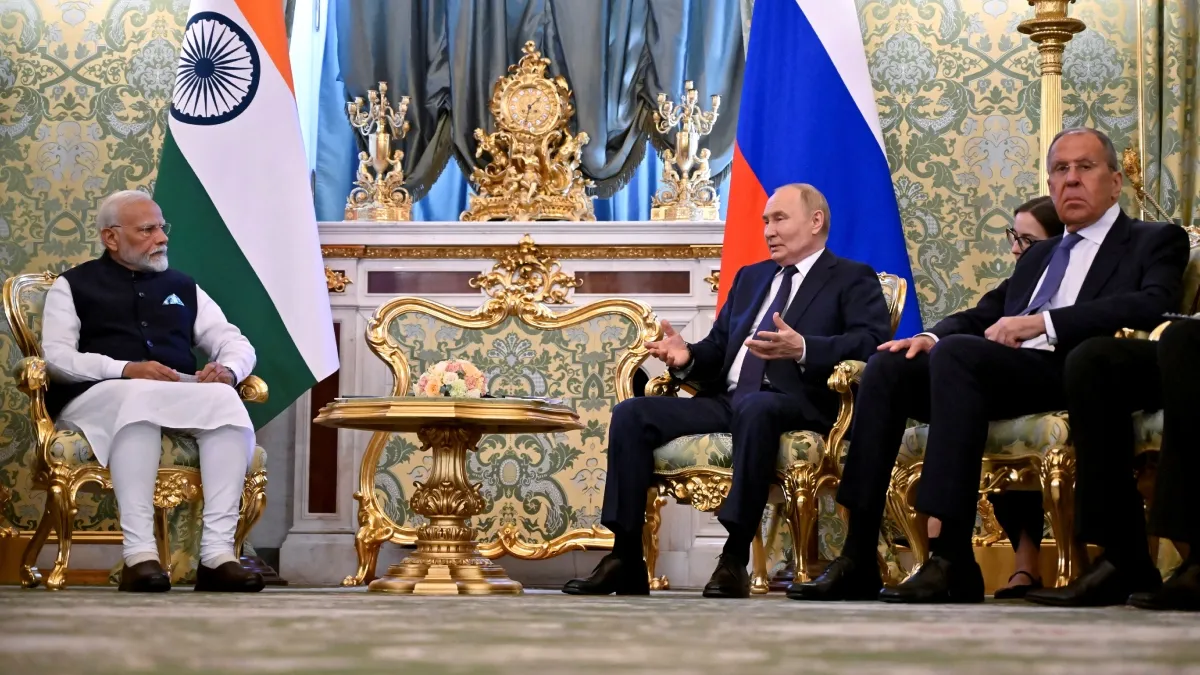
When leaders meet, the world often watches the photo ops. We see the stiff suits or the traditional tunics. We see the smiles. But the real story is in the ink on the Comprehensive Economic Partnership Agreement (CEPA). Since its inception, trade has surged, not by accident, but by design.
The UAE isn't just an oil producer anymore. It is a laboratory for the future. India isn't just a developing nation; it is a human capital powerhouse with a digital backbone that makes Western nations look like they are still using dial-up. When Al Hashimy highlights Modi’s leadership, she is acknowledging a shift in how the Global South views itself. It is no longer waiting for permission from the old guard in London or Washington. It is building its own corridors.
The upcoming visit isn't a formality. It is a pulse check on a multi-billion-dollar bet.
Beyond the Barrel
For decades, the narrative was simple: India needed energy, and the Gulf had it. It was a transactional, somewhat cold arrangement. If the price of Brent crude spiked, India’s economy bruised. If the UAE needed builders, India sent them.
Then, the tectonic plates shifted.
The UAE looked at its vast wealth and realized that sand and oil are finite, but data and innovation are not. Simultaneously, India realized that its greatest export wasn't tea or textiles, but its ability to solve complex problems at scale.
The "treasure" Al Hashimy refers to is this shared realization. It is the ability to look at a desert and see a solar farm, or to look at a crowded Indian street and see a cashless economy. They are trading in "what if."
What if we linked our power grids?
What if we settled our trade in Rupees and Dirhams, bypassing the dominance of the greenback?
What if we became the food security hub for the entire Middle East?
These aren't hypothetical musings anymore. They are active projects. The UAE’s commitment to invest $75 billion in India’s infrastructure was a shot across the bow of global finance. It signaled that the capital of the future is flowing East to East.
The Human Component
Diplomacy is often portrayed as a game of chess played by giants, but its effects are felt at the kitchen table.
There are over 3.5 million Indians living in the UAE. They are the doctors, the architects, the taxi drivers, and the entrepreneurs who have made the Emirates their home. For a long time, these people lived in a sort of limbo—essential to the economy but socially distinct. Under the current leadership of both nations, that has changed.
The construction of the first traditional stone Hindu temple in Abu Dhabi—the BAPS Hindu Mandir—wasn't just a religious event. It was a massive cultural signal. It told the millions of Indians in the UAE: You aren't just guests. You are part of the fabric.
This is the "human-centric" leadership Al Hashimy is pointing toward. It understands that you cannot have a robust economic partnership if the people involved feel like interchangeable parts. You need a soul. You need trust.
Trust is a fragile currency in international relations. It takes years to build and seconds to incinerate. Yet, between New Delhi and Abu Dhabi, it has become the primary asset. When the UAE stood by India during the darkest days of the pandemic, sending oxygen and medical supplies, it wasn't a business transaction. It was a brotherly gesture. That creates a debt of gratitude that no trade deficit can measure.
The Invisible Stakes
Why does this matter to someone who isn't a diplomat or a CEO?
Because the world is currently fractured. We see conflict in Europe, tension in the South China Sea, and a growing divide between the "West and the Rest." In this volatile environment, the India-UAE axis acts as a stabilizer. It is a partnership based on pragmatism rather than ideology.
They aren't trying to change each other’s political systems. They aren't lecturing each other on how to live. They are focused on a very simple, very human goal: prosperity.
When Al Hashimy speaks of Modi’s "visionary" approach, she is referencing the speed of execution. India’s digital public infrastructure—the "India Stack"—is being exported to the UAE. This allows for instant payments and seamless identity verification. It’s the kind of boring, technical stuff that actually changes lives. It means a worker in Sharjah can send money home to his mother in a village in Bihar instantly, with minimal fees, and know it arrived safely.
That is the true face of modern leadership. It isn't about grand speeches; it’s about making the friction of daily life disappear.
The Alchemy of the Future
There is a certain poetry in this alignment.
One nation is a vast, ancient civilization with over a billion people, navigating the complexities of a massive democracy. The other is a young, agile nation that has mastered the art of the impossible, turning a fishing village into a global metropolis in a single generation.
They shouldn't work together on paper. The scales are too different. The histories are too divergent.
But alchemy doesn't care about rules. It cares about the right ingredients and the right heat.
The heat, in this case, is the personal rapport between the leaders. It is well-documented that PM Modi and President Sheikh Mohamed bin Zayed Al Nahyan share a bond that goes beyond the teleprompter. They call each other "brother." In a world where leadership is often characterized by cold calculation, this warmth is a strategic advantage. It allows them to bypass the bureaucracy and get things done.
When the Prime Minister touches down in the UAE, the world will see the red carpets and the ceremonial guards. But the real story will be happening in the quiet rooms, where the next twenty years are being mapped out.
They are looking at green hydrogen. They are looking at space exploration. They are looking at a world where the Indian Ocean is the center of the global economy once again, just as it was centuries ago before the colonial era redrew the lines.
The desert is no longer a barrier; it is a bridge.
The Ganges isn't just a river; it is a symbol of a nation on the move.
As the sun sets over the Persian Gulf, casting long, golden shadows across the skyscrapers of Abu Dhabi, the significance of this visit becomes clear. It is the sound of two ancient and modern worlds finally speaking the same language. It is a reminder that in an age of machines and algorithms, the most powerful force on earth is still the human connection between leaders who refuse to be told that their dreams are too big for the map.
The treasure isn't buried in the sand. It is sitting at the table, planning the future.