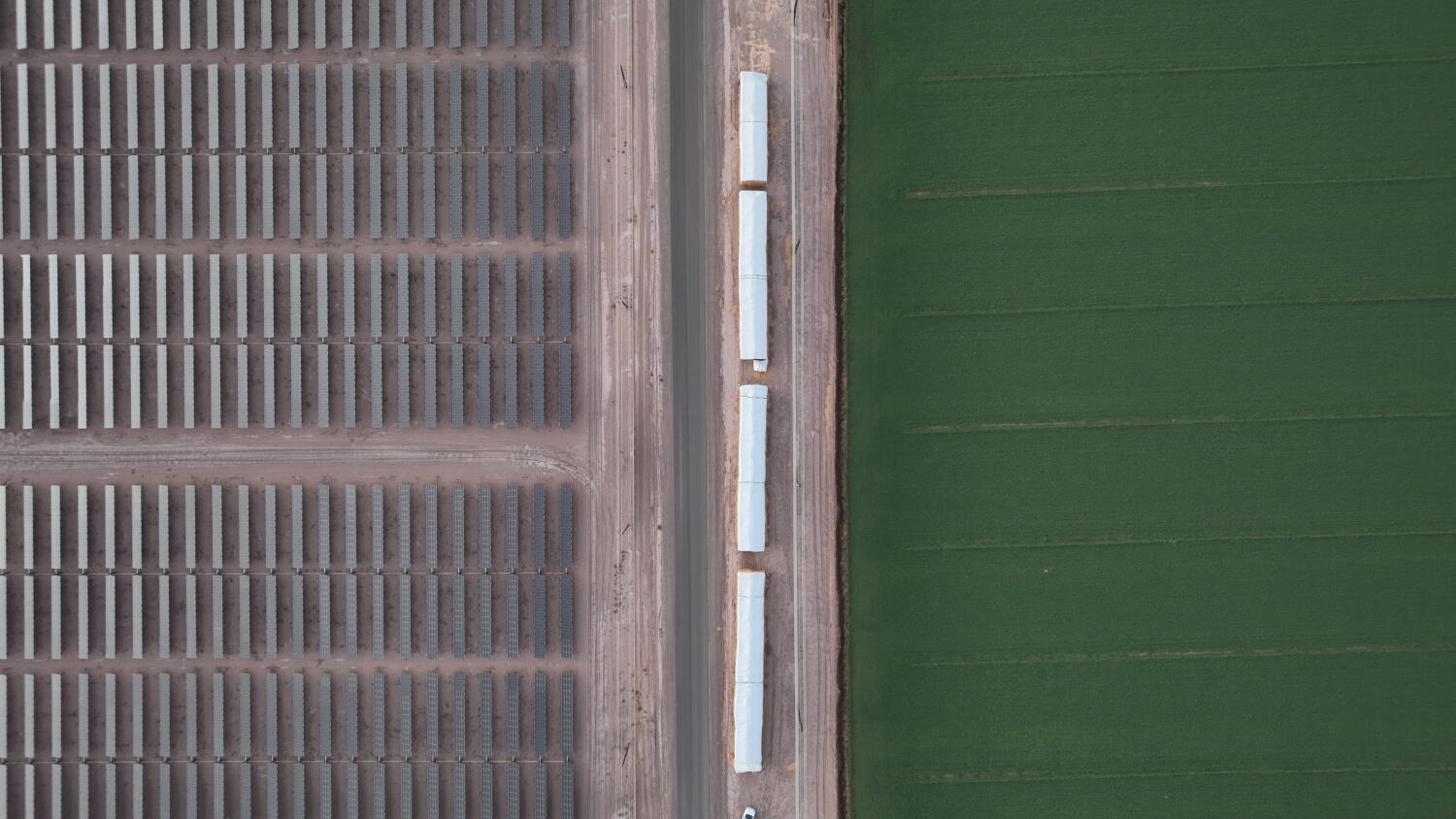
Every agricultural bureaucrat in Washington and Brussels is currently patting themselves on the back. They recently streamlined the paperwork for agrivoltaics, stripping away permitting hurdles so farmers can blanket their fields with solar panels. The lazy consensus says this is a win-win. Farmers get a secondary income stream from clean energy developers, the grid gets green electrons, and crops supposedly get a nice little sunburn shield.
Everybody wins. Except for anyone actually trying to grow food at scale.
I have spent the last decade watching institutional capital treat farmland like a yield-generating server rack. When investment funds run out of urban office space to flip, they look at four thousand acres of Nebraska loam and see prime real estate for photovoltaic arrays. Now, by making it easier to stick steel beams into productive soil, we are accelerating the transition from an agricultural economy to an energy collection zone.
We are not saving the family farm. We are turning it into a charging station.
The Microclimate Fallacy
The central pitch behind putting solar panels over crops is that shade saves water and protects sensitive plants from scorching summer heat. Agronomists love pointing out that lettuce or berries grown under partial shade retain soil moisture better.
This sounds great until you look at the math of actual commodity agriculture.
Corn, soybeans, and wheat do not want shade. They want full, unadulterated sunlight. Photosynthesis is an energy game, and blocking forty percent of the sun with silicon panels drops yields on staple crops off a cliff. When you shade a cornfield, you do not create a microclimate oasis; you stunt the plant's physiological capacity to convert light into grain.
Sure, you can graze sheep under panels or grow shade-tolerant specialty greens. But sheep grazing and specialty crops do not feed global supply chains. They are niche markets operating on thin margins, while the structural output of primary caloric production takes a direct hit. When a region trades high-yield corn ground for shaded pasture, local food security takes a quiet, permanent haircut.
The Real Estate Shell Game
Let us talk about where these projects actually land. Energy developers do not set up shop on marginal, rocky scrubland where plants struggle anyway. That land is too far from transmission lines.
Instead, they target flat, well-drained, fertile bottomland with existing electrical infrastructure. That is the exact same dirt that produces the highest yields per acre in the country.
I have watched venture-backed solar outfits walk into rural townships waving million-dollar lease offers in front of aging farmers whose children want nothing to do with the tractor. You cannot blame the farmer. When input costs for fertilizer and diesel are skyrocketing and grain prices are volatile, a guaranteed check from a utility company looks like salvation.
Once those panels go in, the topsoil changes forever. Heavy machinery strips the top layers during construction, compaction ruins drainage profiles, and even if you pull the panels up twenty-five years later, that soil is a shadow of its former self. We are trading permanent biological productivity for a few decades of subsidized kilowatt-hours.
The Interconnection Illusion
Advocates argue that removing regulatory barriers for dual-use farming solves the financial squeeze on rural communities. They claim it keeps farms solvent.
This is backward logic. If a farm only survives by stopping farming, you have not saved the farm. You have liquidated it piece by piece while keeping the fence posts intact.
The economic model of agrivoltaics relies almost entirely on federal subsidies, tax credits, and corporate ESG mandates. It is a financial engineering trick, not an agricultural breakthrough. When you stack government incentives on top of utility-scale land acquisition, you price actual farmers out of the land market entirely. Young growers trying to buy acreage to scale up organic vegetable operations or regenerative livestock systems cannot compete with a Silicon Valley energy fund that treats lease payments as a rounding error.
We have created an environment where the most profitable crop a farmer can grow is electricity.
What Actually Works
If we want to protect agricultural land while supporting the energy transition, we need to stop pretending that every acre can multitask.
We should restrict large-scale solar development to genuinely degraded land, brownfields, warehouse roofs, and highway verges. Leave the productive topsoil alone. If farmers want to generate power, let them put panels on their massive barn roofs, machinery sheds, and processing facilities. That alone covers baseline farm energy needs without driving a single steel pile into prime dirt.
We need to stop celebrating policies that make it easier to pave over our food supply under the guise of environmental progress. True sustainability starts with keeping productive soil productive.
Stop trying to turn fields into power plants. Grow the food.