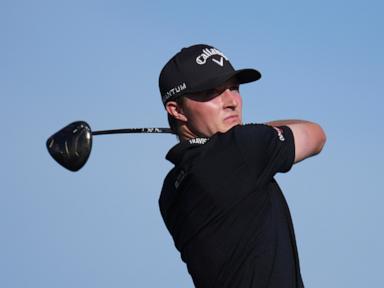
Blades Brown is a teenage golfing anomaly who has forced the sport to confront a reality it is entirely unprepared to handle. At just 16 years old, the high school sophomore from Nashville became the youngest player to advance to stroke play at the U.S. Amateur, breaking a record previously held by Bobby Jones. Months later, he made the cut at the Myrtle Beach Classic, shooting a 10-under-par total that left seasoned PGA Tour veterans shaking their heads in the locker room. The core tension of his career is not whether he possesses the talent to dominate the professional circuit, but whether the current, fractured ecosystem of professional golf will destroy his development before he even gets there.
For decades, the path for an elite young golfer was institutionalized, predictable, and safe. You dominated the junior circuits, secured a scholarship to a powerhouse university like Oklahoma State or Texas, spent two to four years hardening your game in NCAA competition, and then took your shot at Q-School or the Korn Ferry Tour.
That pipeline is dead.
The arrival of massive corporate backing, NIL (Name, Image, and Likeness) money, and the ongoing civil war between the PGA Tour and LIV Golf has turned the amateur game into a hyper-accelerated marketplace. A teenager with a 115 mph swing speed is no longer just a kid with potential. He is a walking corporation, surrounded by agents, equipment manufacturers, and sports psychologists, all pulling him in conflicting directions before he even obtains a driver's license.
The Myth of the Slow Build
The prevailing narrative around teenage phenoms suggests that patience is a virtue. Well-meaning analysts urge families to let kids be kids, advocating for a traditional college experience to build character and emotional maturity.
That advice is hopelessly outdated.
When Tiger Woods turned professional in 1996, the financial stakes were massive, but the developmental runway was still controlled by a centralized authority. Today, the sheer volume of money available to unproven teenagers creates an immense pressure to bypass traditional development entirely. If a young player waits until age 22 to turn pro, they are burning four years of peak athletic monetization.
Consider the mechanics of the modern golf swing. The physical strain required to compete at the highest level demands a level of flexibility and explosive power that peaks remarkably early. The modern game rewards high launch angles and extreme ball speed, traits that are frequently mastered by teenagers who have trained with launch monitors since elementary school. Waiting to turn professional is no longer viewed as a period of maturation; it is increasingly seen as an unnecessary financial risk.
The NIL Paradox
NIL deals were supposed to solve this problem by allowing amateurs to earn money while retaining their college eligibility. In reality, it has complicated the calculation.
An elite amateur can now secure mid-six-figure endorsement deals while playing for a major university. This creates a strange, liminal space where a player has the financial backing of a professional but lacks the freedom to manage their schedule like one. They are bound by NCAA tournament calendars, team travel requirements, and academic minimums, all while their peers on the professional mini-tours are gaining invaluable experience grinding out cuts in rough conditions for their own survival.
- Amateur status prevents players from accepting official prize money from PGA Tour sponsor exemptions.
- NIL contracts often bind young athletes to specific equipment brands before their physical development is complete.
- The pressure to perform for both a college team and individual corporate sponsors creates an exhausting double standard.
This halfway house of development satisfies nobody. It keeps the player tethered to an amateur world they have clearly outgrown, while failing to provide the brutal, necessary education of playing for your next meal.
The Physical Risk of Accelerated Greatness
The most significant danger facing a young player like Brown is not mental burnout; it is physical degeneration. The biomechanical demands of the modern swing are unprecedented.
[Junior Development] ---> [NIL / Amateur Stagnation] ---> [Early Physical Breakdown]
                                  |
                                  +---> [The Professional Crucible]
To achieve the ball speeds necessary to compete on a 7,500-yard PGA Tour setup, young players maximize rotational torque. They plant their lead foot and twist their lower back and hips with violent force. We are already seeing the consequences of this style of play across the professional ranks. Players in their mid-twenties are undergoing back surgeries that used to be reserved for athletes at the end of their careers.
When a sixteen-year-old is thrown into professional events, they aren't just playing against better golfers. They are subjecting their still-developing skeletal systems to a repeating physical trauma that the human body was not designed to endure for fifty weeks a year.
The Schedule Dilemma
Managing a prodigy's calendar requires a level of restraint that few surrounding them actually possess. Manufacturers want their logos on television. Tournament directors want the box-office draw of a local teenage superstar. Parents want to see their child fulfill their potential.
The resulting schedule is often a chaotic mix of high-profile amateur majors, sponsor exemptions on the PGA Tour, and junior events that offer nothing left to learn. This constant shifting between different tiers of competition prevents a player from finding a competitive rhythm. One week they are playing a course set up to test forty-year-old professionals; the next, they are playing a resort course against seventeen-year-olds where the only requirement is making twenty birdies a week. It ruins a player's strategic versatility.
The Destruction of the Short Game
The obsession with distance has created a generation of young players who are elite drivers of the golf ball but functionally illiterate when it comes to short-game artistry.
When you watch a teenager dominate junior golf, they are typically doing so by overpowering the golf course. They hit it thirty yards past their peers, wedge it onto the green, and make the putt. But the PGA Tour does not allow itself to be overpowered so easily. When the fairways narrow and the greens become as hard as parking lots, the game changes from a contest of raw power to an exercise in damage control.
A teenager who has never had to scrape a par from a buried lie in a greenside bunker cannot learn that skill under the television cameras of a PGA Tour event. It is a craft learned through thousands of hours of unglamorous, monotonous practice away from the spotlight. The current frenzy surrounding young stars robs them of the quiet time required to develop these finer tools. They are too busy traveling, doing media interviews, and fulfilling sponsor obligations to spend four hours a day chipping out of heavy rough.
The Structural Failure of the PGA Tour Pathway
The PGA Tour has attempted to address this talent rush with initiatives like PGA Tour University, which offers direct paths to the big league for top college seniors.
It is a band-aid on a bullet wound.
The system still requires a player to spend four years in the collegiate system to guarantee a spot. For an exceptional talent, that timeline is a lifetime. It forces a choice between an inefficient four-year waiting period and the wild, unregulated gamble of turning pro at 18 with no guaranteed status.
The LIV Factor
The competitive dynamic changed permanently with the emergence of LIV Golf. The Saudi-backed league has demonstrated a willingness to offer massive, guaranteed contracts to top amateur talent before they ever strike a ball as a professional. This completely alters the risk profile for a young player.
If a teenager is offered $10 million guaranteed to sign with a LIV team, the argument for going to college or grinding through the PGA Tour’s developmental ladder disappears instantly. The PGA Tour cannot compete with this direct financial security for unproven players, creating a talent drain that threatens the long-term stability of the traditional ecosystem.
The Mental Illusion of Success
The hardest adjustment for a young prodigy is not handling failure; it is handling temporary success. Making a cut at a PGA Tour event as an amateur is an incredible achievement, but it provides a false sense of security.
In a sponsor exemption scenario, the teenager has nothing to lose. The galleries are cheering for them, the media treats them as a feel-good story, and a missed cut carries no real penalty. The environment changes completely the moment that status changes to professional. Suddenly, every missed cut means a loss of capital, a drop in the reshuffle rankings, and a quiet step closer to career irrelevance. The carefree swing that produced a 65 in May becomes tight and defensive when a card is on the line in November.
Amateur Exemption:   No Risk ----> High Freedom ----> Peak Performance
Professional Card:   High Risk ---> Low Freedom ----> High Stress
The governing bodies of golf like the USGA and the PGA Tour like to present golf as a pure meritocracy where the best scores always win. It is a comforting fiction. The reality is that the sport has become an aggressive, corporate-driven assembly line that consumes young talent at an alarming rate, demanding that children make adult decisions about their bodies, their finances, and their futures before they are emotionally equipped to understand the consequences.
The golf world will continue to watch the leaderboard for the next teenage phenom, celebrating every long drive and under-par round as proof that the sport is healthy. But the system is fundamentally broken, rewarding immediate exploitation over long-term development, leaving the families of these prodigies to navigate a minefield where a single wrong turn means becoming a trivia question rather than a champion. The modern game does not protect its future; it burns it for fuel.


