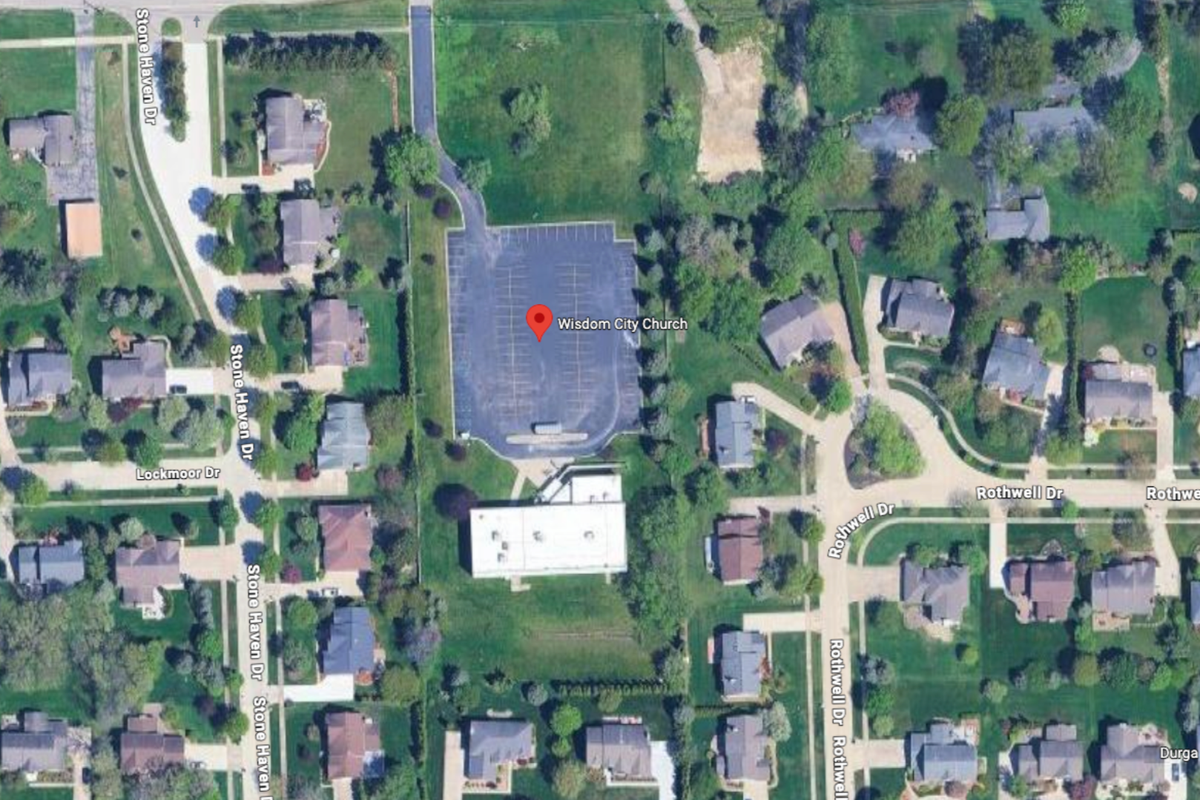
Low-frequency acoustic energy transfer between commercial institutions and residential property owners represents a classic spatial externality failure. When structural foundations resonate with high-amplitude bass frequencies, the resulting conflict exposes fundamental flaws in municipal zoning logic, architectural acoustic isolation, and community risk management. Property owners experience physical displacement symptoms while institution operators claim cultural protection, creating a deadlock that conventional mediation routinely fails to resolve.
Addressing this friction requires setting aside emotional grievances and examining the physics of sound propagation, structural transmission coefficients, and the economics of urban proximity.
The Acoustic Propagation Matrix
Sound operates as a mechanical wave requiring a medium to travel through the air and solid structures. Low-frequency sound waves, typically ranging from twenty to two hundred hertz, possess long wavelengths that carry energy efficiently over substantial distances and bypass common barriers.
When a sound source generates high decibel levels at low frequencies inside a building, two transmission pathways activate simultaneously.
Airborne Transmission
Airborne waves travel directly from the interior source through open windows, poorly sealed doors, and thin walls. While these waves lose energy as they hit obstacles, low frequencies possess high mass-matching characteristics, meaning they pass through light building materials with minimal attenuation.
Structure-Borne Transmission
Structure-borne transmission occurs when acoustic energy couples directly with the physical frame of a building. Subwoofers resting on stages, unisolated amplifier cabinets, or uncalibrated sound systems vibrate the floor plates. This mechanical energy travels through concrete slabs, steel beams, and wood joists, effectively turning the entire structural skeleton of the institution into a secondary speaker cone.
Residential properties situated adjacent to the source share the underlying soil or contiguous urban foundations. Consequently, the energy bypasses the intervening air gap entirely, manifesting inside neighboring living rooms as tactile vibration rather than audible music.
The Economic and Legal Asymmetry
The conflict between a neighborhood and a house of worship over acoustic emissions highlights an institutional mismatch in property rights enforcement.
Institutions operate under specific cultural assumptions regarding community benefit and historical precedence. Conversely, homeowners operate under the legal expectation of quiet enjoyment and capital preservation of real estate assets. When these paradigms collide, standard municipal noise ordinances often prove structurally inadequate.
Most municipal noise codes rely on A-weighted decibel measurements, known as dBA. The A-weighting filter intentionally desensitizes measurement equipment to low-frequency sounds to mimic the human ear's reduced sensitivity to deep bass at low volumes. This creates a regulatory blind spot. An institution can remain entirely compliant with a local dBA noise limit while simultaneously generating enough unweighted linear decibels at thirty hertz to rattle drywall, displace decorative objects, and induce physiological distress in neighbors.
The absence of calibrated low-frequency metrics, known as dBC or linear measurements, creates a regulatory vacuum. Operators have no legal incentive to invest in structural mitigation until property values plummet or formal litigation commences, shifting the entire cost of the externality onto the residential neighbors who bear the physical and financial depreciation.
The Operational Cost Function of Mitigation
Resolving acoustic conflicts requires institutional operators to internalize the negative externalities they produce. This involves a capital expenditure program designed to sever the physical coupling between sound systems and building structures.
[Audio Source]
       │
       ▼
[Mechanical Isolation] (Acoustic decoupling pads, floating subfloors)
       │
       ▼
[Mass & Damping Layer] (Dense drywall, green glue, mineral wool)
       │
       ▼
[Spatial Air Gap] (Double-stud framing isolation)
       │
       ▼
[Property Boundary] (Zero structural vibration transfer)
The primary engineering interventions fall into three distinct operational categories.
Mechanical Decoupling
Subwoofers and low-frequency drivers must never make direct rigid contact with building foundations. Placing high-density elastomer mounts, specialized spring isolators, or acoustic sub-bases beneath heavy audio hardware prevents vibrational energy from entering the concrete slab.
Mass Enhancement and Damping
To stop low-frequency waves from breaching shared walls, operators must increase the mass-per-unit-area of the partition and introduce viscous damping compounds between layers of drywall. Adding resilient channels separates the gypsum board from the framing studs, breaking the direct path of mechanical vibration.
Active Acoustic Control
Advanced installations deploy digital signal processors equipped with feedback loops and real-time spectrum analyzers. These systems automatically cap low-frequency output thresholds based on exterior boundary microphone arrays, removing human error and subjective volume control by audio engineers.
Strategic Resolution Protocols
Protesting outside a venue or petitioning local representatives rarely yields permanent solutions because these actions do not alter the underlying engineering variables. A systematic approach requires direct measurement, contractual accountability, and verifiable engineering interventions.
Property owners and institutional leadership must establish a standardized testing protocol utilizing unweighted sound pressure level meters capable of capturing frequencies below fifty hertz. Establishing baseline readings during peak operational hours provides the empirical data required for binding operational agreements.
If voluntary compliance fails, the pathway shifts to enforcing nuisance laws through civil litigation, utilizing structural engineering reports to demonstrate physical degradation of property assets caused by continuous low-frequency vibration.
Install subfloor isolation pads immediately beneath all low-frequency drivers, commission a professional architectural acoustic audit to establish maximum unweighted decibel limits at the property line, and link the sound system amplification limits to an automated hardware limiter keyed to exterior boundary sensors.