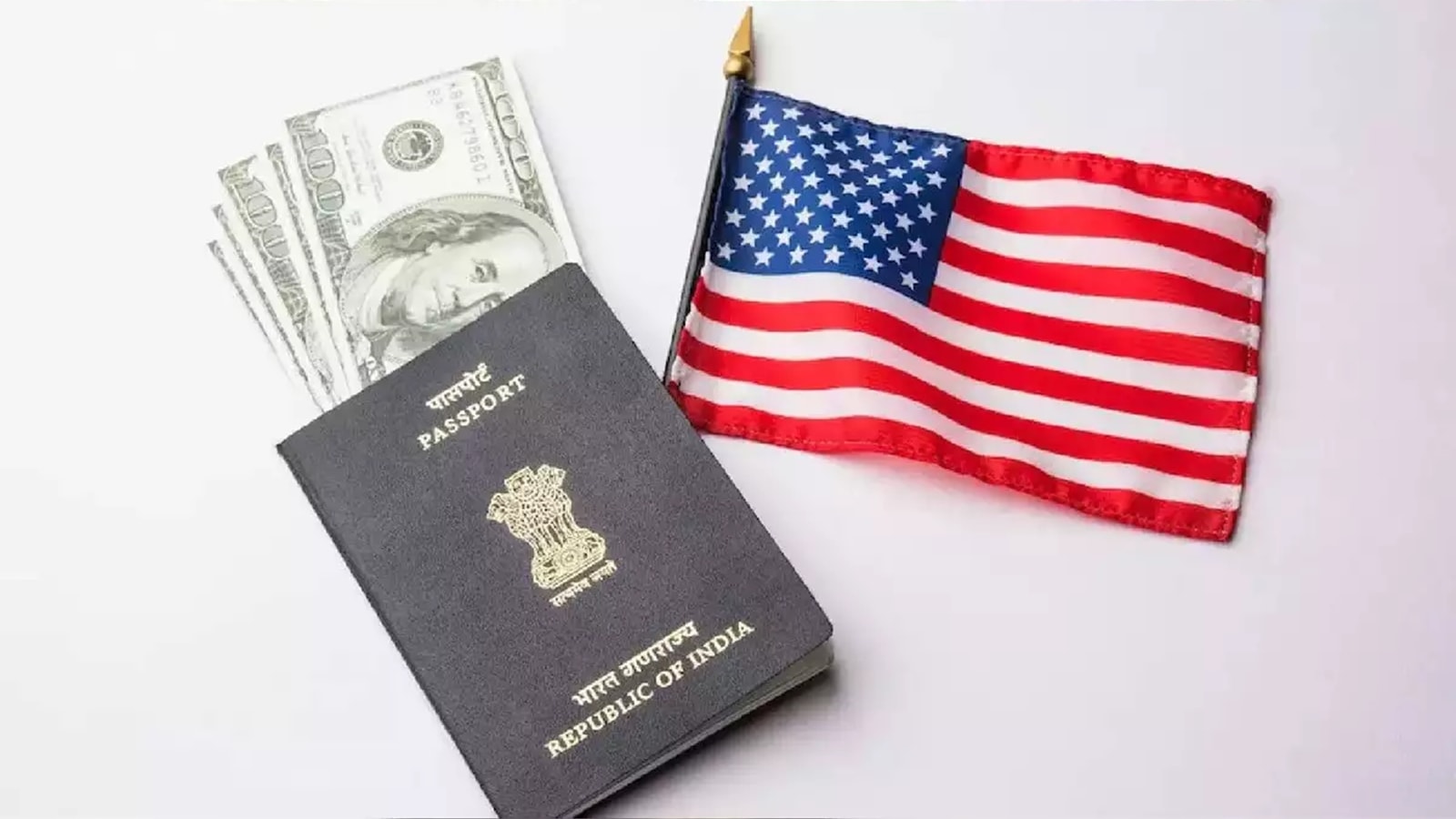
The federal government has quietly engineered a structural shockwave that threatens to dismantle America's economic crown jewels. By replacing a half-century-old policy of open-ended student residency with rigid four-year caps, a newly finalized regulation governing international student visas is set to reshape the domestic technology and innovation sectors. Economists project that a sustained one-third drop in foreign student enrollment could wipe out between $200 billion and $400 billion in annual economic output. This policy shift targets the pipeline of global talent, altering the future of American productivity.
The Mechanics of the Shift
For decades, the United States operated under the principle of duration of status. International students arriving on F-1 visas could remain in the country for as long as it took to complete their education, including a structured window of practical work experience following graduation. That era is over.
Under the new regulatory framework taking effect in September, most students face a strict four-year ceiling. Anyone pursuing a longer doctoral path, a specialized medical residency, or a multi-year engineering post-doctorate must petition federal authorities for administrative extensions.
Every extra semester now requires navigating a bureaucratic bottleneck through United States Citizenship and Immigration Services. The administrative weight will inevitably slow down academic timelines. More critically, the policy grants the government explicit discretion to curtail stays before degrees are finished.
Higher Education as an Export Industry
Policy architects in Washington often treat education as a purely domestic social issue. It is not. International higher education functions as a core American service export.
Foreign tuition payments, housing expenditures, and daily living costs inject billions of dollars into regional economies across the country. When fewer students cross international borders to study at American universities, those export revenues evaporate immediately. A drop in foreign enrollment hurts university towns just as severely as a localized manufacturing slump hits an industrial belt.
Yet, the tuition revenue loss is merely the surface damage. The true economic exposure lies downstream in the labor market.
The Innovation Pipeline Shortage
Modern economic growth relies heavily on high-skill talent, particularly within science, technology, engineering, and mathematics disciplines. Foreign nationals trained in American graduate programs sit at the epicenter of this ecosystem.
Consider a hypothetical example to illustrate the mechanism. A brilliant engineering student from abroad completes a doctorate at a major research university, stays to work through the Optional Practical Training program, and joins a robotics startup in California. That individual does not simply take a job. They help create entirely new industries.
Data demonstrates that foreign-born STEM graduates trained in the United States patent new inventions at four times the rate of typical college graduates. They account for roughly ten percent of all patents registered domestically. Furthermore, they establish high-growth startup firms at six times the rate of native-born peers.
Curtailing their ability to remain in the country starves domestic research and development of essential fuel.
Breaking the Practical Training Bridge
The primary mechanism bringing these international minds into the workforce is Optional Practical Training. This program allows graduates to apply their classroom knowledge through temporary employment directly related to their field of study.
Without this transition period, employers face steep hurdles. Sponsoring a permanent work visa involves substantial financial costs and administrative risk. Companies rarely sponsor an unproven international applicant straight out of a foreign university.
Practical training acts as an extended interview. It gives employers a chance to evaluate talent before committing to full sponsorship. Approximately one-third of international STEM graduates find an employer willing to sponsor them after completing this training period. Without it, that conversion rate plummets.
The Ripple Effect on GDP
When analysts at the Peterson Institute for International Economics calculated the fallout of a potential one-third contraction in foreign student inflow, the numbers stunned even seasoned observers. A loss of $400 billion per year equals roughly 1.3 percent of the total gross domestic product.
To put that figure in perspective, it matches the entire economic output of states like South Carolina or Utah disappearing overnight. This is not cash vanishing from a bank account. It represents economic potential that never materializes. It is the cost of products never invented, manufacturing processes never optimized, and software architectures never written.
The administration defends the restrictions by pointing to administrative vulnerabilities and historical security concerns. Yet, security experts note that existing monitoring systems already track student movements closely. Framing a sweeping economic restriction around narrow administrative grievances ignores the macro-level consequences.
The Legal and Legislative Battleground
The battle is not entirely finished. Industry coalitions and higher education advocacy groups are preparing to challenge the rule in federal court. Plaintiffs will argue that the administration failed to conduct an adequate economic impact assessment before finalizing the policy.
Concurrently, members of Congress retain the authority to overturn the regulation using the Congressional Review Act. Lawmakers who represent districts heavily dependent on research institutions face mounting pressure from local business leaders.
America built its technological dominance by operating as a magnet for the brightest minds on the planet. Closing the door changes that gravitational pull. The economic reckoning for this policy miscalculation has only just begun.