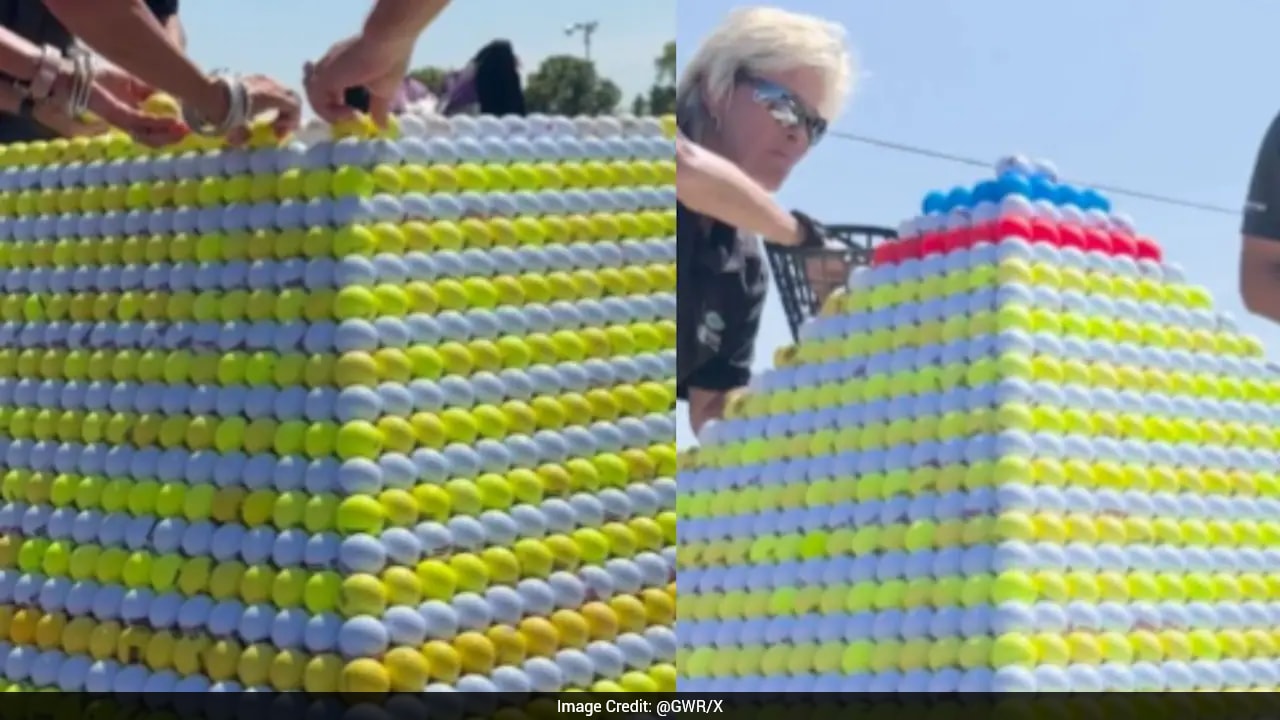
Building a massive structure out of tiny, dimpled spheres sounds like a form of self-inflicted torture. One wrong move, or a slight tremor in your hand, and thousands of hours of precision labor come crashing down around your feet. Yet, that is exactly what happened when a dedicated team decided to shatter the world record by constructing the world's largest golf ball pyramid.
The feat required exactly 19,019 golf balls. It looks simple from a distance. It is just a big triangle, right? Wrong. The engineering behind stacking thousands of perfectly round objects without them rolling away is a nightmare.
Most people look at a spectacle like this and see a fun weekend hobby gone wild. I see a triumph of physics, patience, and absolute madness. Let's look at how this mind-boggling structure came to life, why it actually matters, and what it takes to pull off a stunt this absurd.
The Brutal Physics Behind Stacking Spheres
Spheres do not want to stay put. It is a fundamental law of nature. When you stack blocks, the flat surfaces distribute weight evenly. When you stack golf balls, you deal with point contacts. The weight of every single ball pushes down on a tiny fraction of the ball beneath it.
To build the world's largest golf ball pyramid, the construction crew could not just throw things together. They used a strict mathematical arrangement known in physics as close-packing of equal spheres. This specific geometry maximizes density and stability.
Every ball rests in the hollow space created by four balls underneath it. Think of it like fruit stacked at a grocery store, but on a massive scale.
- The base must be a perfect square.
- Every layer decreases by exactly one ball per side.
- The apex features a single, solitary ball holding the aesthetic together.
The real danger is cumulative error. If the base layer shifts by even a millimeter, that tiny mistake multiplies as you move upward. By the time you reach the middle layers, the entire structure becomes unstable. The team spent hours ensuring the foundation was flawlessly level before the real work even started.
The Logistics of 19,019 Golf Balls
Let's talk about the sheer volume of equipment needed for this record. A standard golf ball weighs about 1.62 ounces. Do the math. A pyramid made of 19,019 golf balls weighs well over 1,900 pounds.
That is nearly a ton of plastic and rubber concentrated on a relatively small footprint.
The pressure on the bottom layer is immense. A standard golf ball can handle plenty of force—after all, it survives being smacked by a driver at 150 miles per hour—but the structural integrity of the pyramid relies on static friction.
Total Weight: ~1,925 lbs
Base Dimensions: 33 x 33 balls
Total Layers: 33
The construction required a specialized wooden frame to lock the outer edge of the base layer into position. Without that frame, the outward lateral pressure caused by the weight of the upper layers would cause the base to blow outward, resulting in an instant avalanche of dimpled plastic.
The crew worked in shifts. Hand-placing thousands of balls requires extreme focus. Your hands cramp. Your vision gets blurry. You start seeing dimples in your sleep. Several times during the build, a dropped ball threatened to trigger a catastrophic chain reaction. The team used custom-made trays to slide whole sections into place at once, minimizing human contact with the fragile structure.
Why We Are Obsessed With Absurd Records
Guinness World Records sees thousands of applications every year. People balance spoons on their faces, build giant rubber band balls, and sit in ice tubs for hours. It sounds silly on the surface. But there is a deep-seated human desire to push boundaries, even arbitrary ones.
This golf ball pyramid is a perfect example. It serves no practical purpose. It does not cure a disease, and it does not make a golf swing any better. But it captures our imagination because it represents extreme discipline.
We love seeing what happens when someone takes a completely mundane object and pushes its utility to the absolute limit. It forces you to pause and appreciate the sheer dedication required to finish something so tedious. Most people quit hobbies after a few weeks. These builders spent days staring at golf balls, risking total failure with every movement. That deserves respect.
How to Build Your Own Mini Pyramid
You probably do not have 19,000 golf balls sitting in your garage. That is fine. You can still test your patience and understand the physics by building a smaller version at home. Grab about 140 balls and follow these steps to see just how difficult the process gets.
Find a perfectly flat, hard surface. A carpet will not work because the fibers create uneven pressure. Use a wooden table or a tiled floor.
Create a square base. A 7-by-7 square uses 49 balls. You need to secure the edges. Use two-by-fours or heavy books to create a tight perimeter so the balls cannot roll outward.
Start filling in the second layer. Place each ball directly into the nests formed by the four balls below. Work from the outside edges inward.
Keep going. Your next layers will be 6-by-6, then 5-by-5, down to a single ball at the peak. Notice how your hands shake as you get higher. The tension is real, even with a tiny version.
If you manage to complete it without the whole thing collapsing, you will have a newfound appreciation for what the world record holders achieved. It takes steady hands and a lot of focus.
Go find some golf balls, clear off a table, and see if you have the patience to master the physics of the stack.