Every major newsroom in Asia is treating the 16,000 applications for Hong Kong’s streamlined taxi and ride-hailing exam like a roaring victory for urban mobility.
They see a booming labor pool. I see 16,000 people lining up to buy depreciated tickets on a sinking ship. If you found value in this piece, you might want to read: this related article.
The lazy consensus says simplifying the written test—dropping the ridiculous requirement to memorize dozens of obscure street junctions in an era of turn-by-turn GPS—solves Hong Kong’s notorious point-to-point transport shortage. Reporters are framing this surge as proof that the government’s new regulatory framework for ride-hailing platforms and premium taxi fleets is unlocking latent economic opportunity.
That narrative is dead wrong. It confuses exam registration with active supply, ignores the brutal unit economics of Hong Kong’s commercial vehicle market, and completely misses the real reason passengers still get stranded in the rain outside Central at 6:00 PM on a Friday. For another angle on this event, refer to the latest update from Reuters Business.
The Illusion of the 16,000-Driver Surge
Passing a multiple-choice test does not put a single car on Nathan Road.
In urban transport economics, there is a massive chasm between latent licensing and active street utilization. Having a commercial driving permit in Hong Kong is like owning a gym membership in January. Thousands sign up when the barrier to entry drops; almost nobody shows up when the daily grind begins.
I have watched mobility startups and fleet operators across East Asia burn tens of millions of dollars mistaking driver sign-ups for actual road capacity. In Singapore, London, and New York, every regulatory overhaul that lowered licensing friction produced an immediate spike in exam applicants, followed within six months by a stubborn plateau in peak-hour availability. Why? Because the bottleneck was never the test. The bottleneck is the daily cost of turning the ignition.
Consider the math a newly minted Hong Kong driver faces the morning after passing that streamlined exam:
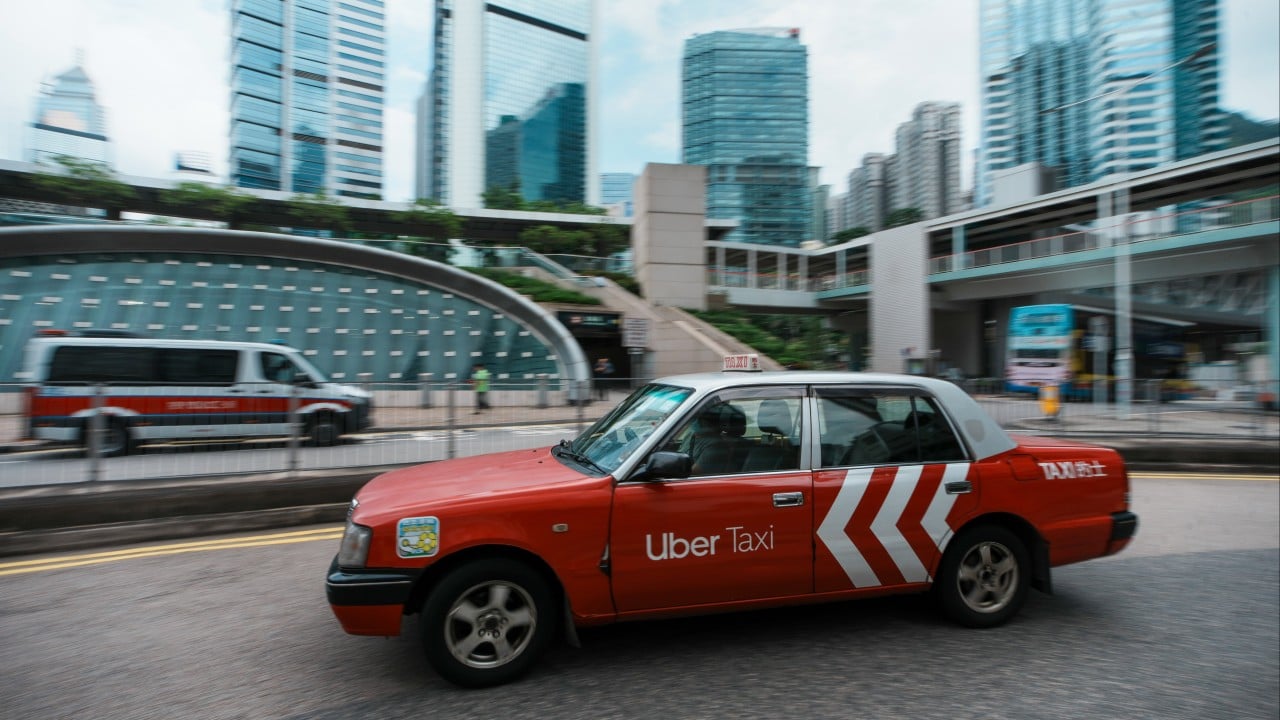
- Daily Vehicle Rental: Renting a standard red urban taxi costs between HK$350 and HK$450 per shift, depending on the day of the week and vehicle age.
- Fuel and Charging: Even with subsidized liquefied petroleum gas (LPG) or electric vehicle charging, an active 10-hour shift burns through HK$120 to HK$200 in energy costs.
- Tunnel Tolls and Deadheading: Cross-harbor trips eat into margins when drivers have to absorb return tolls or burn unpaid minutes hunting for fares in low-density districts.
Before a driver buys a single bowl of wonton noodles, they are roughly HK$500 to HK$650 in the hole every single day.
To clear a modest take-home pay of HK$1,000 for a grueling 11-hour shift, that driver needs to gross nearly HK$1,700. When you divide that across a city with strict speed limits, chronic congestion in Causeway Bay, and regulated flag-fall rates that have lagged inflation for decades, the hourly yield barely beats working logistics at Chek Lap Kok airport—without the risk of a HK$320 parking ticket or an insurance deductible.
Why Simplifying the Exam Solves the Wrong Problem
Let’s look at what the government actually changed. Historically, the Transport Department’s taxi written test was a relic of the 1980s. Candidates had to memorize specific routes and obscure landmarks across Hong Kong Island, Kowloon, and the New Territories—a bizarre hazing ritual that kept pass rates artificially low while doing nothing to improve customer service or driving safety.
Replacing geographical rote memorization with practical route-planning principles and passenger service questions was long overdue. Nobody defends testing drivers on street names they can find on Google Maps in two seconds.
Yet policymakers and commentators are acting as if removing an obsolete exam hurdle fixes a broken market structure. It does not.
Look at the actual demographics of the 16,000 applicants. A massive slice of this cohort is not looking to become full-time, career taxi drivers. They are white-collar workers, gig economy couriers, and retirees grabbing an optional side-hustle credential just in case ride-hailing regulations open the door for part-time private car permits.
Imagine a scenario where 10,000 of those 16,000 candidates pass the test. How many of them are going to wake up at 4:30 AM to take a handoff from a night-shift driver in Kwun Tong? Almost none. Part-time drivers only turn on their apps when surge pricing spikes on Saturday nights or during typhoons. They disappear during the exact Tuesday morning rush hours when commuters actually need reliable point-to-point transit.
The Cartel Elephant in the Room
You cannot talk honestly about Hong Kong’s taxi and ride-hailing crisis without addressing the HK$18,000-per-month elephant sitting on the balance sheet: the permanent taxi license medallion.
For decades, Hong Kong capped the number of taxi licenses at 18,163. Because supply was frozen while wealth grew, those licenses mutated from commercial operating permits into speculative financial assets. At their peak in 2015, urban taxi licenses traded for over HK$7 million each. Even after years of decline triggered by ride-hailing competition and higher interest rates, a single license still commands roughly HK$2.5 million to HK$3 million.
Here is the structural poison nobody in official press releases wants to admit: the people who own the licenses are rarely the people driving the cars.
Decades ago, taxi medallions were consolidated into the hands of fleet investors, holding companies, and wealthy individuals who treat them like commercial real estate. Their sole financial objective is maximizing daily rental yield from drivers.
When the government introduces new regulatory hoops—whether it is mandatory dashcams, e-payment terminals, or new licensing tiers for ride-hailing platforms—those compliance costs do not come out of the medallion owners’ pockets. They get passed straight down to the driver through higher shift rents, or passed onto the public through higher fares.
Transport economists like David Hensher at the University of Sydney and Bruce Schaller—whose landmark research exposed how unregulated app-based fleets choked Manhattan traffic—have repeatedly demonstrated the same iron law of urban mobility: you cannot regulate your way to better service if the underlying asset ownership separates capital risk from service quality.
In Hong Kong, a driver who rents a cab for a 12-hour shift has zero long-term equity in the customer relationship. If they refuse a cross-harbor fare at 4:45 PM because changing shifts in Kowloon at 5:00 PM will cost them an hour of unpaid traffic, they are not being malicious. They are responding rationally to a rigid shift-handover clock dictated by a landlord who owns the medallion.
What Everyone Gets Wrong About Ride-Hailing Regulation
When you ask people on the street what Hong Kong needs, they almost always say, "Just legalize Uber completely and let anyone drive."
That is the opposite extreme, and it is equally naive.
Hong Kong is not Houston or Los Angeles. It is one of the most densely populated vertical cities on earth, with roughly 7 million people crammed into narrow coastal corridors squeezed between steep mountains and Victoria Harbour. Road space per capita in Hong Kong is among the lowest in the developed world.
If you remove all caps on commercial ride-hailing vehicles without strict congestion pricing or dynamic fleet quotas, you do not get cheap, instant rides. You get gridlock.
Look at what happened when unrestricted app fleets flooded Jakarta, Manila, and New York. Average traffic speeds plunged, bus lanes clogged up, and drivers ended up making less money per hour because they spent 45% of their shift cruising empty looking for pings. Even worse, unrestricted ride-hailing cannibalizes public transit—specifically the MTR and franchised buses, which move over 80% of Hong Kong’s daily commuters efficiently.
The government’s attempt to thread this needle—by issuing a limited number of licensed ride-hailing platform permits alongside five new premium taxi fleets—tries to please everyone and risks satisfying no one.
Here is why the current hybrid model faces brutal execution friction:
- Fleet Fragmentation: Splitting premium service across five separate taxi fleet operators plus private ride-hailing platforms splinters liquidity. In dispatch algorithms, liquidity is everything. One unified pool of 5,000 cars always delivers faster pickup times than five separate pools of 1,000 cars.
- Insurance Arbitrage: Commercial third-party insurance for ride-hailing vehicles in Hong Kong remains astronomically expensive compared to private car policies. Until insurers price risk dynamically based on telematics rather than blanket commercial classifications, part-time drivers will either get priced out or operate illegally under personal policies—leaving passengers exposed in major accidents.
- The Quality Trap: Premium fleets promise cleaner cars, polite drivers, and guaranteed e-payments. Yet if those fleet operators still rely on traditional shift-rental models rather than salaried employment with performance bonuses, service standards will revert to the mean within eighteen months.
Answering the Questions Drivers Are Too Afraid to Ask
If you are one of the 16,000 people preparing for this exam, or an investor betting on Hong Kong’s mobility sector, you are probably asking the wrong questions. Let’s strip away the official talking points and answer the real ones.
Is getting a Hong Kong commercial driving license actually worth it right now?
Only if you treat it as an asymmetric option, never as a primary income engine. Passing the simplified exam costs very little money and a few evenings of study. Having the credential in your pocket gives you downside protection if you lose a white-collar job or want to monetize idle hours during peak weekend demand.
However, quitting a stable salaried role to rent a taxi full-time in 2026 is a terrible bet. Between high vehicle lease rates, rising maintenance costs on aging LPG fleets, and fierce competition from cross-border e-commerce delivery apps, your inflation-adjusted hourly wage has a hard ceiling.
Will 16,000 new exam takers finally stop taxi drivers from refusing fares?
No. Fare refusal in Hong Kong is not a driver shortage problem; it is an incentive alignment problem.
Drivers refuse short trips at taxi stands because waiting 40 minutes in a queue at the airport or a major hotel only to get a HK$35 ride around the corner destroys their daily math. Similarly, drivers refuse cross-harbor trips near shift-change hours because fixed shift handovers penalize them for getting stuck in tunnel traffic. Until dispatch apps eliminate physical stand queues and replace rigid 12-hour shift handoffs with flexible vehicle sharing, drivers will keep Cherry-picking fares—regardless of how many people pass a written exam.
Why doesn't Hong Kong just buy back all taxi licenses like other cities?
Because the numbers do not work politically or fiscally. Buying back 18,163 licenses at even a discounted valuation of HK$2.5 million each would cost the Hong Kong treasury over HK$45 billion—money the government desperately needs for housing, healthcare, and major infrastructure projects.
No Financial Secretary is going to hand HK$45 billion of public funds to taxi medallion investors while running budget deficits. That is why every policy from the Transport and Logistics Bureau is a delicate workaround designed to inject competition slowly without triggering a sudden medallion collapse that defaults commercial bank loans backed by those licenses.
The Uncomfortable Truth About My Contrarian View
Let’s be completely honest about the blind spot in this critique: crisis forces adaptation faster than spreadsheets predict.
Hong Kong’s traditional taxi industry has spent the last decade losing trust with both locals and high-spending tourists. When visitors from Shenzhen, Singapore, or Tokyo land at Hong Kong International Airport and realize they still need physical cash for half the cabs in the city—or get yelled at for carrying two suitcases—the reputational damage hits the entire retail and hospitality economy.
Pressure from Beijing to maintain Hong Kong’s status as a premier international hub, combined with fierce competition from mainland Chinese cities where autonomous robotaxis and seamless super-apps are already standard, means the status quo cannot survive forever. If the 16,000 new applicants force legacy fleet owners to slash daily rental rates just to keep cars from sitting idle in lots, that alone will transfer some economic surplus back to working drivers.
Even a flawed reform breaks the psychological monopoly of the old guard. Once passengers get used to rating drivers, tracking arrivals on a map, and paying automatically via phone, there is no going back to waving blindly in the rain on Des Voeux Road.
What Actually Needs to Happen Next
If Hong Kong wants world-class point-to-point transport rather than just a headline-grabbing exam turnout, policymakers and fleet operators need to stop celebrating applicant numbers and fix the plumbing:
- Kill Rigid Shift Handovers: Mandate smart-key digital access across all new licensed fleets so vehicles can be swapped anywhere in the city via an app, eliminating the 4:00 PM to 6:00 PM cross-harbor dead zone.
- Dynamic Congestion Tolls Over Hard Car Caps: Stop guessing the "right" number of ride-hailing permits. Use electronic road pricing in Central, Admiralty, and Tsim Sha Tsui during peak hours so road space goes to high-occupancy transit while commercial point-to-point vehicles pay the true cost of congestion.
- Enforce Universal Digital Payments Immediately: Make working contactless and QR payment terminals a strict condition of annual vehicle roadworthiness inspection—not a voluntary feature for "premium" tiers.
Until those structural incentives change, 16,000 new exam candidates will not fix Hong Kong’s streets. They will just give 16,000 more people a front-row seat to why the system is broken.