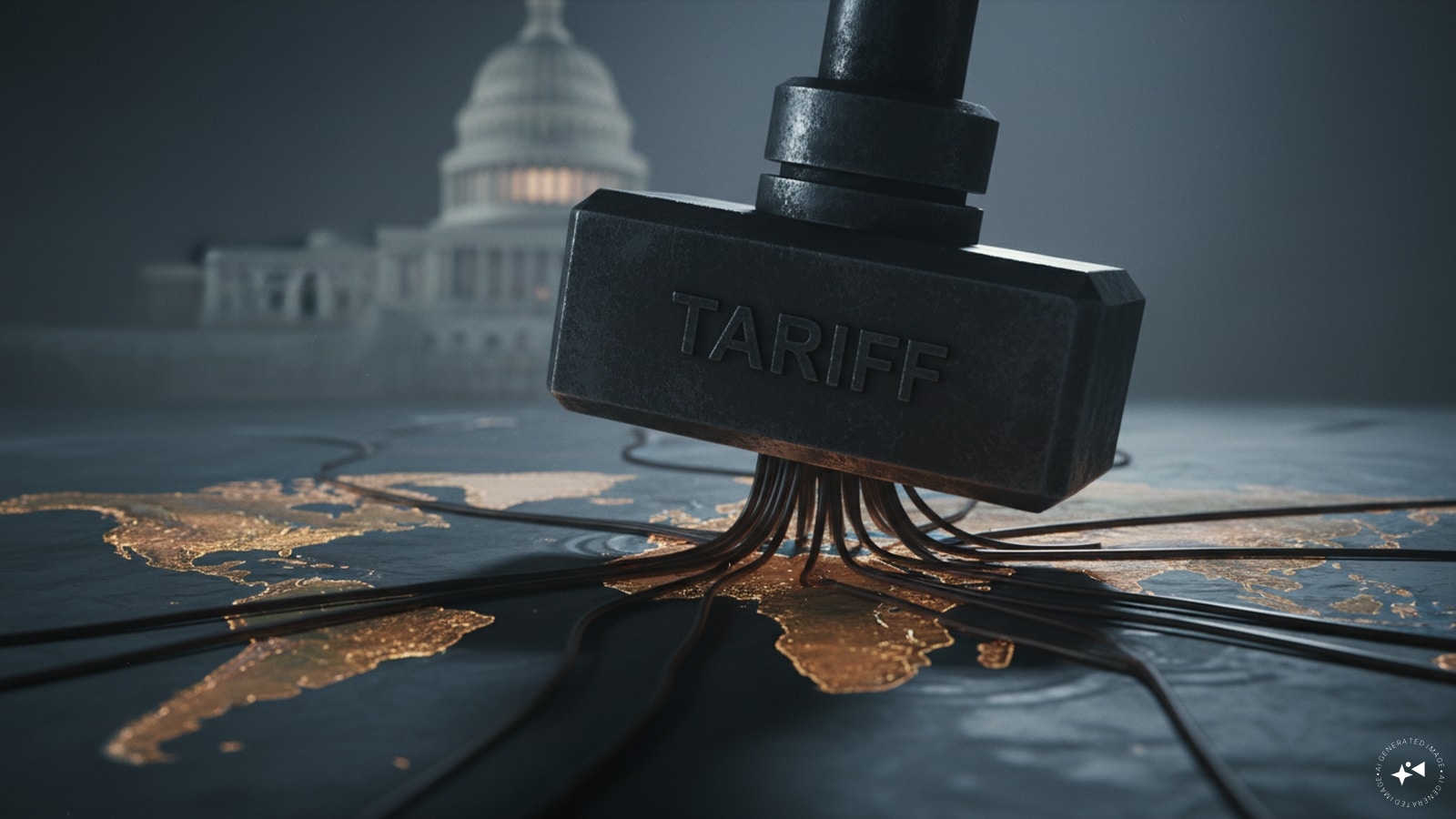
Every trade pundit in Washington and New Delhi is currently hyperventilating over the threat of sweeping secondary sanctions and hundred percent tariff walls targeting nations buying Russian energy or defense hardware. The lazy consensus is simple and terrifying. The narrative goes that Washington is about to drop a hammer on non-aligned democracies, forcing India to choose between Western markets and Russian discounted crude, effectively choking its economic engine.
It is a completely superficial read of how modern global supply chains actually operate.
I have watched bureaucrats draft blunt-instrument protectionist policies for over a decade. I have sat in rooms where politicians draw lines on maps without understanding the ledger sheets underneath them. The 100 percent tariff panic is a masterclass in economic illiteracy. Washington cannot slap a prohibitive tariff wall on India without collapsing its own domestic retail markets, and New Delhi knows it. The threat is a political posture, a weaponized negotiating tactic designed to corral compliance through fear rather than execution.
Let us dismantle the mechanical reality of what happens when you try to penalize the world's fifth-largest economy out of existence.
The Arithmetic of Refined Crude Laundering
The entire premise of the US sanctions panic rests on a fundamental misunderstanding of commodity flows. When India buys discount Russian crude, it does not simply burn it in local generators. It refines it.
Once crude oil is cracked in a distillation column, its origin story evaporates. Refineries in Gujarat take sanctioned Russian barrels, process them into diesel, jet fuel, and gasoline, and ship those finished products straight to global markets, including Europe and the United States. The molecule changes identity.
Washington cannot slap a hundred percent tariff on Indian refined petroleum products without instantly triggering a severe energy shock at home. American consumers are already sensitive to fuel prices. Artificially doubling the cost of refined fuels imported from allied nations would send domestic pump prices skyrocketing.
The policy designers in Washington are playing checkers while the global energy markets are playing three-dimensional chess. If the United States blocks Indian refined products over secondary sanctions, global supply shrinks overnight. Refineries in Europe and the Americas cannot make up the deficit. The resulting price spike would dwarf any geopolitical victory the State Department hopes to claim.
The Sovereignty Illusion in Modern Defense
Another pillar of the tariff panic is the legacy defense relationship between New Delhi and Moscow. For decades, the Indian military ran on Soviet hardware. Spare parts, maintenance schedules, and heavy armor are deeply entrenched in the system.
Commentators love to point at S-400 missile defense batteries and T-90 tanks as structural flashpoints for sanctions. They assume that New Delhi can simply pivot to Western defense contractors with the flick of a pen.
That is not how military logistics work.
I have seen procurement officers try to swap out core military infrastructure mid-stream. It takes decades, billions of dollars, and absolute institutional alignment. India cannot decouple from Russian defense spares overnight without leaving its borders entirely exposed to Chinese aggression along the Line of Actual Control.
Washington understands this constraint intimately, even if cable news talking heads do not. The Pentagon relies on a stable, heavily armed India to act as a counterweight in the Indo-Pacific. Crippling the Indian economy with punitive tariffs does not weaken Russia; it hobbles the very regional proxy the United States needs to contain Beijing. It is a self-defeating geopolitical paradox.
Why Bilateral Trade Survives the Rhetoric
Look past the sensational headlines and examine the actual bilateral trade volume between the United States and India. It surpassed two hundred billion dollars. Major American technology firms, financial institutions, and manufacturing giants have staked their next twenty years of growth on the Indian consumer market.
Do you seriously believe Wall Street allows the White House to execute a policy that locks out American corporations from the fastest-growing major economy on earth over a secondary dispute regarding Moscow's oil exports?
Corporate lobbying in Washington is ruthless, and self-interest always wins over ideological purity. The moment a hundred percent tariff bill moves from a draft proposal to a serious legislative threat, the boardroom insurrection from American multinationals will neuter it.
The relationship between the US and India is transactional, messy, and entirely dependent on mutual pragmatism. It is not governed by emotional alignment or strict adherence to Western foreign policy orthodoxies. India practices strategic autonomy. It buys oil from Russia, tech from the US, and raw materials from whoever offers the best margin.
The Real Risk Everyone Is Ignoring
While everyone is obsessing over the boogeyman of hundred percent tariffs, the actual risk facing international trade is far more mundane and damaging: death by a thousand regulatory cuts.
Washington will not drop a sledgehammer tariff. Instead, it will implement hyper-specific compliance hurdles, opaque licensing requirements, and targeted restrictions on specific financial institutions facilitating trade settlements in non-dollar currencies.
This is where the real friction lies. The transition away from the US dollar in bilateral trade settlements between emerging economies and sanctioned states is the actual threat to American hegemony. Moscow and New Delhi are quietly building alternative payment rails to bypass SWIFT and avoid dollar exposure.
That is what keeps Federal Reserve governors awake at night. Not the oil purchases, but the plumbing.
If you are running an import-export business or managing an international portfolio, stop worrying about a sudden, catastrophic tariff wall. It is political theater designed for domestic consumption in Western capitals. Instead, audit your supply chain exposure to currency conversion risks and tightening export controls on dual-use technology.
The pundits want you to panic about a trade war that makes zero economic sense. Look past the noise, follow the capital, and ignore the empty threats.