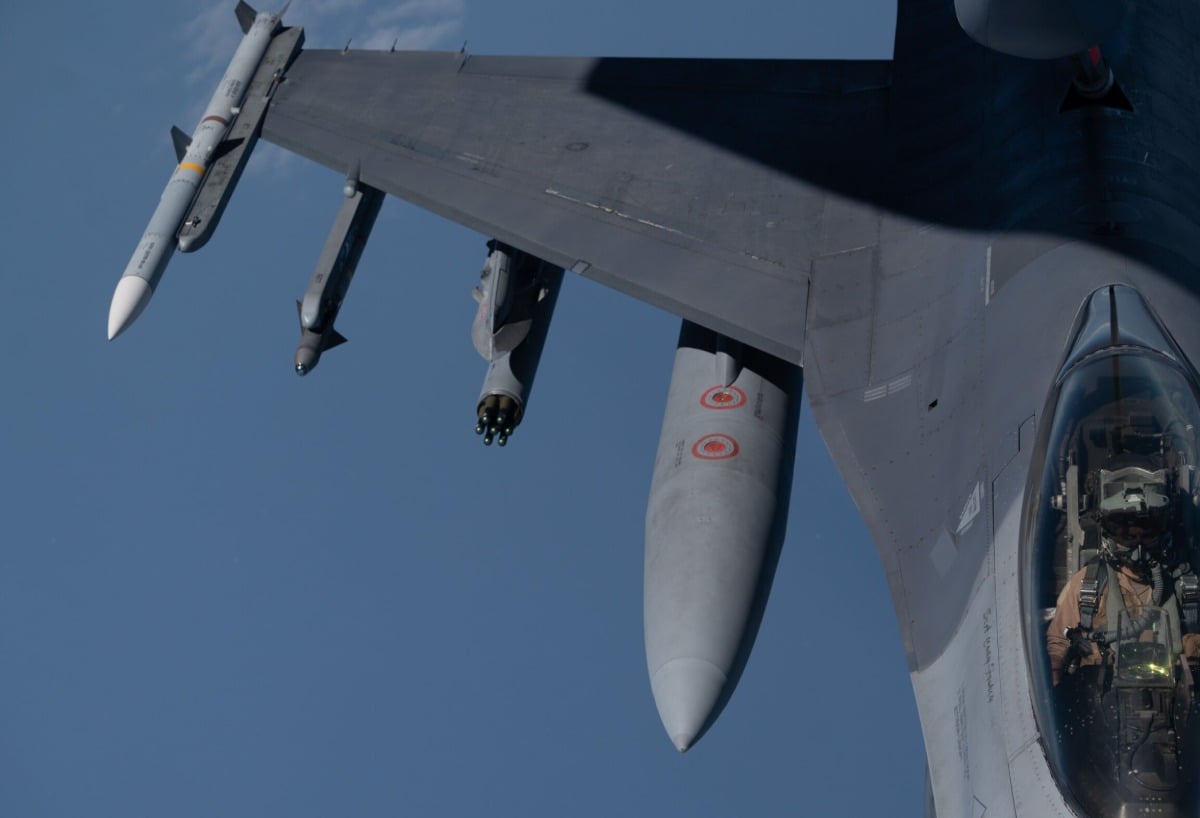
The mainstream defense press is salivating over the Pentagon clearing a massive $1.3 billion sale of 20,000 laser-guided rockets to Saudi Arabia. The standard narrative is already locked in. Analysts are regurgitating the same tired talking points: it strengthens regional deterrence, tightens the alliance with Riyadh, and secures a massive windfall for American defense contractors.
They are missing the entire point.
Buying 20,000 Advanced Precision Kill Weapon Systems (APKWS) is not a flex. It is a loud, expensive admission of a deeper structural failure. This deal does not project modern military dominance; it exposes an outdated logistical bottleneck. The defense establishment is celebrating a massive procurement order that tethers a modern military to a warfare model that is rapidly becoming obsolete.
The Lazy Consensus on Precision Munitions
The conventional wisdom says that more precision is always better. The argument goes like this: by converting standard 70mm unguided rockets into laser-guided weapons, the Saudi military can minimize collateral damage and strike targets with pinpoint accuracy.
That sounds great in a marketing brochure. In reality, it ignores the physics of modern asymmetric warfare.
APKWS converts a dumb rocket into a smart one by adding a mid-body guidance section. It fills the gap between unguided rockets and heavy-duty Hellfire missiles. But look at what happens when you try to deploy 20,000 of them in a real-world conflict against decentralized, low-signature threats.
To use a laser-guided rocket, you need a platform to fire it—usually an Apache helicopter, a fighter jet, or a high-end drone. More importantly, you need a continuous line of sight to paint the target with a laser designator until the rocket impacts.
I have watched defense teams spend years optimizing acquisition pipelines for exactly this kind of hardware, only to watch the operational reality shred their assumptions. In a contested airspace or against an adversary utilizing basic electronic warfare and smoke countermeasures, the requirement for constant laser illumination transforms a multi-million-dollar aircraft into a sitting duck.
The Math of Diminishing Returns
Let's break down the actual economics of this transfer. We are talking about a $1.3 billion package. While the individual rocket modifications are relatively inexpensive compared to a cruise missile, the total cost of ownership is staggering.
- The Launch Platform Burden: You do not just fire these from the hip. They require sophisticated targeting pods, specialized racks, and integration with complex avionics systems.
- The Maintenance Trap: Storing, maintaining, and calibrating 20,000 precision guidance kits over a decade requires an army of contractors and climate-controlled infrastructure.
- The Opportunity Cost: That $1.3 billion is capital locked up in traditional kinetic inventory that cannot be spent on next-generation decentralized systems.
Imagine a scenario where a military force faces a swarm of hundreds of cheap, off-the-shelf reconnaissance and explosive drones. Each drone costs less than a used laptop. Do you fire a laser-guided APKWS rocket from an Apache helicopter that costs $30,000 an hour to operate at it?
The math fails instantly. You are using a scarce, expensive, highly centralized capability to chase down cheap, distributed threats. It is a negative economic spiral. The adversary wins simply by existing and forcing you to burn through your inventory.
What the Defense Analysts Get Wrong About PAA
If you look at the standard questions people ask about these arms sales, the flaw in the premise becomes obvious.
Does this sale stabilize the region?
No. It creates an inventory glut of weapons designed for a style of interventionist warfare that is disappearing. True stabilization comes from integrated air defense, localized counter-drone networks, and resilient cyber infrastructure—not from stacking pallets of air-to-ground rockets in a desert warehouse.
Why does Saudi Arabia need so many guided rockets?
The lazy answer is "volume and persistence." The brutal, honest answer is that traditional militaries burn through munitions at terrifying rates because their targeting cycles are too slow. They use volume to compensate for a lack of real-time, algorithmic situational awareness.
The Downside of Moving Away From the Status Quo
To be fair, abandoning the comfort of massive kinetic stockpiles is terrifying for military planners. The contrarian approach—shifting funds from traditional munitions toward autonomous electronic warfare, distributed low-cost loitering munitions, and swarm defense—has glaring downsides.
First, it requires a complete overhaul of training and doctrine. It is easy to train a pilot to lock a laser on a truck. It is incredibly difficult to train an entire military command structure to operate in a degraded environment where automated systems are making split-second engagement decisions.
Second, it destroys the political theater of defense procurement. A line of 20,000 rockets looks impressive on a spreadsheet and creates predictable revenue for legacy defense primes. An invisible network of cyber countermeasures and decentralized drone interference software does not offer the same optical satisfaction to politicians or generals.
The Real Future of Air-to-Ground Engagement
The true innovators in defense technology are not looking at how to make old rockets slightly smarter. They are looking at how to eliminate the legacy platform entirely.
The conflict ecosystems of the mid-2020s have proven that fixed supply lines and heavy reliance on manned aviation are liabilities. If your precision weapon requires a $100 million aircraft to get close enough to designate a target, the weapon is already a bottleneck.
The future belongs to weapon systems that can think for themselves from launch to impact, without requiring a human to keep a laser beam glued to a target for fifteen seconds while taking anti-aircraft fire.
Riyadh isn't buying a vanguard capability. They are buying the tail end of a legacy technology curve. They are building a massive warehouse for the wars of 2012, while the rest of the world is adapting to a reality where mass kinetic inventory matters far less than software adaptability and attritable autonomy.
Stop measuring military readiness by the sheer volume of munitions approved in Washington. Start measuring it by how fast a force can adapt when those munitions become irrelevant on day one of a modern conflict.